



PORTUGAL: The UN Letter to Portugal Tells Only One Side of the Story
By Francisca Silva Zacarias
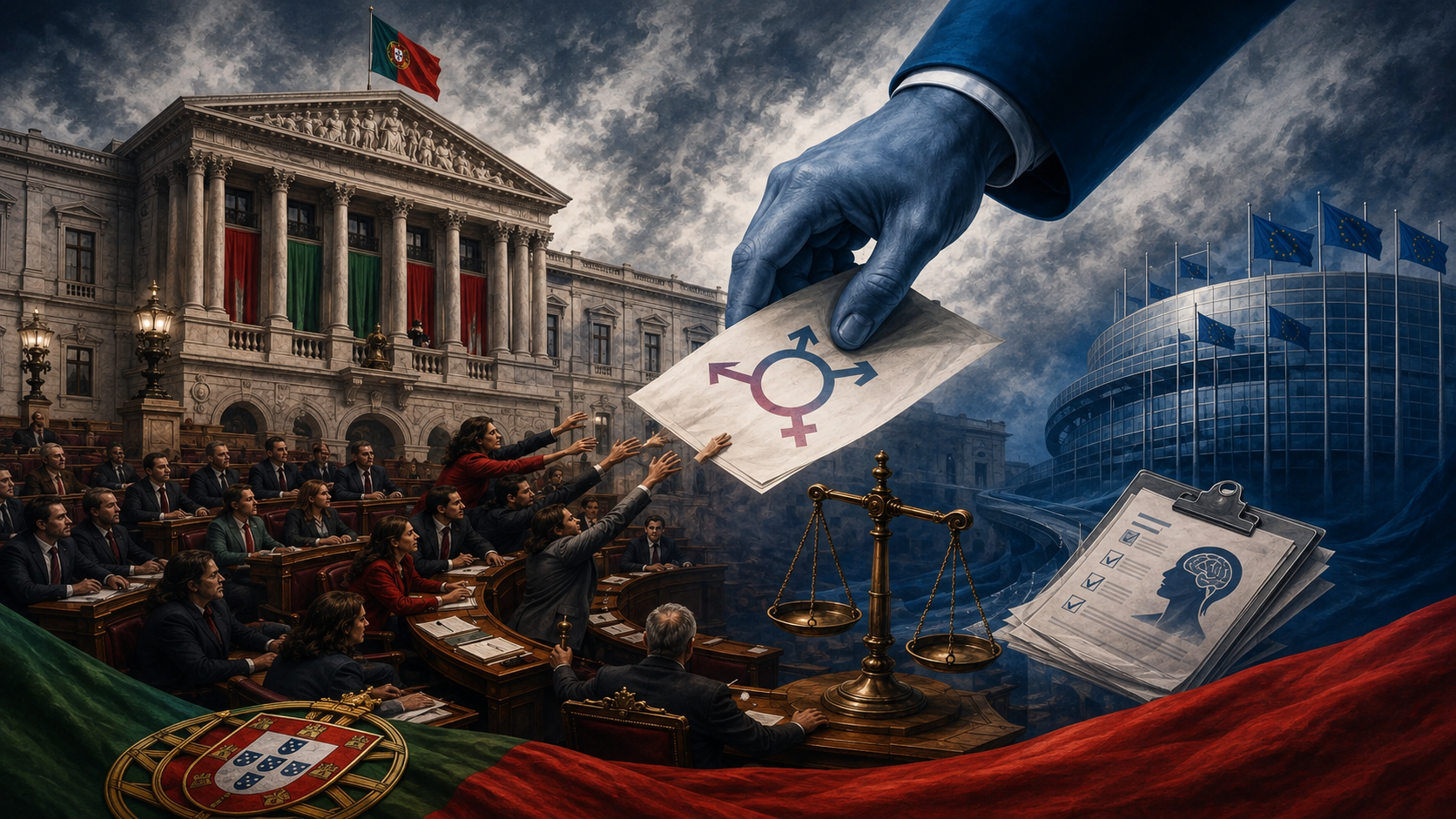
Volker Türk presents one interpretation of gender policy as a human-rights imperative. Reem Alsalem, another. The interpretation is far from settled. By Francisca Silva Zacarias
Clique aqui para ler este artigo em português.
UN High Commissioner for Human Rights Volker Türk has written to the Portuguese Parliament objecting to three bills concerning gender identity, minors, medical interventions, sport, and prisons. He asks Parliament to withdraw or revise them, arguing that several provisions may conflict with Portugal’s international human-rights obligations.
The letter deserves serious attention, but also scrutiny. Türk presents one understanding of gender identity and healthcare through the language of autonomy, non-discrimination and human rights, while giving less weight to competing rights, clinical uncertainty and safeguarding.
Another UN expert has challenged several of those assumptions. Reem Alsalem, the UN Special Rapporteur on violence against women and girls, has raised concerns about unrestricted self-identification, youth medicalisation and the impact of gender policy on women and girls. Genspect has raised many of the same concerns.
1. Does International Law Require Self-Identification?
The OHCHR argues that legal gender recognition should be based on self-identification through a simple administrative procedure and should not depend on medical certification. But Alsalem has challenged that conclusion. In her January 2024 letter to WHO Director-General Tedros Adhanom Ghebreyesus, she reiterated a position previously set out regarding Scotland’s Gender Recognition Reform Bill: legal gender recognition does not imply a right to unregulated self-identification without appropriate safeguarding and risk assessment.
She also argued that State practice does not establish an international consensus recognising unrestricted self-identification as an inherent human right. The question, therefore, is not whether transgender people should have legal recognition, but whether self-identification without objective safeguards must be treated as the only human-rights-compliant model.
Genspect has raised the same concern: if “legal recognition of self-determined gender identity” is assumed at the outset, questions about harms and competing sex-based rights have already been answered.
2. Depathologisation is Part of the Dispute
The OHCHR points to the WHO’s removal of “gender identity disorder” from the ICD-11 chapter on mental disorders and warns against “re-pathologisation”. But depathologisation is itself part of the clinical dispute.
Genspect calls for the re-psychopathologisation of the drive to medically transition and the restoration of psychiatric safeguards in the treatment of gender-related distress. This does not mean treating gender non-conformity or identity exploration as mental illness. The question arises when a person develops a conviction that a healthy sexed body is wrong and must be medically altered.
Genspect argues that this should be clinically investigated, not automatically assumed to represent an innate, healthy identity requiring affirmation. Could psychological or developmental factors be relevant? Could the distress change over time? Could psychological treatment help without irreversible intervention? This is a dispute about what clinicians believe they are treating. Human-rights language cannot settle it.
3. Children’s Rights and Medical Uncertainty
Türk also objects to restricting legal gender recognition for 16- and 17-year-olds, invoking children’s rights to identity and participation. These principles matter. But so do the child’s best interests and the Convention’s recognition of evolving capacities. The difficult question is what adults and institutions should do after listening.
Adolescence is a period of profound developmental change. Gender-related distress can persist, but it can also evolve or later be understood differently. A responsible framework should create space for exploration.
The evidential problem becomes sharper when medical treatment is involved. The OHCHR itself acknowledges an ongoing scientific, legal, ethical, and human-rights debate over medical interventions for minors. Once uncertainty is admitted, legislative caution cannot simply be called an attack on healthcare or human rights.
4. Who Gets to Define “Consensus”?
Alsalem’s intervention with the WHO is especially relevant here. In 2024, she raised concerns about the composition of the group developing the WHO’s proposed guidelines on trans and gender-diverse health. She noted that the majority appeared to favour hormonal transition and legal self-identification, while cautious perspectives on youth medicalisation and female-only spaces were not comparably represented. She also highlighted missing voices: experts from England, Sweden and Finland, specialists in adolescent development, detransitioners, parents and gay andlesbian organisations.
Genspect raised similar concerns, finding that at least 11 of the original 21 proposed members had current or previous senior associations with WPATH, GATE or ILGA.
5. Women’s Rights and Genuine Inclusion
The OHCHR also objects to provisions allowing biological sex to be considered in sport and prisons. But we know sex is relevant to sporting performance, safety, privacy and female-only spaces. Alsalem has argued that the effects of self-identification must also be considered from the perspective of women and girls. The rights of transgender people are real. So are the rights of women.
Türk also calls for “transparent and inclusive” consultation. I agree. But inclusion must actually mean inclusion. It should include transgender organisations and detransitioners; clinicians who support medical transition and those who favour comprehensive assessment; proponents of self-ID and women’s organisations or legal scholars and clinicians who argue for safeguards.
A process in which one worldview decides in advance who counts as a legitimate participant is not genuinely inclusive.
The Debate is Not Settled
Türk’s communication presents one interpretation of gender policy: autonomy, self-identification, depathologisation, non-discrimination and access. Reem Alsalem has raised the other side from within the UN itself: safeguarding, risk assessment, women’s rights, female-only spaces, the medicalisation of children and scientific uncertainty. Genspect has reached many of the same conclusions from a clinical and scientific direction.
The Portuguese Parliament should read Türk carefully, but also Alsalem, the evidence that led England, Sweden and Finland towards greater caution, and Genspect’s critique of the current model.
The question is not whether transgender people have human rights. Of course they do. It is whether one contested interpretation should prevail over competing rights, unresolved science, clinical safeguarding and biological reality. Even within the United Nations, the answer is clearly not unanimous.
And still, much of the Portuguese mainstream media reduces all of this to a simple headline: THE UN SAYS Portugal is violating human rights. But that framing erases the actual dispute. What we have is not a settled UN position, but one interpretation advanced by one UN office — an interpretation that has been challenged from within the UN system itself, and that remains contested legally, scientifically and ethically.
Francisca Silva Zacarias
27 August 2026
Francisca Silva is a Portuguese writer and public advocate working at the forefront of Portugal’s debate on gender ideology, child safeguarding, and freedom of conscience. Her work explores gender ideology as part of the broader revolutionary movement, bringing scientific evidence, historical analysis, and international developments into public and parliamentary debate.
Genspect publishes a variety of authors with different perspectives. Any opinions expressed in this article are the author’s and do not necessarily reflect Genspect’s official position. For more on Genspect, visit our FAQs.