



Don’t Forget the Psyche
By Mary Ann Kenny
Why REPATH should keep the psychological away from psychiatry Mary Ann Kenny
I became a follower of Genspect almost by accident. To begin with, I didn’t have a particular interest in transgenderism beyond the fact that I was bringing up two boys on my own in the early decades of the twenty-first century at a time when diagnostic and identity categories were permeating public discourses around child-rearing and young people in general. I came to Genspect simply because I’d read an earlier book by Stella O’Malley called Bully-Proof Kids and I liked her work.
Shortly after its launch in 2025, I started listening to the Beyond Gender podcast. I haven’t missed a single one if its now almost 100 episodes. I love the premise of exploring the wider cultural context in which an idea so bizarre as being born in the wrong body has been able to take hold and I adore the style of the two presenters which bristles with intelligence, irreverence, scholarship and curiosity. The podcast has taught me a lot about things like puberty blockers and trans-sex hormones and the surgical reconstruction of genitalia as well as broader cultural issues like social contagion and cancel culture.
There is also a more personal reason for why the work of people like Stella O’Malley and Mia Hughes appeals to me: ten years ago, I had a life-changing experience of being medicalized and ‘psychiatrized’ for what began as a ‘normal’ reaction to the sudden and devastating loss of my husband. A few months after the bereavement, I suffered an adverse reaction to an SSRI, leading to a psychotic break and a twelve-week stay in a psychiatric hospital. What I experienced during those weeks ended up being far more traumatic than the grief experience itself and, ever since, I’ve been on a journey to understand my breakdown and the psychiatric treatment I received. I therefore find myself drawn to anything that sheds light on or challenges conventional orthodoxies in the ‘mental health’ domain.
Lately I’ve been following Genspect’s REPATH series. To date, I’ve listened to the introductory episodes and I’ve read the first two essays. I find the concept of trans as an ‘overvalued belief’ compelling. I know exactly what an overvalued belief is, because for two months during my breakdown in 2015, that’s what I was suffering from: a single fixation that consumed my every waking thought and made it impossible for me to focus on anything else. Unlike the adherents of transgender ideology, however, I found myself alone in my belief because it was a delusion and the product of my distressed and grieving mind. I was treated in hospital with a heavy regimen of psychiatric medication and eventually, the conviction disappeared without any professional ever exploring with me where it had come from or what it meant.
REPATH’s explanation for how trans was depathologized, leading to gender affirming care, is also persuasive. It allows us to understand how it ever became possible that something previously so unimaginable as wanting to transition into a member of the opposite sex came to be seen as a healthy state of being that needed to be affirmed and enabled through medical and surgical intervention.
Where I have some difficulty with the REPATH approach is in the mixed language used to define and explain the key concept of ‘repsychopathologization’. It makes perfect sense to me when the presenters describe people who want healthy body parts chopped off as ‘suffering’ and ‘in need of compassionate and ethical psychological support’. This, I believe, is the correct approach. In this respect, I also believe that such people are no different from those diagnosed with other forms of mental illness, up to and including psychosis and ‘schizophrenia’.
Where I have a problem is when the presenters use psychiatric language to describe what are really psychological phenomena. It starts with the word ‘pathology’ which, despite its roots in ‘pathos’, meaning ‘suffering’, is mainly used today in the medical sense of ‘disease’ or ‘illness’. Unsurprisingly, it is also widely employed in psychiatry, which, after all, is a discipline of medicine. ‘Pathologization does not mean medicalization,’ the presenters tell us, but it sounds like it does when concepts like ‘mental illness’ and ‘psychiatric disorder’ are liberally used.
I understand that it can be difficult to talk about severe forms of psychological distress without using medicalized language but there are several problems associated with drawing on the psychiatric paradigm. Psychiatry locates the problem within the brain of the individual and treats human beings as collections of symptoms. It never asks ‘why’ and its front line of treatment is medication. (I know all this because this is what happened to me and I’ve read widely on the subject.)
Perhaps the issue is a cultural one. I’m aware that psychiatry and psychotherapy are far more enmeshed in North America due to the insurance system than in other parts of the world like Ireland and the UK, where you don’t need a psychiatric diagnosis to qualify for psychotherapeutic treatment. Nevertheless, I think the presenters need to do more to disentangle the two domains. Otherwise, until the series moves on to talk about treatment options for the overvalued belief of trans, the impression could form that one type of medicalization (surgery, endocrinology) is to be replaced by another (psychiatric medication).
‘REPATH’ is a clever coinage. It’s also easier to say than the multisyllabic ‘repsychopathologization’. But we should never lose sight of the ‘psycho’ part.
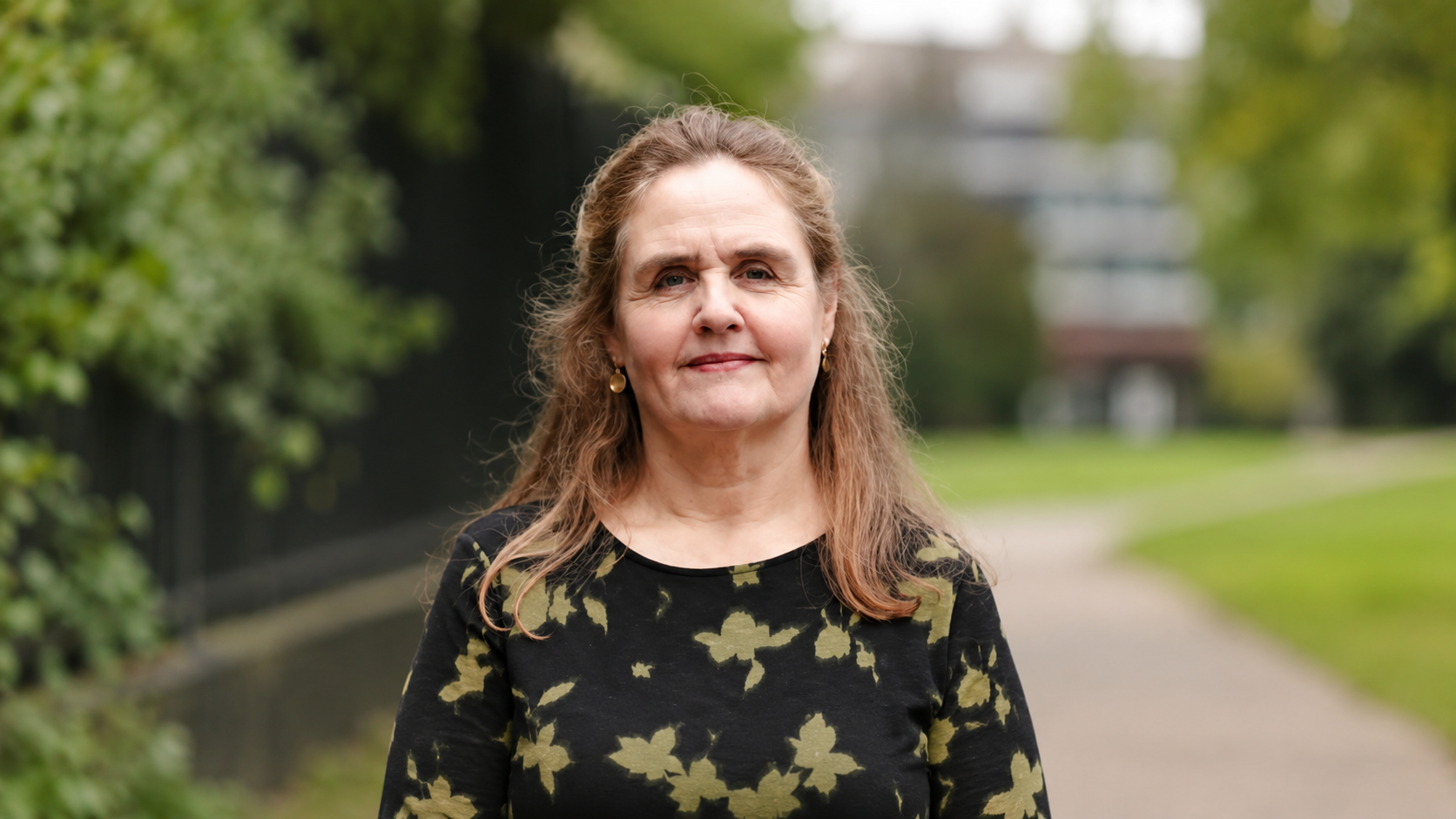
Mary Ann Kenny is an academic who lives in Dublin with her two sons. She is the author of ‘The Episode. A True Story of Loss, Madness and Healing’, published by Penguin in 2025.
Genspect publishes a variety of authors with different perspectives. Any opinions expressed in this article are the author’s and do not necessarily reflect Genspect’s official position. For more on Genspect, visit our FAQs.