



Antidepressants, Atrocity and Accountability
By Carrie Clark
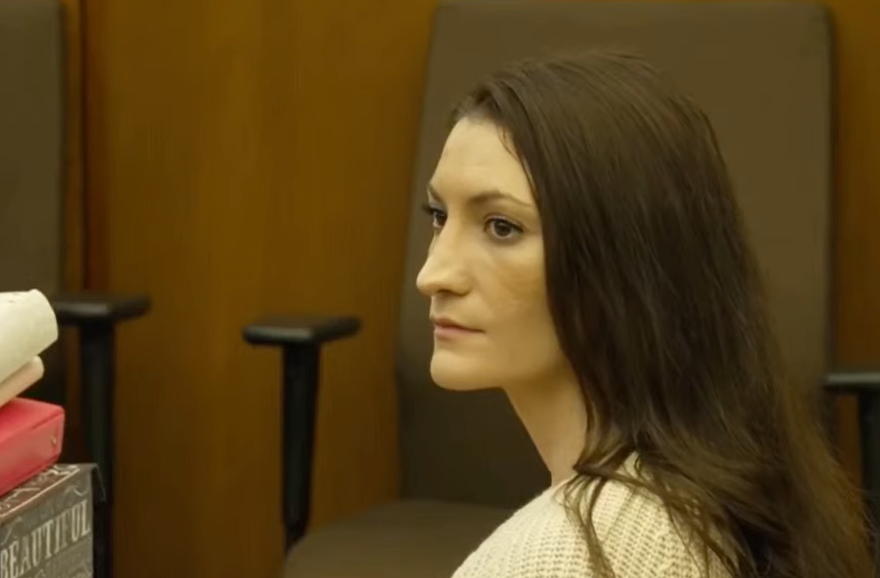
Can ‘insanity’ ever really excuse appalling crimes?
The tragic case of Lindsay Clancy, an American mother who strangled her three children before attempting suicide herself, has triggered a challenging debate about mental illness, psychiatric treatment and criminal accountability.
Clancy does not deny that she killed her children. Her lawyers claim that her doctors failed to recognise that she was suffering from a lethal combination of post-partum mental health problems and adverse reactions to prescribed psychiatric medication. Over four short months, mental health professionals prescribed Clancy no fewer than 13 different psychiatric drugs, recklessly piling on new prescriptions even after Clancy and her family reported that they were making things worse. By all accounts, her actions appear to have been completely out of character. Reports from her friends, family, and colleagues paint a picture of a kind, ordinary person: a loving mother, devoted wife, and trusted friend. If Clancy is successful in pleading diminished capacity, she will be found not guilty by reason of insanity and detained in a mental health hospital until courts and clinicians deem it safe for her to be released. If her insanity plea fails and she is found guilty of the murders, she faces life in prison.
Commentators have broadly adopted one of two positions. On one side are people who believe that Clancy is essentially evil incarnate. This position is exemplified by perennial irritant of the woke left and conservative influencer Matt Walsh, whose view might best be summarised as, “Burn the witch.” He has literally called for Clancy’s execution. On the other side are two groups who support Clancy’s insanity plea, but for different reasons. One group holds that Clancy was rendered helpless by her mental health difficulties and cannot be held responsible for her actions. The other group reaches the same conclusion from a different direction, arguing that Clancy committed the murders because she was in the grip of an adverse reaction to prescribed psychiatric drugs. This position might be distilled down into the phrase, “She knew not what she did.”
I can’t speak to the misdiagnosis of post-partum mental illness, but I am automatically sympathetic to the argument that Clancy was influenced by an adverse reaction to prescribed psychiatric drugs. I have experienced such a reaction myself. Mercifully, I never had the urge to harm others, but I do know what it’s like to live for months on end in a state of chemically induced terror. Nonetheless, I firmly believe that Lindsay Clancy should be imprisoned for murdering her children. I don’t think the insanity defence should apply to crimes of exceptional severity. The most appropriate moniker for my own view might be, “She knew not what she did, but she did in fact do it.”
This view has not made me popular with my colleagues in the prescribed harm community, some of whom have expressed shock at what they perceive as my lack of empathy and compassion for Clancy. Many people feel I should automatically defend her, given my personal experience of how devastating prescribed psychiatric drug harm can be. I’ve even been called ‘barbaric’ for adopting the stance that she should be imprisoned. For me, this debate reveals two very different visions of personal autonomy and accountability.
Medicine Out-of-Control
This is not to say that there isn’t plenty of accountability to go around, or that there are no lessons that ought to be learned from what happened. Supporters of the “She knew not what she did” position argue that Clancy’s doctors should be facing prosecution, and on this point we are in complete agreement. Adele Framer, founder of the Psychotropic Deprescribing Council, has been at pains to point out that there is nothing out of the ordinary about the psychiatric treatment Clancy received. This is not a deviation from an otherwise safe and well-functioning psychiatric system, a case of a few incompetent clinicians delivering inadequate care. The indiscriminate poly-drugging, rapid medication switches and unrecognised adverse drug reactions that plausibly contributed to Clancy’s crime are, sadly, completely standard features of conventional psychiatric practice. The case highlights systemic issues in the mental health system that will continue to generate tragic outcomes for as long as they remain unaddressed.
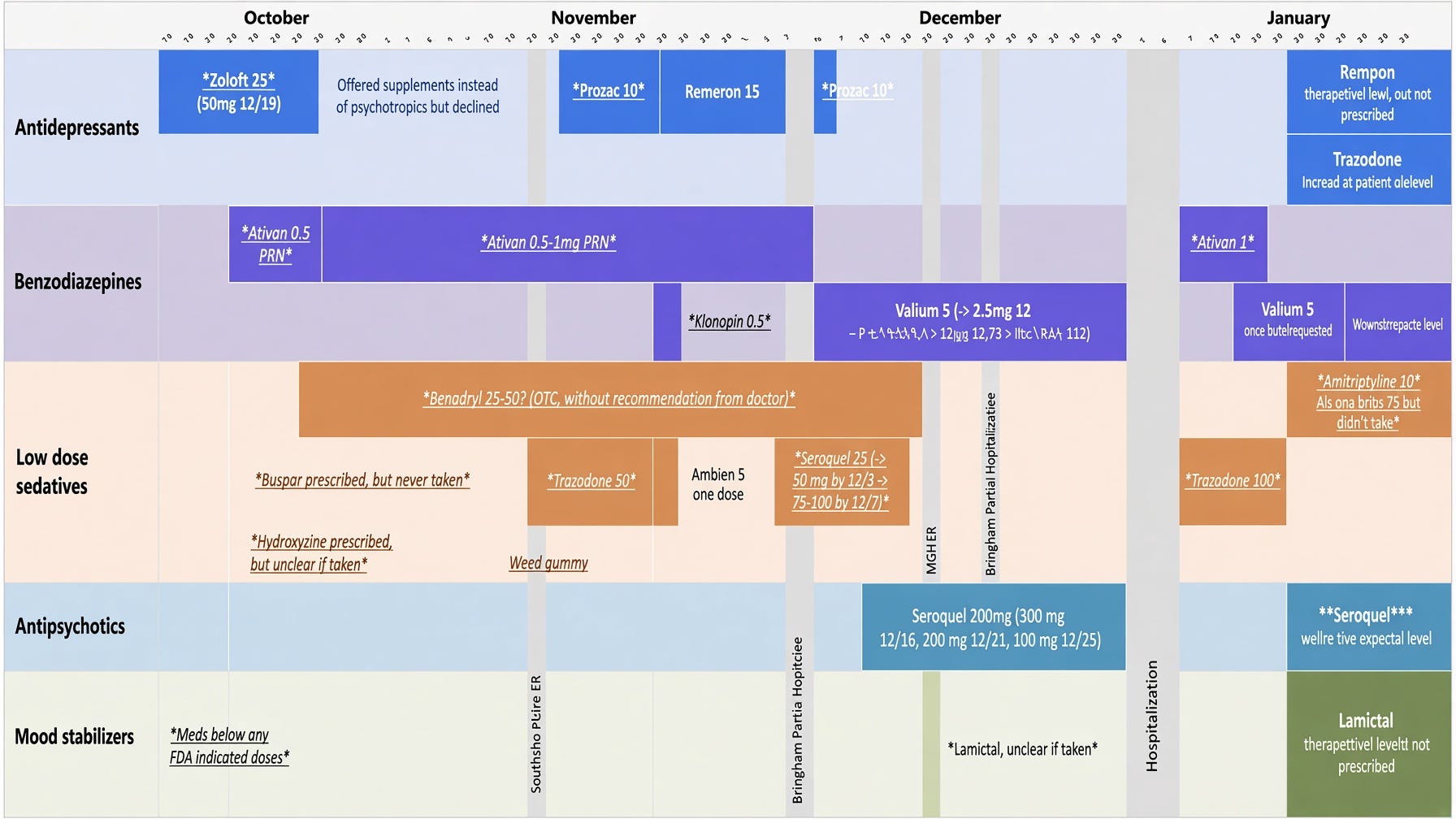
For example, a striking feature of the case is how clearly both Clancy and her family reported that the drugs appeared to be exacerbating her problems, and how consistently these concerns were dismissed out of hand by clinicians. When Lindsay and her husband Patrick reported that the antipsychotic Seroquel had made her feel “10,000 times worse”, she was advised to increase the dose. Clancy developed insomnia immediately after starting Zoloft, a clear sign that she was experiencing an adverse reaction to antidepressant drugs. She was told to stop taking it, but was then prescribed three more antidepressants in a space of just nine days. After starting Remeron, Clancy told her doctor that it had triggered “intrusive thoughts that I never had before”. She said she didn’t like the way it made her feel and wanted to stop taking it. Her doctor diagnosed this as a symptom of ‘anxiety’. Clancy’s reluctance to keep taking a drug that was making her feel bad was documented in her medical record as proof that she lacked ‘insight’ into her mental health condition. She was advised to keep taking the drug.
People unfamiliar with conventional psychiatric practice may be surprised to learn how blithely clinicians dismiss patient reports of adverse drug effects. I know from bitter personal experience how absolutely routine it is for doctors to misdiagnose such effects as worsening mental illness, or to attribute even completely novel symptoms occurring for the first time after drug initiation to ‘paranoia’, ‘anxiety’, or lack of ‘insight’ on the part of the patient. I feel enormous sympathy for Lindsay Clancy. I think the cocktail of psychoactive substances she was advised to take by her doctors almost certainly meant she wasn’t fully in command of her senses when she killed her children. And I still believe she should be imprisoned and held accountable for her crime.
Human Agency
In large part this is because I am immediately suspicious of anything that positions human beings as helpless subjects, passively acted upon by forces beyond their control or comprehension. When it comes to how society responds to appalling acts of violence, I think it matters very little whether those forces are conceptualised as an adverse reaction to psychiatric drugs, the symptoms of putative mental illness, or just plain old-fashioned evil. Tragedies like this are never monocausal, and we will never be in a position to identify precisely how much influence contributory factors like poor mental health or adverse drug reactions actually had on Clancy’s actions. In any event, neither explanation is entirely satisfactory. Many women suffer post-partum mental health difficulties, and many of us have experienced adverse reactions to psychiatric drugs. The vast majority of us do not perpetrate acts of horrifying brutality as a result.
That being so, I think our decisions in cases like this need to be informed by the broader civilizational principles that hold society together. Regardless of motive or mindset, some acts offend human morality so deeply that the logic of justice unravels if we let them pass unpunished. Put simply: for the purposes of criminal justice, it shouldn’t matter why Clancy murdered her children. Only she will ever know what was in her mind on that awful day. All we can do is make a judgement about her actions, about what she actually did. And what she did, by her own admission, was choke the life out of her children one by one. Reckless polypharmacy might have set the scene, but Lindsay Clancy did the deed.
I think some of the eagerness to attribute Clancy’s actions to outside forces is rooted in a primal and very understandable fear. We are reluctant to confront the existence of evil. We want to believe it’s just not possible for good people to do bad things unless they are in the grip of a malign outside influence. Whether it’s mental illness or adverse drug reactions, we reach desperately for an explanation that relieves the human subject of responsibility for their actions. We are too scared to admit that senseless tragedies are sometimes just that: senseless, inexplicable, impenetrable horrors drawn from the darkest parts of human nature. Sometimes all we can do in the face of incomprehensible tragedy is make our peace with never really understanding, while ensuring that no truly evil deed ever goes unpunished.
Carrie Clark writes from a classically liberal perspective about mental health reform, medical scandals, and prescribed psychiatric drug harm. Read more of her work here, and follow her on X.
Sources about the Lindsay Clancy trial
• Full Associated Press live coverage of the trial
• Transcripts of the trial, days 2-12
• Commentary on the trial from critical clinical psychologist, Dr. Roger McFillin:
Genspect publishes a variety of authors with different perspectives. Any opinions expressed in this article are the author’s and do not necessarily reflect Genspect’s official position. For more on Genspect, visit our FAQs.