




What’s Going On Here?
By David Allison
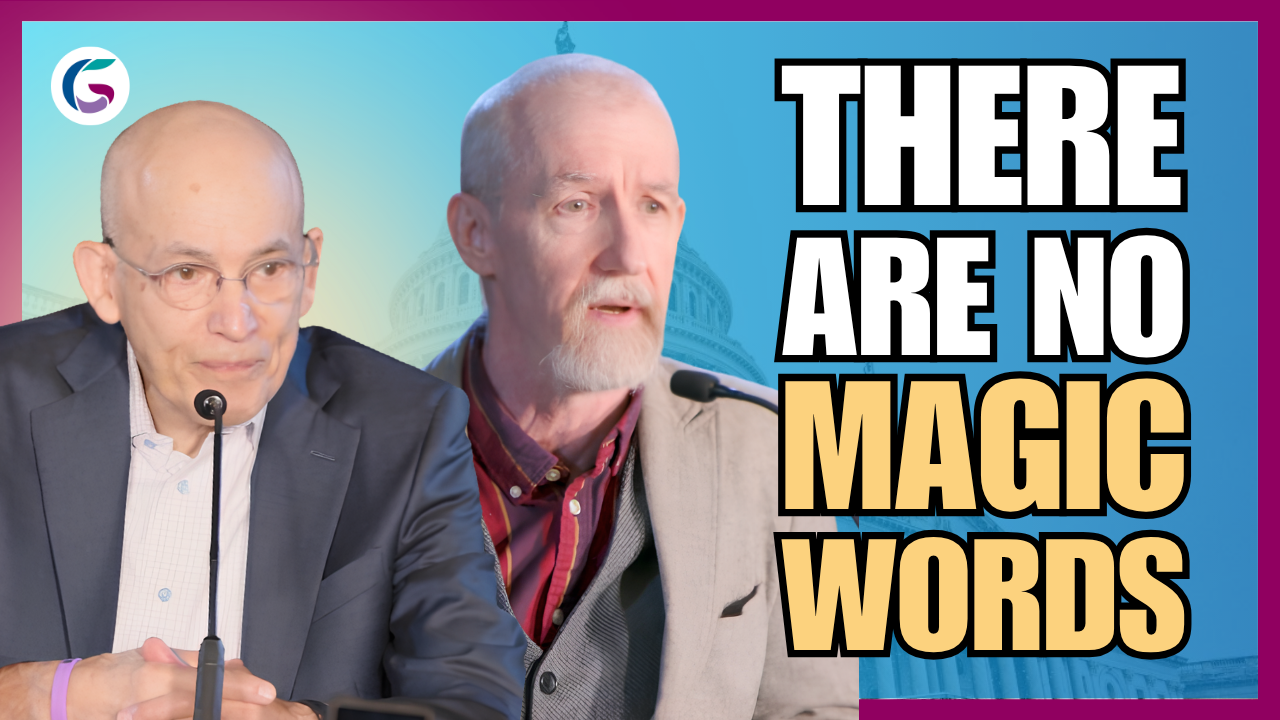
When therapy collapses into affirmation, suffering is ignored: the Psychology Panel from Detrans Awareness Day.
How did the trans phenomenon happen? And how did a lot of therapy get to be as bad as it is? Stella O’Malley discussed the roles of psychotherapy, psychology and psychiatry with panel guests Dr. Stephen Levine, Evelyn Ball and Dr. Brett Alderman at Detrans Awareness Day on March 12 in Washington D.C.
It won’t have escaped anyone’s attention that the trans phenomenon is explosively political. Nor that therapeutic responses to the trans experience are equally contentious.
That said, the politicisation of mental health extends far beyond the transgender issue. Colin Feltham identifies the 2018 Wall Street Journal article ‘Therapy is no longer a politics-free zone’ as “the key moment when the psychotherapy and counselling world departed from its outward political neutrality.” Plausible though this sounds, a strong argument can be made that political neutrality has always been an illusion in the helping professions. In his classic of modern psychiatry, Psychiatry in Dissent, Anthony Clare noted that the debate about the legitimacy of the concept of mental illness itself has often been “fractious and acrimonious”. In his view, social workers tended to adhere to theories of causality rooted in social and economic hardship. Medical personnel, on the other hand, looked to a biological matrix, while clinical psychologists adhered to behaviourist principles. Today’s so-called progressive therapists, it seems, appeal to the minority stress resulting from “the psychosocial stressors associated with having to exist within a cisheteronormative society”. Politics is never far away in the caring professions. As Paul McHugh concludes in his critique of psychiatric responses to traumatic events, the problem arises when the passionate convictions of therapists, that they are “rooting out villains and helping victims of misused power” draw therapists away from their responsibility for establishing clinical truth.
The ‘clinical truth’ can sound daunting. In a psychotherapeutic context, as Stella O’Malley says in this panel discussion, it means asking clients “What’s going on?” and then delving deeper with the question “Now, what’s really going on?”
These were the questions Stephen Levine asked when, on finishing his psychiatric residency in 1973, he encountered rare cases of adult men who wanted to be women. At the time “there was no political issue” and his team simply listened to the patients’ suffering and tried to understand what was behind these men’s new identities. He applied a psychodynamic approach: looking at how the mind produces behaviour and at the thoughts, feelings and experiences that motivated people to act in certain ways. In Stephen Levine’s words, “this is welcoming to the process of understanding the self and others,” and “how a mental health professional can be helpful”.
This way of working entails being alive to and able to face immense agony. Levine talks about being “aware of the suffering inherent” in his patients’ situations as well as of the imminent danger of disaster. Whether a psychodynamic approach is itself a political perspective is irrelevant here: the therapist’s concern is with suffering, not as a social justice abstraction, but in the raw, empathetic encounter with real people.
When the political side really took off in 2013, Levine says, psychotherapy was sidelined. Questioning was frowned upon as gatekeeping. Therapy became an affirmative process that was all about identity as opposed to “lived experience”. And, crucially as Evelyn Ball puts it, “when therapy collapses into affirmation, suffering is ignored”. Affirmation silences curiosity about what suffering and dysregulation mean. You can’t ask “What is really going on here?” Affirmation just closes the door. It says: “Yes, this is who you are. Case closed.” It leaves the depths untouched. Affirmation neither challenges nor builds the strength, maturity, and resilience needed for real growth. It merely goes along with immediate desires. In the Beyond Trans support groups, with which Evelyn Ball and Brett Alderman work, those whodeeply regret their transition describe despair at the lack of care shown by mental health professionals who have been blind to their real traumatic experiences and who have failed “to bring curiosity and courage to the therapeutic relationship”.
Brett Alderman traces the current incarnation of politicised bad therapy back to the so-called “linguistic turn”. This philosophy of language gained new prominence in the late 60s and early 70s in the work of Derrida, Foucault and Richard Rorty and set the stage for Queer theory. Language, according to these theorists, is not used to represent, but to create reality. Everything, as exemplified in the trans discourse, becomes a language game. It’s “amazing to see how people get funnelled into certain ways of understanding their experience based on the language they use,” he says. 20 years ago, it might have been possible to talk about the actual experience of dysphoria. But now a young person may simply say, I am trans, a particular type of person and you have to chip away at a “thick layer of ideology” even to get close to what’s called “lived experience.”
Taken literally, Derrida’s notorious “there is nothing outside the text” negates the reality of embodied experience. Based on her more than 20 years of experience working as an educator with small children (who haven’t read Derrida!), Evelyn Ball observes that many sensory and embodying moments have indeed been removed from childhood experience. It is painfully tragic that children so often now go from sitting in a car, to sitting in classrooms, to sitting on their beds with their devices.
If all is words, and you don’t believe anything is essentially real, it becomes impossible to ask: “What is going on here?” But it becomes very easy to deploy euphemisms that fail to say what is actually happening. Top surgery is one such euphemism that is wielded to avoid the brutal emotional experience of a mastectomy.
Gender medicine and its auxiliary mental health services in their current social justice manifestation are driven by ideology, not by science. The American Psychological Association (APA), Stephen Levine explains, has committed to a treatment approach that is not based on science, that depends on euphemisms and promises that there are no inherent limitations, no maladaptive consequences, no harm to be considered when affirming a trans identity: “I scratched my head. I had spent years caring for people who had clear limitations in the quality of their lives.”
The scientific mindset, according to Steven Pinker, is the search for explanations that “give us the deepest, richest, best-informed understanding of the human condition”. In contrast to this, the affirmative belief in the gendered soul resembles those discredited doctrines “masquerading as scientific truths” that Anthony Clare points out psychiatry has recurrently succumbed to and that each in their time commanded immense intellectual status: astrology, phrenology, mesmerism, galvanism, hydrotherapy.
WPATH have influenced the APA and others to see the trans issue as one of language and identity. For the members of the panel in this fascinating discussion, on the contrary, there are no magic words. Gender-questioning young people deserve curious and challenging explorative therapy.
Genspect publishes a variety of authors with different perspectives. Any opinions expressed in this article are the author’s and do not necessarily reflect Genspect’s official position. For more on Genspect, visit our FAQs.