




Recovery From Transition: Detransing Our Culture
By Mia Hughes
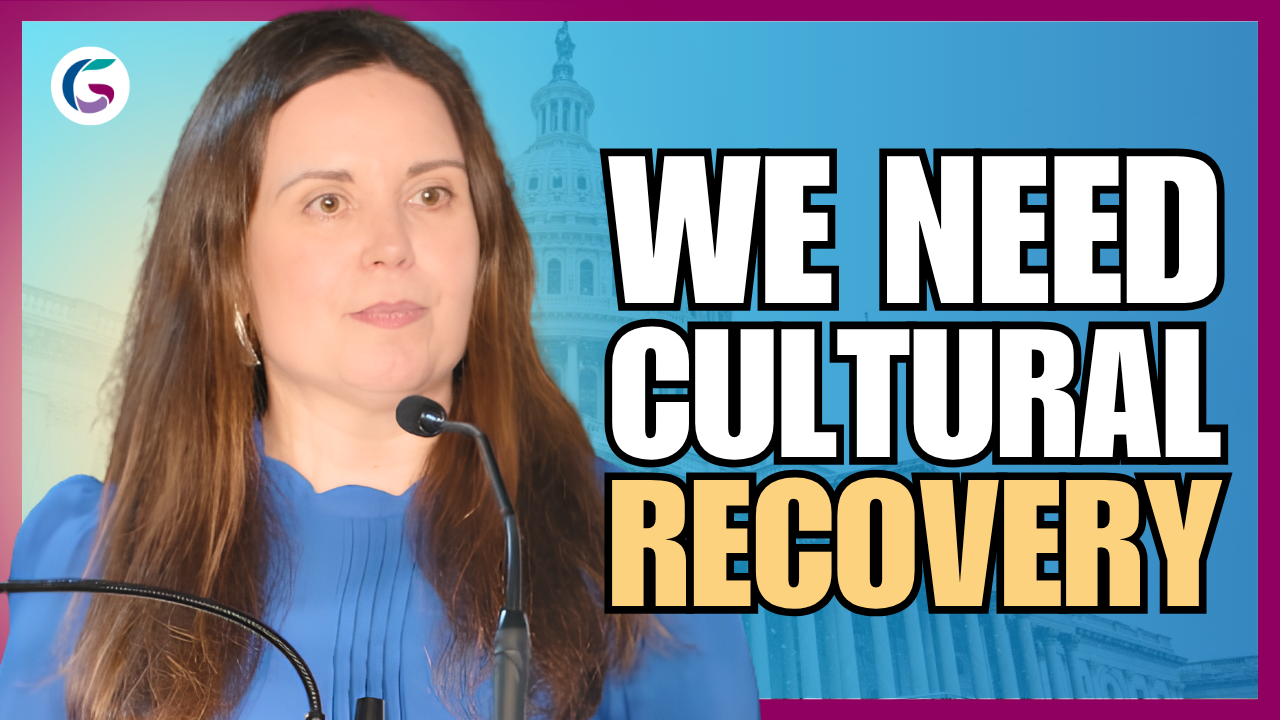
Mia Hughes’ speech at Detrans Awareness Day 2026
The Panic
The subject of my talk today is recovery from transition. And I’m going to begin by taking you all back to an unlikely place: the city of Columbus, Ohio, one hundred and thirteen years ago.
In its most famous telling, the story begins at around noon on March 12, 1913, with residents going about life as normal, the High Street abuzz with activity.
When, all of a sudden, a man started running. No one knows why. But his action triggered a panic. One by one, others started running too, and before long, everyone was in a state of frenzy, fleeing an imaginary danger.
They all believed the local dam had burst. “GO EAST!” everyone cried.
But of course, the dam had not burst. Instead, a false belief triggered an entire population to temporarily take leave of its senses.
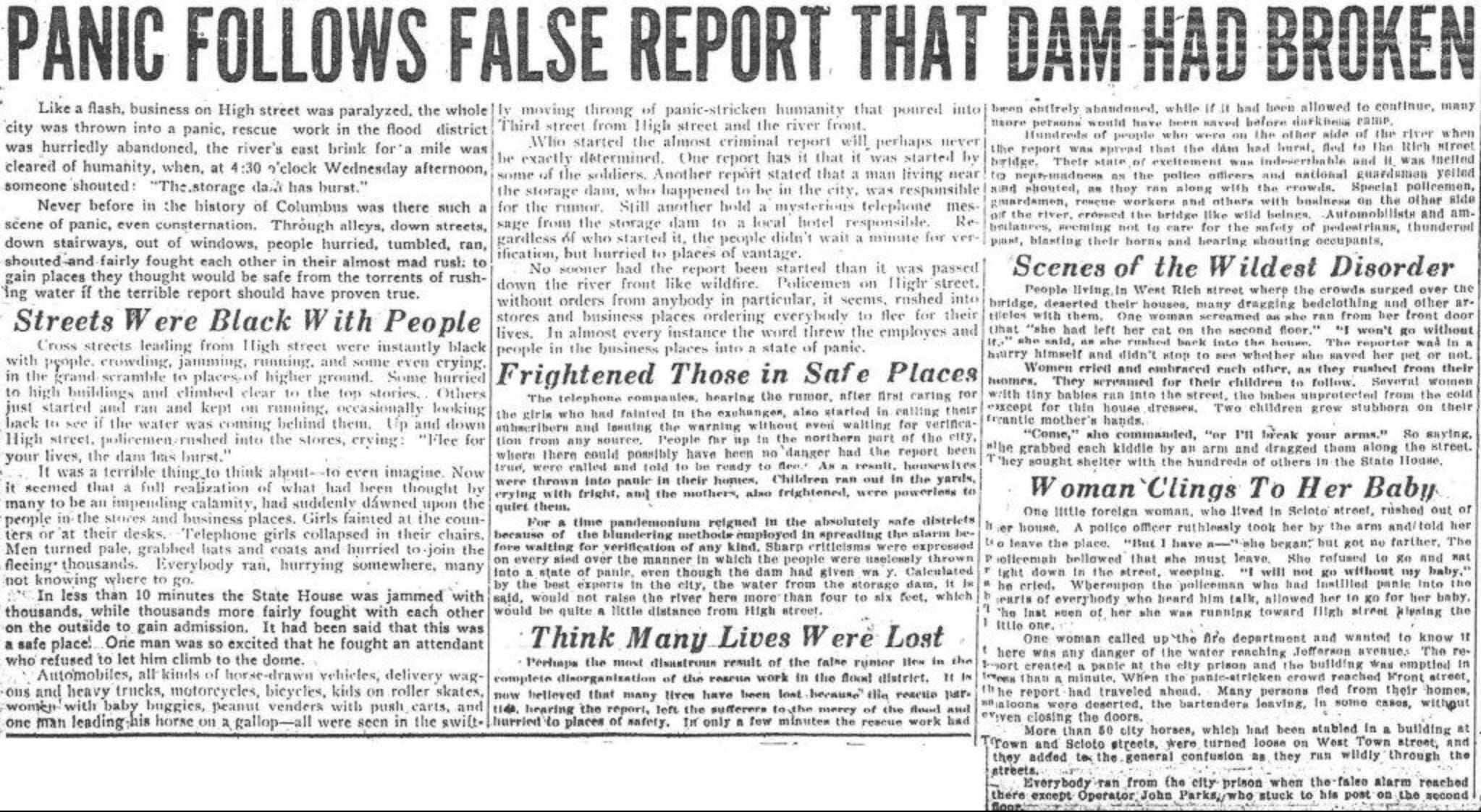
And that is exactly what has happened in our era — in which entire nations have abandoned reason and stampeded in the wrong direction in the name of a false belief.
And many of the innocent people injured in that stampede are sitting right before me today in this room to mark Detrans Awareness Day.
The Modern Stampede
Until the 2010s, Western society too was going about its business as normal.
Everyone knew what a woman was. We all understood that adolescence is a time of identity development and great change. And it was a widely accepted fact that wanting healthy body parts amputated was a sign that a person needed serious psychological support.
Then suddenly, a new civil rights movement exploded onto the scene, and pandemonium broke out.
This movement was built upon the idea that being transgender is a healthy variation of human existence that somehow, paradoxically, requires drastic hormonal and surgical interventions.
There is obviously no truth to this claim. It is the product of decades of political advocacy in which activists created a whole new reality — one where a complex psychiatric condition is reframed as an innate identity, and guardrails around drastic life-altering medical treatments are portrayed as discrimination.
Anyone who stops to think about that, even for a moment, should be able to see how dangerous it is.
The trouble is that when the idea first appeared, very few people stopped to think.
Instead, like the residents of Columbus, good decent people panicked and stampeded in the wrong direction — irrationally throwing their support behind doctors turning perfectly healthy people into lifelong medical patients.
“TRANS WOMEN ARE WOMEN,” they cried. “PROTECT TRANS KIDS.”
And so the belief that trans is a healthy innate trait took on a life of its own, leaping from mind to mind, becoming all-consuming in those most susceptible.
Psychiatry has a name for this phenomenon: extreme overvalued beliefs — convictions that grow stronger the more a culture reinforces them; that can come to dominate minds if no countervailing perspectives are present.
The trans overvalued belief propels some to pursue drastic medical interventions. Others to perform those interventions. And still others to apply the label “trans” to children long before they could possibly comprehend what that means.
Two Types of Recovery
And this brings me to the central point of my talk today.
Because this madness is cultural, recovery from transition has two dimensions: Individual recovery and cultural recovery.
Because while detransition takes place in the life of the individual, the belief that led so many towards medical harm did not arise in the individual mind. It was absorbed from the surrounding culture — from institutions, from media, from schools, from doctors, from activists, and from the internet.
Meaning that if we truly want to support detransitioners, recovery must happen at both levels.
First, individual recovery.
Now as so many of you in this room already know, medical detransition is limited or impossible. Hormones change bodies. Surgeries cannot simply be undone. The physical consequences of these treatments are lifelong.
But psychological detransition is possible. And ideological detransition is possible.
What that means is letting go of the belief.
Letting go of the belief that medically altering the body is the path to authenticity and happiness.
For some, that means letting go of the ideology that told you you were born in the wrong body. For others, it means recognising that living as the opposite sex will never deliver the happiness that was promised.
Either way, it means letting go of the belief that you must spend the rest of your life fighting reality.
For some people, this realization comes suddenly. For others, it unfolds gradually.
Stella has a beautiful analogy about psychological detransition being like adding pebbles to a bucket. One by one, small pebbles are added — each representing doubts long pushed away, simple truths long ignored, alternative explanations that begin to make more sense than the trans identity ever could.
Slowly, the bucket fills. Until eventually the accumulated weight of those pebbles outweighs the hold the belief had for so long.
And when that belief finally loosens its grip, many of you in this room have told me something remarkable happens.
There is immense relief.
The exhausting effort of constantly trying to bend reality disappears. In its place there is acceptance, a deep understanding of the self, and reconciliation with the body you were born with — the only one you will ever have.
But letting go of the belief is not easy. Because it requires admitting to yourself that you made a terrible mistake. It requires confronting sunk costs, losing friendships, and being expelled from once-welcoming communities.
And crucially, it means doing all of that while the belief itself is still being celebrated all around you. It means letting go of this dangerous belief in a culture that condemns anyone who dares question it.
Which brings me to the second kind of recovery.
Cultural Recovery
For ideas, behaviours, and emotions to spread rapidly through a population, conditions must be just right.
The dam-burst panic occurred during the time of the Great Flood. Residents of Ohio were already in a heightened state of anxiety. Rivers were rising. Rumours were spreading. Fear was already in the air.
So when one man started running, the entire population was primed to follow. It didn’t matter that there was no wall of water bearing down on the city. The behaviour was entirely irrational.
And the same was true when trans activism — and the idea that trans is a healthy innate trait requiring medicalization — first appeared. Cultural conditions were also just right.
Gay rights was drawing to a close, and it was clear which side held the moral high ground. People were primed to fear being seen as bigots.
So when the next rainbow-hued movement arrived — one that on the surface looked remarkably similar to its predecessor — people quickly jostled for their place on the right side of history.
It didn’t matter that the belief was incoherent.
It didn’t matter that it required discarding all existing knowledge about child and adolescent development.
It didn’t matter that it encouraged gender clinics to “trans away the gay.”
The fear of being called “transphobic” overruled logic and reason. And in the stampede that followed, innocent people were trampled.
The New Contagion
But now a new idea is beginning to spread, and it is our responsibility to cultivate the perfect cultural conditions in which it can thrive.
Unlike those earlier contagions, this one is not driven by fear. It is driven by courage. It is the idea that there is life after transition. Life after letting go of the belief.
Every detransitioner who speaks publicly gives this idea strength. Your stories become templates that guide others towards letting the belief go.
In the same way that thousands of young people, including many in this room, once encountered someone just like them online, announcing, “I’m trans” — and soon adopted the label themselves. Now those same people are encountering detransitioners. People who have the courage to say: I once believed I was trans, but now I realise it was all a lie.
All of you in this room who were harmed by this medical scandal are on your own individual journeys of recovery. But by speaking publicly and telling your stories, you are also doing something much larger. You are helping spread the idea that recovery is possible.
You are the role models your younger selves so desperately needed — but that society failed to provide.
In a tragic symmetry, the same social mechanism that once drew people in is now working in reverse — leading people away from further medical harm and towards self-acceptance and truth.
The Responsibility
But the responsibility for fueling this cultural recovery does not fall on the shoulders of detransitioners alone. It falls on all of us. Because we cannot truly support detransitioners while continuing to uphold the very belief that led them into harm in the first place.
True support begins with society-wide ideological detransition. Until then, the waves of detransitioners will just keep on coming.
We must stop pretending that a new type of human being has been discovered — that a serious psychiatric disorder is an innate healthy trait.
We must stop pretending that amputating healthy body parts is medicine, for anyone of any age.
And we must stop pretending that becoming a lifelong medical patient is a human right — something to be encouraged and celebrated.
Abandoning the Belief
But as history shows us, it’s hard for people to let go of false beliefs.
At the end of the dam-burst panic, residents of Columbus were left in a state of bewilderment. Some were up trees. Others had climbed to high ground. They simply could not let go of the belief that the dam had burst. It took militiamen riding through the streets in lorries, shouting through megaphones that the dam had not broken!
That is now the responsibility of everyone today who knows the truth about this medical scandal. Because our culture exists in a similar state of befuddlement.
Nations are banning these treatments for minors, yet they remain available on demand for adults — as if something magical happens at the stroke of midnight when a young person turns eighteen.
There are constant calls for better quality evidence — yet producing that evidence requires subjecting even more healthy people to those same interventions that have already been shown to cause so much harm.
All this confusion stems from one simple problem: our culture refuses to let go of the belief itself.
So this is not the time to be timid.
This is the time to pull out the megaphones.
The time to say plainly that the entire field of gender medicine is built upon a lie — that people who fixate on these medical interventions as the road to happiness do not need scalpels and hormones. They need compassionate psychotherapeutic care that guides them towards a less destructive path.
How It Ends
In Columbus, when the panic had died down and people had returned sheepishly to their homes and offices, residents minimized the distances they had run or concocted various reasons for running.
Then, the next day, the city went about its business as if nothing had happened. But no one saw the funny side. It wasn’t until years later that anyone dared treat the breaking of the dam lightly.
When people finally understand that trans was never an innate identity but always a psychiatric disorder — that it was a false belief that led vulnerable people towards medical harm when what they really needed was support and time — something very similar will happen.
People will try to minimize what happened here. Some will say they always had doubts. Others will claim they never believed any of it.
But many of the people in this room cannot pretend it never happened. And so those who inflicted the harm should not be allowed to either.
Recovery is possible — both for individuals and for society. But this must never be treated lightly. And there will certainly never be any jokes.
Instead, we must remember what happened. Learn from it. And remain forever on guard against the devastation our capacity for collective madness can unleash.
Mia Hughes is the author of The WPATH Files and the director of Genspect Canada.