




Sex and Gender in New Zealand Politics: 2025 Year in Review
By Genspect
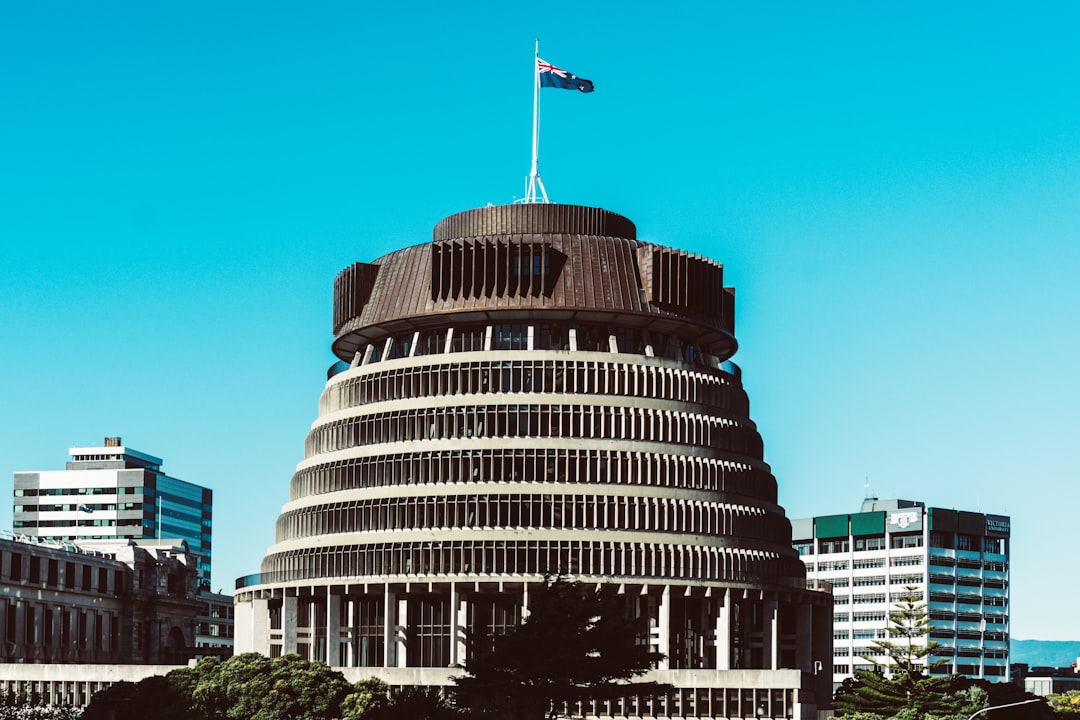
In April of 2024, in our article, “New Zealand Has a New Government. What Does this Mean for Sex and Gender?”, we laid out our analysis of the state of sex and gender under the newly elected coalition government made up of the National Party, ACT NZ Party, a libertarian party, and the nationalist New Zealand First Party. Now here we are at the end of 2025…
Background – or How We Got Here
To set the scene, it is worth highlighting again the damage the Labour Party under Prime Minister Jacinda Ardern did to the rights of women and girls and the safeguarding of children in New Zealand. Under the Labour Government, unelected representatives behind the scenes in the civil service quietly made changes and effectively removed women’s language. The word ‘woman’ was quietly dropped out of a range of government ministries, NGO policy documents, and women’s health, including maternity services. The most damaging changes to law were Sex Self-ID, in the form of the Births, Deaths, Marriages, and Relationships Registration Bill (BDMRR), and the bill to ban ‘conversion therapy’, the Conversion Practices Prohibition Legislation Bill.
Public concerns about these Bills were arrogantly dismissed by the Parliamentary Select Committees, who mocked submitters and accused some of transphobia, with the most vociferous hostility reserved for concerned sex-realist women submitters, with women Labour MPs and one prominent Māori woman Green MP actually mocking their verbal presentations. The Sex Self-ID law was passed unanimously, with no opposition from any party. The only hope came from the vote on the Conversion Practices Prohibition Legislation Bill, in which eight National MPs voted against it, and 23 of National’s MPs exercised their conscience votes and abstained. At the time, it seemed that most National MPs were not enthusiastic supporters of this Bill, which gave some hope that a National Government would reverse some of the damage once it came into power.
Where We Are in December 2025: An Overview
Puberty blockers
On November 21st, 2024, after a very long wait, the Ministry of Health finally published its evidence brief on puberty blockers. They opened a consultation on the use of puberty blockers after the release, which closed in January 2025, which resulted in 7103 online submission form responses and 2768 email submissions. A “sensitive” document was then released outlining four policy options ranging from the status quo to new primary legislation. The evidence brief confirmed serious limitations in the quality of evidence for both the benefits and risks (or lack thereof) of using puberty blockers. Unsurprisingly, it was attacked by transactivist groups such as Gender Minorities and the Professional Association for Transgender Health (PATHA). A position statement was released at the same time as the evidence brief, but this was superseded in December 2025 by the Medicines (Restriction on Prescribing Gonadotropin-releasing Hormone Analogues) Amendment Regulations 2025, which were set to take effect on Friday, 19th December.
Amongst the organisations protesting these new regulatory protections for children were the Human Rights Commission, which stated this was a “serious infringement on human rights and medical autonomy”. PATHA appealed for an urgent injunction against the Minister of Health, arguing that the process used to implement the ban was potentially unlawful. Justice Wilkinson-Smith accepted this argument for interim relief, and there will now be a full judicial review “heard with all possible urgency” sometime in 2026. Judge Wilkinson Smith made a declaration that the Crown should take no steps to enforce the puberty blocker regulations pending the outcome of the judicial review.
Relationship and Sexuality Education (RSE) in schools
National MP Erica Stanford, who promised she would address the RSE before the 2023 election, announced the removal and replacement of the ideological gender, sexuality, and relationship-based education guidelines as Minister of Education. The new RSE draft framework was open for consultation until April 2025, and the group Resist Gender Education (RGE), formed in 2021 to advocate for scientifically accurate and age-appropriate relationships and sexuality education in NZ schools, gave the new curriculum, which has had all gender ideology removed, an A-grade.
The new curriculum is out for consultation until January 14th, 2026. In their submission, RGE is suggesting a national, standard workbook for RSE be produced and distributed to all schools. Hence, there is uniformity in lesson content across the country, and parents must retain the right to withdraw their child from the lessons. This is important because, without it, activist teachers would still have the opportunity to pressure a school into reinstating gender ideology. Meanwhile, the Minister instructed schools to revert to the older guidelines, free of gender ideology, while this consultation is in process.
Genspect NZ is aware of schools that are ignoring this directive from the Minister of Education and continuing to teach the Navigating the Journey curriculum, written by Sexual Wellbeing Aotearoa, which includes gender ideology and misinformation, including telling children that girls are not the only ones who have menstrual periods.
Protection for women and girls
1.Safe single sex spaces
Within the Government Coalition, NZ First appears to be the only political party committed to protecting the safety of women and girls. Proposed legislation, the “Definitions of Woman (and Man) Amendment Bill, was introduced as a Member’s Bill in April 2025, and aims to provide clarity and consistency in NZ law by defining “woman” as “an adult human biological female” and “man” as “an adult human biological male” in the Legislation Act 2019. NZ First also introduced a Members’ Bill in May 2024, the ‘Fair Access to Bathrooms Bill’, which would require all new non-domestic publicly accessible buildings to provide separate, clearly demarcated, unisex, and single sex bathrooms. Meanwhile, in the Capital City of Wellington, the newly elected Mayor and ex-MP Andrew Little (who, as Minister of Health under the Labour Government, tried to radically reform the whole NZ health system during the peak COVID-19 pandemic) is pushing for a Rainbow Action Plan. This plan proposes that all toilets and changing rooms in new facilities become ‘all gender spaces’ and the phasing out of single sex options.
2. Lesbian Action for Visibility in Aotearoa (LAVA) versus Wellington Pride
Members of LAVA, Hilary Oxley and Margaret Curnow, brought a claim to the New Zealand Human Rights Review Tribunal after a booking for a stall at the annual Out in the City (OITC) fair in Wellington was cancelled after being accepted. The claim is that Pride was offering a service in providing stalls at the fair and that they unlawfully discriminated against LAVA because of LAVA’s political opinions about trans issues and women’s rights. This is because of LAVA’s views that sex and sexual orientation exclude trans women from being women and lesbians.
The NZ Human Rights Act protects lesbians as same sex attracted women from discrimination, and protects their political beliefs. The case hearing started in July 2025, and because Wellington Pride called 25 fact and expert witnesses, it was scheduled to be heard over three months, with hearings every four weeks. It should be noted that Pride was represented pro bono, with six lawyers attending. LAVA, which had to crowdfund for costs, had one lawyer and was seriously disadvantaged in multiple ways. Witnesses called for LAVA included Dr Emma Hilton and Professor Dianna Kenny. After a LAVA supporter’s harmless comment on social media, the Human Rights Tribunal issued a strict order prohibiting LAVA from posting anything about the case until final submissions were made in November. Each day in court, the LAVA women had to listen to themselves being described as hateful and abusive and listen to witnesses for Pride make statements such as ‘biological sex as a term is redundant’, ‘the sex binary masquerades as a scientific legitimacy’, and ‘eggs and sperm are not the only gametes that exist’. When the suppression order was issued at Pride’s request, it banned any member of the public from publishing anything about the case. It further prohibited anyone other than an accredited journalist from taking notes or recording the proceedings.
Despite this being the most significant discrimination case for NZ, only one journalist attended on one day of the hearings. The Human Rights Review Tribunal also refused permission for two well-established journalists, Jenny Ruth and Helen Joyce (who was touring NZ at the time), to be counted as accredited journalists. On the 4th and 5th of November, closing submissions were made, and now we await the case outcome.
3. Men in women’s prisons
New Zealand has a problem with trans-identified men being housed in the women’s estate. In July 2024, the women’s rights advocacy group Speak Up for Women (SUFW) submitted a request to the Department of Corrections under the Official Information Act 1982 to enquire about the number of trans identifying males in custody, and how many were housed in a female corrections facility. SUFW also requested the numbers of those who were sentenced or on remand for crimes involving sexual assault.
The response from Corrections NZ stated that an average of 86 trans-identifying males had served a custodial sentence or had been remanded in custody each year for the past five years, and approximately 14% of the sentenced offenders were charged with (on remand) or convicted for sexual assault. As described in the SUFW media release, the data showed that male individuals, regardless of how they identify, had offending patterns similar to those of other males. No updated data on trans identified men in women’s prisons is available. Corrections NZ has a support plan for trans prisoners that states they must be provided with access to all items required to maintain the appearance of their gender identity, and these items may include padded bras, tape for tucking, and specialty underwear.
4. Language
As previously mentioned, under the Labour Government, women’s language was stealthily removed from policy documents across government departments, including health, without consultation or impact assessment. When the first-ever NZ Women’s Health Strategy was released, it was initially designed to address the continuing health inequities for women, but it ended up using confusing ‘inclusive’ language that included men who identify as women. The Government Ministries adopted the Public Service Commission’s Rainbow Inclusive Language Guide. Now, in 2025, despite clear direction from the Associate Minister of Health to Health New Zealand to restore women’s language, very little has changed in the Ministry of Health and Health NZ’s public health messaging, policies, and documents – the Ministry is ignoring the Minister’s direction.
Health New Zealand websites and documents continue to confuse public health messaging. ‘Pregnant people’, ‘people giving birth’, ‘breastfeeding parents’, ‘chest feeding’, ‘those who have a cervix’, ‘most people who have a miscarriage’, free abortion services to any ‘pregnant person’, are the terms being used instead of ‘pregnant women’ across a range of public information websites. On one Health NZ public health webpage designed to inform families about how to support a pregnant woman in the family (the Māori word for family is whānau), the word woman is not used at all, and to manage this omission, the document refers to your “pregnant whānau member” all the way through.
After a few years of protest from midwives, women and their supporters, a petition, and complaints to the Parliamentary Regulations Committee, the NZ Midwifery Council Scope of Practice (SOP) for Midwives – a regulatory document for public safety – has finally and reluctantly in 2025 added the word ‘woman’ back into the SOP but added ‘and gender diverse people’ – effectively and confusingly adding the needs of men to a midwife’s responsibilities of care and expertise in a legal regulatory document that comes into effect in February 2026. Protest continues.
Stats NZ and the capture of the NZ census
After seemingly ignoring the debacle of a census in the UK in 2023, Stats NZ decided to continue the misleading theme of conflating sex and gender in the census, legitimising ‘gender identity’ in data, and telling the NZ population that sex can change over a lifetime. As described in an excellent Substack article that covers the Stats NZ 2023 census story, the “flaws of the UK’s sex and gender data collection, as beautifully illustrated by the England and Wales census, have been met by Stats NZ and raised some concerns”.
In late 2025, Stats NZ undertook a consultation on a proposed data collection approach and content for the census. They plan to ‘modernise’ the next census, and propose collecting and producing information about sexual identity, variations of sex characteristics, and the rainbow/LGBTIQ+ population. Unfortunately, ideological language, including ‘cisgender,’ is used throughout the consultation, and the terms sex and gender continue to be confusingly conflated.
The Law Commission – la Tangata: A review of the protections in the Human Rights Act 1993 for people who are transgender, people who are non-binary and people with innate variations of sex characteristics
In June 2024, the NZ Law Commission undertook a consultation on protections under the Human Rights Act through an Issues Paper. In 2025, a 200-page report riddled with ideological language like ‘sex assigned at birth,’ ‘cisgender,’ and ‘gender affirmation’ was released. It recommended changes to most of the existing exceptions that currently allow people to be treated differently based on their sex, such as in sports, changing facilities and toilets, or shared accommodation, prisons, and women’s refuges.
There are 13 prohibited grounds for discrimination in section 21 of the Human Rights Act: sex, marital status, religious belief, ethical belief, colour, race, ethnic or national origin, disability, age, political opinion, employment status, family status, and sexual orientation. The Law Commission’s recommendations, if accepted, would amend the current Human Rights Act by removing sex-based protections for women and including gender identity and expression.
Genspect NZ made a submission in September 2025 recommending to Justice Minister Paul Goldsmith that the report should be set aside because prioritising gender identity over biological sex would embed rights to “gender affirmative” treatment that fails to uphold the longstanding bioethical principle of ‘first, do no harm”. If the term “sex” is not defined as “biological sex” (an objective fact) but is allowed to incorporate “gender identity” (a subjective belief), neither women (nor men) can be accurately counted in statistics nor identified in health data, nor be provided with services that meet their need.
As the current protections in the NZ Human Rights Act already protect all New Zealanders, none of these proposed amendments are necessary. This process was unnecessary and driven by ideology, transactivist influence, and flawed survey data without scientific rigour, conducted by an activist lobby group.
The Cabinet of the Coalition Government will decide in 2026 whether to act on the Law Commission’s recommendations.
Here’s to a Happy New Year 2026!