




Tough Election Questions from a Transitioned Irish Female
By Luke O'Reilly Kane
In 2015, when I was in my fourth year of secondary school, I began questioning the implications of legally changing my gender. Now, as an adult, I want parents across Ireland to understand the legal and practical challenges I face, particularly in healthcare and employment, due to the Gender Recognition Act 2015.
The Dilemma
After legally changing my gender to male, my biological sex remains female. I’ve been seeking clarity on whether this affects my rights to same-sex healthcare and employment protections. Despite reaching out to organisations like the Transgender Equality Network Ireland (TENI), BeLonG To Youth Services, the Law and Disability Office, ADHD Ireland, AsIAm, Epilepsy Ireland, the Ombudsman for Children’s Office, Citizens Information, the Gender Identity Clinic in Loughlinstown, my GP, and An Garda Síochána, I’ve struggled to get clear answers.
In 2016, I attended the Gender Recognition Bill Review at the Ombudsman for Children’s Office to voice my concerns, but the issues remain unresolved.
Healthcare Concerns
I live with epilepsy, which raises serious questions about my medical care. If I’m unconscious and medical staff rely on my legal gender (male), will they provide treatment suited to my biological sex (female)? In 2023, I was hospitalised and given medical equipment unsuitable for my body because my records listed me as male. During the same hospital stay, a urine sample led to a misdiagnosis because the doctor didn’t review my file. I was tested for gallstones, a condition less likely in women, particularly during menstruation. Only after I clarified my biological sex did the doctor adjust the diagnosis, as my results were typical for a woman.
While seizure treatment protocols are the same for males and females, hormone therapy can make it harder for medical staff to determine a patient’s biological sex. This increases the risk of incorrect treatment. Additionally, healthcare workers face a legal dilemma: if they treat me as female based on my biology, are they breaking the law by not adhering to my legal gender? Conversely, if I’m harmed because they treat me as male, could I take legal action against them for following the law?
I wrote to the Minister for Health, who responded that this issue falls outside her remit and advised contacting the Health Service Executive (HSE). I replied that HSE staff are bound by law, and if the law creates problems, it’s the Minister’s responsibility to address it.
Employment Rights
Under the Employment Equality Acts, employers cannot discriminate based on gender. As someone who presents as male, I wonder about the implications if I pursued a career in nursing, particularly in roles involving intimate care. Would patients, parents, or children have a right to know my biological sex? Could failing to disclose this breach their rights? Does my employer need to know my biological sex, and where do my privacy rights begin and end? Could an employer face legal consequences for hiring a transgender person without disclosing their biological sex, and would this conflict with my rights as a transgender person?
Garda vetting does not disclose biological sex to employers. Should I be required to disclose my biological sex to avoid potential issues with informed consent, particularly in sensitive roles? When I was younger, I would have preferred a biologically female nurse or carer for certain types of care, and I believe many women and girls feel the same. I’ve informed my employer of my biological sex, but this isn’t a legal obligation, and not all transgender individuals may choose to do so.
Implications of the Gender Recognition Act
When applying for a Gender Recognition Certificate, I declared, “I, Luke O’Reilly Kane, solemnly declare that I will live and be treated as a male for the rest of my life.” Does this mean I’ve forfeited sex-based rights, such as access to female spaces?
Ten years on, I am debating revoking my certificate, however, after reading through the document. I don’t understand the point. Without these questions answered, can I use male or female spaces? What provisions will revoking give me?
Concerns for People with Disabilities
The Gender Recognition Act creates challenges for people with disabilities. I experience symptoms of autism typical for females, but diagnostic criteria differ between males and females to ensure accurate identification, particularly for girls who are often underdiagnosed. Because I’m legally male, I may be assessed using male criteria, potentially denying me access to appropriate healthcare and support. This feels like discrimination against transgender individuals with disabilities.
The Social Democrats’ recent push to include non-binary genders in Irish law—through parliamentary questions and an ongoing interdepartmental working group assessing impacts—raises further questions. What will this mean for transitioners who are unconscious in A&E? If a patient’s legal gender is non-binary, how will emergency staff determine biological sex-based treatments without clear protocols?
Further, if this comes into law, psychologists and psychotherapists could be sued for not affirming a person’s preferred gender, according to the proposed ban. This is particularly concerning for conditions like autism and ADHD, where symptoms differ by sex, and where exploring gender identity through therapy might be misclassified as “conversion practices.”
Broader Implications
I may be among the first to navigate these legal complexities through school and into the workforce, but I can assure you I will not be the last. Relating to these unresolved questions, the Prohibition of Conversion Therapies Bill 2018 lapsed when the Oireachtas dissolved in 2020. After the election, the government pledged to introduce a new ban. In 2023, Minister Roderic O’Gorman reaffirmed that commitment, but by July 2024, the legislation still hadn’t been finalized. It most likely will be soon, considering the EU has urged hate speech legislation to come into Ireland within the next two months—or face legal action. As someone who receives support through Genspect—a service I find valuable and life-affirming—I worry: will the therapy I choose be criminalised under this proposed law? Will my path to self-understanding be respected or suppressed?
It is common knowledge that females go undiagnosed with autism and ADHD due to differences in symptoms—autism, for instance, has tailored diagnostic criteria for girls and boys to ensure girls don’t go overlooked. Since I declared I am “to be treated as male for the rest of my life,” is there a possibility of me not being assisted accordingly? As I still have female-typical symptoms, but am legally to be treated as male, if this bill comes through, am I neurologically a male or a female? Will there be precautions in place for psychologists that may be sued for not treating the biological sex of the individual? My TD and Prime Time stated, “This will be unlikely as the individual will want a diagnosis—who will sue them?” But without clarity, how can we trust the system?
I was astonished to see my concerns raised be ignored by organisations like the Ombudsman for Children’s Office, BeLonG To, TENI, and all our ministers. Transitioned individuals with disabilities, like me, are left in a legal grey area with limited support.
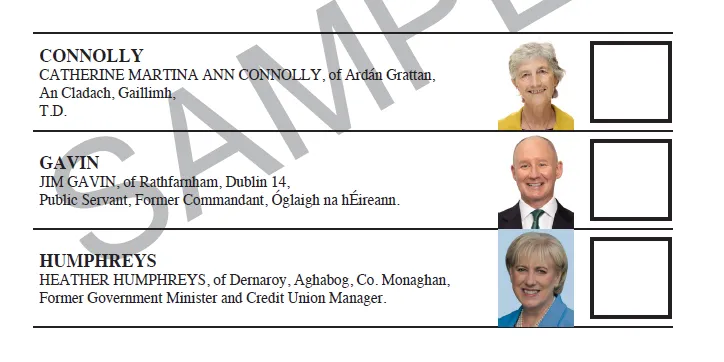
Catherine Connolly seems like a very kind, thoughtful woman and says she’s “a president for all,” but I cannot support parties backing her, including Minister Roderic O’Gorman of the Green Party, as their policies hinder my access to safe healthcare and clear employment rights. I note Minister Heather Humphreys’ recent comments distinguishing between transgender women and biological women, but as a former Minister for Social Protection, her timing—potentially tied to a non-political role—raises questions. I urge parents to consider these challenges and advocate for clearer laws to protect transitioned individuals, particularly those with disabilities, in healthcare and employment.
Former Taoiseach Leo Varadkar, in his Irish Times article on the GRA, stated, “Ireland’s Gender Recognition Act has been a success.” After reading my experiences, have they been? He defines sex as “biological and related to our chromosomes, organs, and related characteristics,” a view aligned with presidential candidate Heather Humphreys’ distinction between transgender and biological women. Should we amend the GRA to include sex? Varadkar also noted, “That is not to say it is perfect. Like all legislation, it should be subject to review and, where appropriate, amendment.” I plead with our next president and the Irish government to amend the GRA to support our healthcare workers, our safeguards, and the transitioned people of Ireland.
Image: The Irish go to the polls on Friday, October 24th
Genspect publishes a variety of authors with different perspectives. Any opinions expressed in this article are the author’s and do not necessarily reflect Genspect’s official position. For more on Genspect, visit our FAQs.