




Planned Parenthood, Junk Science and ‘Gender Affirming Care’
By Daniel Howard James
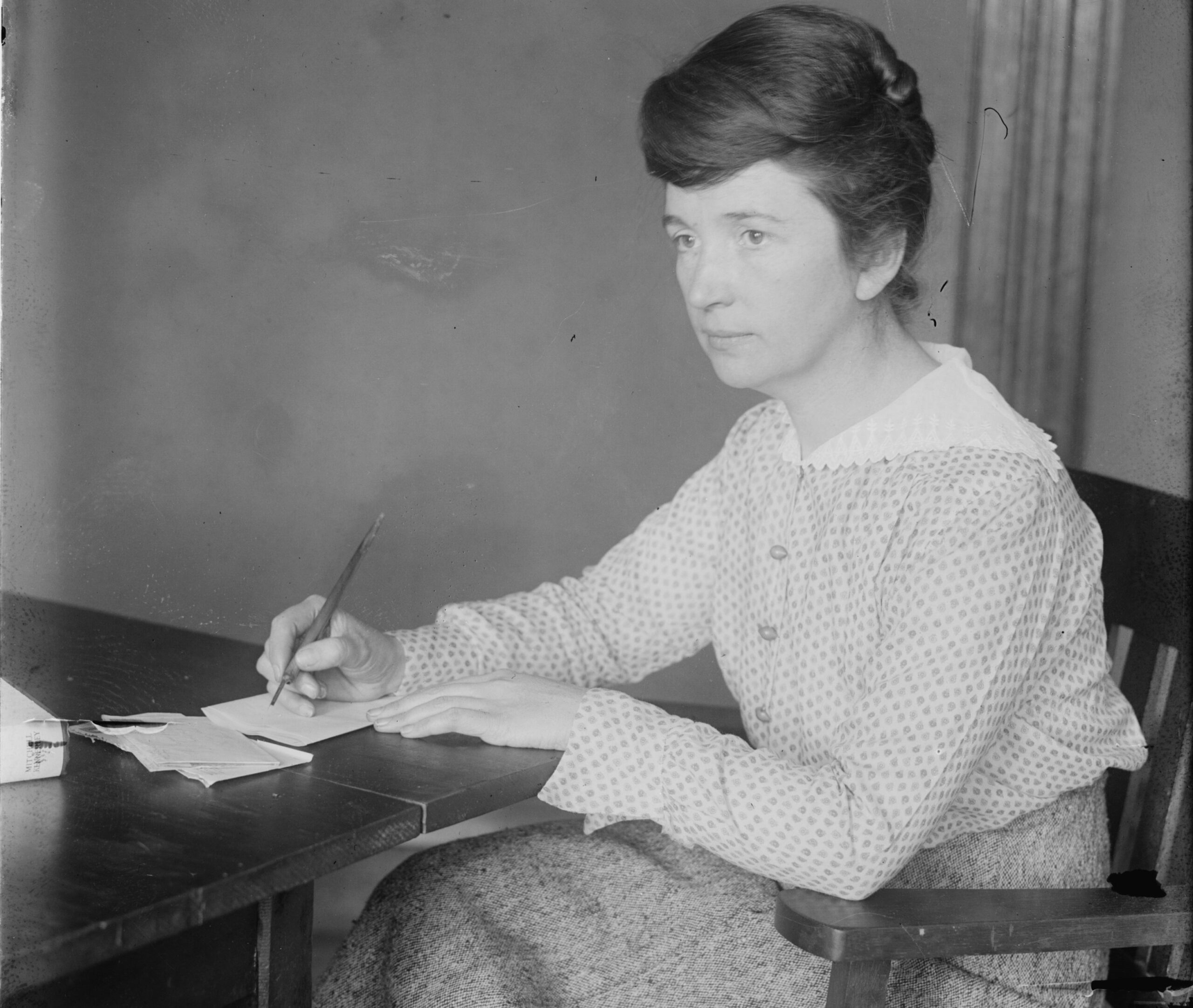
The history of the American Birth Control League, Inc. which opened its first clinic in Brooklyn, New York in 1916, and became Planned Parenthood in 1942, is well documented. Setting out the organisation’s principles and aims in an appendix to her 1922 book ‘The Pivot of Civilization’, founder Margaret Sanger wrote: “People who cannot support their own offspring are encouraged by Church and State to produce large families. Many of the children thus begotten are diseased or feeble-minded; many become criminals. The burden of supporting these unwanted types has to be borne by the healthy elements of the nation. Funds that should be used to raise the standard of our civilization are diverted to the maintenance of those who should never have been born.”
While the justification for this position appeared economic, eugenics held that the inability to afford children was an inherited health condition, due to ‘dysgenic’ breeding. Sanger defined three pillars for parenthood which the League would promote:
“We hold that children should be 1. Conceived in love; 2. Born of the mother’s conscious desire; 3. And only begotten under conditions which render possible the heritage of health. Therefore we hold that every woman must possess the power and freedom to prevent conception except when these conditions can be satisfied.”
Sanger further wrote that the League would “collect the findings of scientists, concerning the relation of reckless breeding to the evils of delinquency, defect and dependence.”.On the one hand, Sanger made an appeal to scientific authority, but on the other, a theological explanation for those humans she wished to prevent the reproduction of.
And so from the very beginning, there was a contradiction at the heart of the League; a woman’s right to choose was contingent on her making the correct ‘choices’. In practice, various politicians of the United States enthusiastically embraced pseudo-scientific eugenic principles and worked them into state legislation, making sterilisation compulsory for women held against their will in mental health facilities.
Some doctors got ahead of the legislation by carrying out sterilisations on their own initiative, often on pretexts and without the consent of the women involved. Dr Albert Priddy promoted the adoption in 1924 of eugenic law in Virginia to resolve his personal difficulties, having been sued for sterilising a woman without her knowledge.
Carrie Buck was an institutionalised teenager confined against her will to a mental health facility, who became pregnant after being raped by her ‘boyfriend’. Following Priddy’s death, the 1927 Supreme Court case Buck v. Bell confirmed the Virginia law, approving compulsory sterilisation surgery on the “feebleminded and socially inadequate.” An estimated 60,000 to 70,000 sterilisations followed, and this legal decision has not yet been overturned.
Civil rights activist Fannie Lou Hamer referred to her 1961 hysterectomy, performed without her consent, as an example of the ‘Mississippi Appendectomy’ because the practice had become so common in the South. During the Richard Nixon presidency, a new effort to sterilise black and native Americans without their knowledge was uncovered. One young native woman reportedly asked her doctor for a womb transplant, under the impression that the hysterectomy she had been given six years earlier was fully reversible.
The 1978 Supreme Court case Stump v. Sparkman established that 15 year old Linda Sparkman, who had a mild cognitive disability, had been sterilised after being told her appendix was to be removed. It transpired that the procedure had been approved by a judge, but Linda had not been told the truth about the court’s plan to make her sterile.
Despite forced sterilisation being against California law since 1979, allegations emerged in 2013 that coercive tubal ligations were still taking place on women in the state’s prisons, with 150 cases reported.
A Belated Admission
In July 2020, following the Black Lives Matter riots across the USA, Planned Parenthood of Greater New York announced that it would remove Margaret Sanger’s name from its Manhattan Health Center. “The removal of Margaret Sanger’s name from our building is both a necessary and overdue step to reckon with our legacy and acknowledge Planned Parenthood’s contributions to historical reproductive harm within communities of color,” said board chair Karen Seltzer. The nation’s largest Planned Parenthood affiliate also requested that the city rename Margaret Sanger Square, dedicated in 1993. This was a departure from the organisation’s position as recently as 2016, when it had defended Sanger from her critics.
Despite this long-overdue acknowledgement of Sanger’s explicit racism, including her rallies with the Klu Klux Klan, Planned Parenthood has had less to say about the intersection between reproductive rights and mental health. In 1931, Sanger gave a speech entitled “My Way to Peace” which advocated lifetime incarceration in labour camps for those ‘unfit’ individuals who resisted the compulsory and permanent loss of their fertility. Sanger stated “the whole dysgenic population would have its choice of segregation or sterilization… there would be farm lands and homesteads where these segregated persons would be taught to work under competent instructors for the period of their entire lives. The first step would thus be to control the intake and output on morons, mental defectives, epileptics. The second step would be to take an inventory of the secondary group such as illiterates, paupers, unemployables, criminals, prostitutes, dope-fiends; classify them in special departments under government medical protection, and segregate them on farms and open spaces as long as necessary for the strengthening and development of moral conduct.”
The Fertility of the ‘Transgender Child’
Today, Planned Parenthood is in the gender identity business. Its website poses the question “How Can You Support Your Trans Child?”, answering “You love your kid. You want to make sure they feel safe and supported both inside and outside your home. Find out what you can do”. Clicking the link leads to a page called ‘Identity’ which states “Lesbian, gay, bisexual, transgender, queer, and gender nonconforming people are a part of every community and beloved members of many families. Learn how to discuss sexual orientations and gender identities with your kid, and how to support them if they’re LGBTQ+.” Wasn’t it supposed to be that gender identity and sexuality are independent? Didn’t the child transition industry deny that it was targeting gay and lesbian youth?
The website’s advice page “How do I talk with my preschooler about identity?” states that ‘experts’ know “Trans and gender nonconforming kids are:
Consistent: They don’t go back and forth about their gender — they clearly identify with one particular gender identity.
Insistent: They feel very strongly about their identity, and get upset when they’re told that they’re not the gender they say they are.
Persistent: How they identity themselves stays over time.”
We do not need a degree in Gender Studies to notice that these diagnostic criteria would apply equally well to ‘cisgender’ children, excluding only the “non-binary, genderqueer” preschoolers that Planned Parenthood is educating us about. Just as in Margaret Sanger’s day, the organisation is primarily political, rather than medical, and its rationale remains pseudo-scientific. On that basis, it should not be putting young people with identity crises on medical pathways which can lead to permanent sterilisation.
One Parent’s Experience
I reached out to a parent who mentioned that their child had been accessing Planned Parenthood gender services. This is their story.
“My twenty-year-old daughter announced she was trans and taking testosterone in June 2023 after coming home from her first year away at college. My husband and I were completely caught off guard by this, as our daughter never showed any discomfort with being a girl growing up and had always had boyfriends. She is bright and gifted and very likely on the autism spectrum.
She clearly explained statistics and studies on trans that she had learned in a Gender Studies class that she took in her first semester. However, when we asked her why she wanted to be a male, she couldn’t find the words to explain it. She told us vaguely that she thought her face was too fat and she wanted it to be more angular and she wanted to look more androgynous. She told us that her brain is more male than female, but not completely male. Through conversations that occurred almost nightly after she made her announcement, we found out that she had been sexually assaulted. I suspect that her rejection of her female body is related to that trauma.
Her ‘belief’ in gender ideology led her to think she was trans and to take testosterone that she got at a Planned Parenthood Clinic after a thirty-minute meeting with a nurse practitioner. Planned Parenthood used the code E34.9 ‘Endocrine disorder unspecified’, as if there was something wrong with her endocrine system.
My daughter took testosterone for about 10 months. During that time Planned Parenthood also prescribed her Finasteride to prevent hair loss. This drug has devastating side effects for males and is not approved or recommended for use in females. It caused her to have depression and anxiety, which I learned is common with this drug. She ended up seeing a psychiatrist and going on a few different anti-depressants. The testosterone caused cystic acne, her voice to deepen, hair to grow on her face, and her face shape to change.
She should not have been able to walk into Planned Parenthood and walk out with a prescription to testosterone without addressing the mental health issues related to her trauma.
As I struggled to understand what was happening and what could have led her to this belief, I found information about gender identity ideology. I came across stories of young women who had this belief and had taken hormones and had double mastectomies only to realize that they had made a mistake. I came across the stories of several young women whose stories are similar to my daughter’s and I began to see patterns – autism, sexual assault, grooming by adults on-line during the pandemic and exposure to porn.
We believe our daughter was groomed online during the pandemic (when she spent more time than ever online) and those beliefs were solidified in the Gender Studies course at her university, a course that taught her that if she didn’t think that she fit society’s norm for a girl, then she must be a boy. It’s hard not to see this ideology as incredibly regressive.
I worry about her physical and mental health. She stopped taking hormones in March 2024 and seems to have detransitioned (i.e. stopped taking hormones and is dressing as a girl). She is doing better mentally since she is off the hormones and has a new boyfriend who she really likes. I think this boy had a lot to do with her realizing that she didn’t really want to be male. Her biology caught up with her and she couldn’t deny it any more. She is just a confused, straight girl caught up in this social contagion. But I don’t think she has fully rejected the ideology, yet.”
A Connected Organisation
Planned Parenthood enjoys support at the highest level of American politics. In 2009, then Secretary of State Hillary Clinton accepted the Margaret Sanger Award from the organisation, and was quoted as saying “I admire Margaret Sanger enormously, her courage, her tenacity, her vision… And when I think about what she did all those years ago in Brooklyn, taking on archetypes, taking on attitudes and accusations flowing from all directions, I am really in awe of her… Margaret Sanger’s work here in the United States and certainly across our globe is not done.”
In 2016, Planned Parenthood demanded a criminal investigation into one of its critics by California Attorney General, Kamala Harris. This led to a police raid on the home of activist David Daleiden, who still faces eight felony charges relating to undercover filming without consent. Planned Parenthood employees had been filmed discussing the best ways to harvest organs from aborted foetuses in order to sell them for research.
Although Planned Parenthood president Cecile Richards apologised for the content of the undercover videos, the organisation also pursued a private prosecution of Daleiden and his associates, with the court awarding it a reported $2.2m in damages ( https://www.nytimes.com/2019/11/15/us/planned-parenthood-lawsuit-secret-videos.html ). Planned Parenthood successfully argued that while it was true that the organisation was paid to harvest foetal body parts, it was not doing so for profit. In 2019, Richards’ daughter Lily Adams was reported to be a top aide to the Kamala Harris presidential campaign.
Conclusion
In the paper Psychosocial Characteristics of Transgender Youth Seeking Gender-Affirming Medical Treatment: Baseline Findings From the Trans Youth Care Study by Chen, Diane et al, published in 2021, two-thirds of the group using cross-sex hormones reported suicidal ideation, and a quarter reported making a suicide attempt. The mean average age in the group was 16, and approximately two-thirds of the study participants were female.
As gender dysphoria remains a DSM-5 mental health diagnosis and treatment is funded on that basis, it is no longer possible to ignore the eugenic movement’s desire to eliminate the fertility of the ‘unfit’. People suffering the significant delusion of believing that they were somehow born in the wrong body would have been institutionalised in the past, and are treated by Planned Parenthood today. Those who affirm delusion are culpable for the consequences.
Planned Parenthood needs a meaningful reckoning with the eugenic legacy of the sterilisation of people with mental health problems. It is too easy to make an institutional mea culpa or a symbolic gesture such as re-naming a building, and carry on business as usual. Performativity is not just for gender, as it turns out. What is needed is for Americans to ask why a birth control organisation is involved in so-called ‘gender affirming care’ at all.
Genspect publishes a variety of authors with different perspectives. Any opinions expressed in this article are the author’s and do not necessarily reflect Genspect’s official position. For more on Genspect, visit our FAQs.