




It Happened on a Kayak
By Evelyn Ball
Is a new generation of parents recovering their authority by learning to say “no”?
We cannot fully grasp the pressure on parents to affirm a child’s trans identity without seeing the larger pattern in which adults have been made to feel it’s nearly impossible to say “no.” Yet the first generation raised on screens may now be quietly rebelling.
It happened on a kayak.
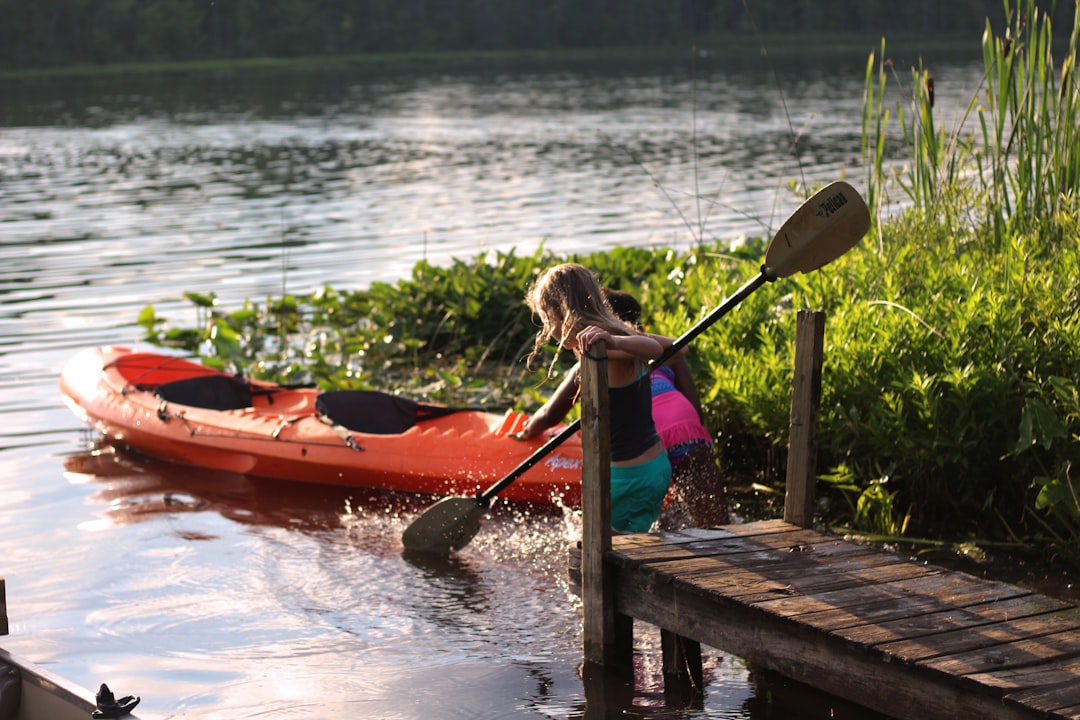
I spent an hour this morning paddling on a mountain lake where each kayak is accompanied by a guide. By sheer luck, my guide happened to be a thoughtful young mother of four children—all under the age of seven, the youngest just 18 months old.
She and her husband intentionally moved to this small mountain town, surrounded by lakes and forests, because they wanted to raise their children differently. She homeschooled them up to this point. They wanted a slower life, closer to nature, one that would allow them to be deeply involved in their children’s upbringing.
As we floated across the lake, we found ourselves talking about children, education, and some of the parenting ideas I write about here.
Eventually, we arrived at the topic of parental authority. She described it as the kind that provides limits, boundaries, guidance, and emotional steadiness—the kind of parenting that requires attention, attunement, and the willingness to tolerate a child’s frustration rather than immediately removing it.
At one point, I mentioned that I’m a psychotherapist. I explained that I am trained and remain grounded in the psychology of the 20th century, before its more recent shift toward extreme individualization, over-diagnosing, over-medicalization, and a growing reluctance to exercise adult leadership with children.
She nodded knowingly.
She described watching families in places like Walmart, where a child is screaming, seemingly over a toy. The parents reinforce the behavior by handing over their phone, then buying the toy—without ever requiring anything different from the child, or from themselves.
She wasn’t judging the parents so much as recognizing a pattern: adults increasingly hesitant—or unwilling—to lead their children.
Then she shared a personal parenting experience that caught my attention.
A year or two ago, she and her husband bought a tablet for their oldest child. Within days—certainly within weeks—they noticed a striking change in his behavior. They didn’t spend months debating it. They simply removed the device.
Problem solved.
She also mentioned conversations with parents who wonder whether their children have ADHD while simultaneously disengaging from the relationship and allowing unhealthy food, sweets before bed, and few restrictions on screens.
None of this was said with arrogance. It was said with clarity.
What moved me most wasn’t simply that we agreed on so much. It was the quiet confidence with which she and her husband had chosen a philosophy of child-rearing. They weren’t outsourcing their authority. They weren’t expecting technology, schools, therapists, or diagnoses to replace the work of parenting.
She put it simply:
“Children need adults who are willing to be adults.”
After we pulled the kayaks onto the shore, I found myself walking along the sand, quietly hopeful.
It’s easy to believe that our culture has forgotten how children develop. It’s easy to think families like this no longer exist.
And then you meet one—quite by accident, on a kayak in a mountain lake—and you’re reminded that there are still parents out there, simply doing the hard, beautiful work of raising children with presence, boundaries, responsibility, effort, and love.
They may not be the loudest voices.
But they are very much around.
Evelyn Ball is a therapist and commentator focusing on gender identity, detransition experiences, and safeguarding concerns related to medical transition practices.
Genspect publishes a variety of authors with different perspectives. Any opinions expressed in this article are the author’s and do not necessarily reflect Genspect’s official position. For more on Genspect, visit our FAQs.