



Face Forward
By Elizabeth Edens
One detransitioned woman’s experience with electrolysis
Facial hair is one of the lingering effects of transition. Electrolysis has been an effective method of facial hair removal for me, and has become a normalized part of my weekly routine.1
I hydrate intensely the day before my appointment, as it helps with the effectiveness of the electrolysis process. I apply my lidocaine cream in the car before I drive the 20 minutes to my appointment. I have to be careful not to put too much on, because this medication can affect blood pressure. I highly recommend getting lidocaine/ prilocaine cream from a doctor. In the USA, this requires a prescription.
I have found it is most effective to focus on a one-inch to two-inch area of my face at a time.
This works because it ensures you hit the same follicles a second or third time, which can eliminate these follicles faster over time.
I shave the rest of my face as usual, the day of, leaving my little two-inch square furry. This allows me to cover that area with a bandage if I need to meet with someone that day or go somewhere before my appointment.
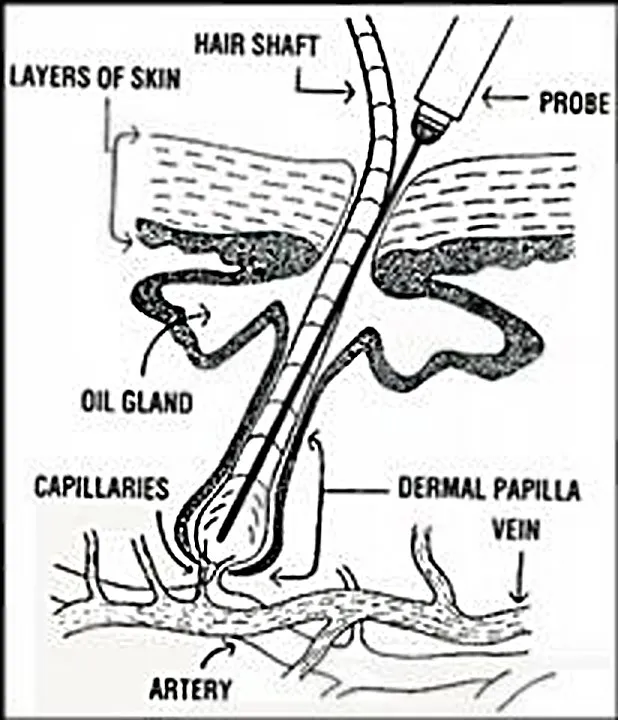
During the procedure, my technician inserts a needle probe into the hair follicle and applies electrical current to the root, thereby destroying the papilla. She then removes the hair with tweezers. If you feel a sensation similar to how it feels when you pluck your eyebrows, it is not working. If the electrolysis has been successful, you should not feel anything when the hair is pulled out. I wasted a year of my life and lots of money going to an electrologist who was not doing it correctly!
I typically pick a good audiobook or podcast for distraction while she works.
Sometimes this process brings up emotions for me. I find it’s best not to dwell on why I am there and what brought me there, as this makes the whole experience more painful. I find it less painful to think about something that makes me smile. When I feel those emotions coming up, I redirect them; now is not the time! I include this, not to deter you from treatment, but to share that this may be a normal experience for us and not to worry.
I usually go for 45 minutes to an hour, depending on my pain tolerance that day.
Types of Electrolysis
Galvanic Electrolysis
This is the oldest technique currently in use. It is a chemical method that utilizes a direct electrical current to convert normal body salt and water in the hair follicle into a compound capable of destroying the dermal papilla. The chemical is produced only in the follicle and does not affect any other area.
Thermolysis
This method uses a high-frequency current to generate heat in the area influenced by the current. This heat cauterizes and destroys the dermal papilla
Blend
This method combines the two currents in the same probe. Thermolysis enhances the effectiveness of the galvanic method, resulting in a faster process.
I now see an electrologist who uses a blended technique.
What to Expect after the Appointment
When I get home, I apply an ice pack to the treated area. I have noticed that taking Tylenol also aids in both the pain during the appointment and recovery after.
My pain tolerance is lower than most. It is also hugely affected by where I am in my cycle. I find I cannot stomach a full hour of electrolysis during the week leading up to my period. I also noticed that electrolysis was significantly more painful during my pregnancy. I did not experience any negative effects from continuing electrolysis during my pregnancy, but you decide if it is comfortable for you.
Electrolysis became more effective for me after my hormones had some time to regulate. My hormones fluctuate with my weight gain and loss, as well as time of the month and pregnancy (more on that in another article coming soon!)
When I first detransitioned, I needed to shave twice a day. After undergoing electrolysis on and off for about five years, this is no longer the case. The time required to notice a difference varies for everyone. I know one woman who removed all her facial hair in six months, going to her electrologist twice a week for 90-minute sessions.
Last Thoughts
It would be hugely beneficial for detransitioners if the cost of hair removal could be subsidized in some way. Ironically, many institutions offer micro-grants for hair removal to so-called “trans women”. I encourage detrans women to apply for these; we are WOMEN who have transitioned. No need to clarify anything further to the grant givers!
Another helpful development has been the sisterhood with women with Hirsutism in Facebook groups. Women with Hirsutism experience similar hair growth on account of androgens in their systems, usually brought about by Polycystic Ovary Syndrome (PCOS). I encourage detransitioners to embrace the similarities in their experiences rather than focusing on differences, and to use spaces and resources for women affected by the issues we struggle with. There are other women who struggle with facial hair growth for reasons unrelated to detransition. Here’s an opportunity to connect to the broader world again, without focusing on our unique situation.
Genspect publishes a variety of authors with different perspectives. Any opinions expressed in this article are the author’s and do not necessarily reflect Genspect’s official position. For more on Genspect, visit our FAQs.
1 Note: my skin type is fair ( English and Irish), and my hair is red. Skin and hair types are affected differently by the process.