




Derailing the “Trans Train” in Germany
By David Allison
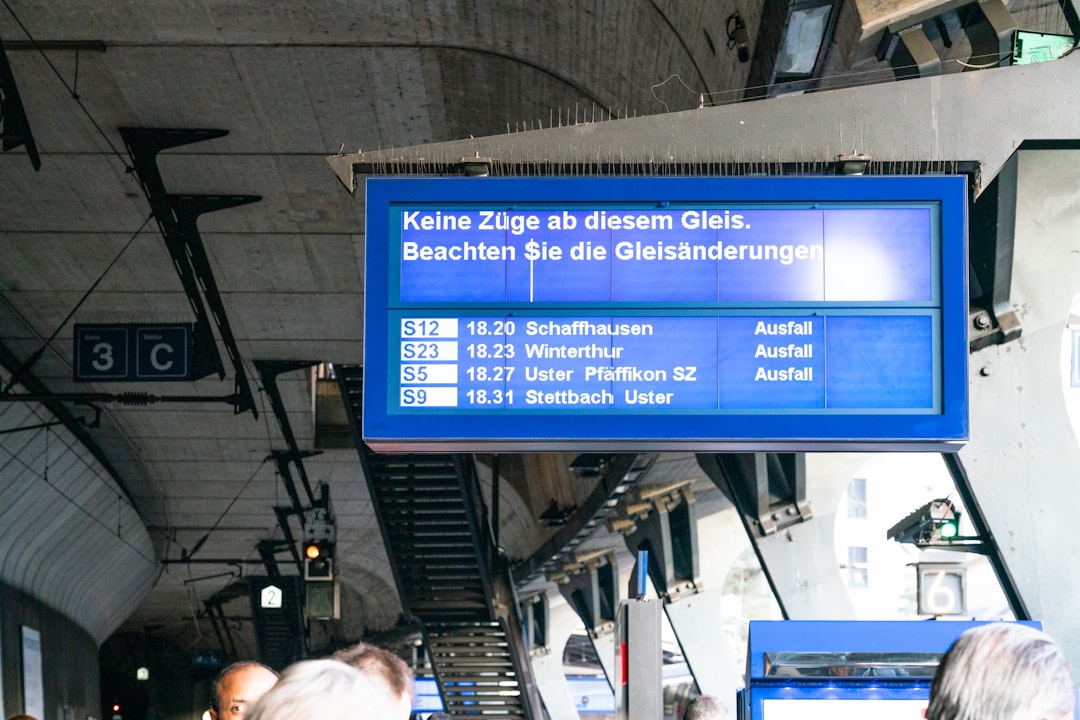
Delays and cancellations. That’s what most Germans now associate with their country’s once-punctual railway system—due to a lack of public funding. The only bright spot has been that this same lack of funding has also stalled the “trans train,” the rapid, uncritical progression of gender-confused children through puberty blockers, cross-sex hormones, and irreversible surgeries with long waiting lists. Unfortunately, it appears that money intended to address issues like the nation’s failing system will be diverted into efforts to transition German children.
Despite campaign promises to the contrary, Germany’s new conservative chancellor has introduced a massive, debt-financed spending package to rebuild the country’s infrastructure. With significant funding now available, it’s likely that the new S2k guideline will expand access to medical interventions for gender-confused children. (Read more about S2K here, and here).
Hear No Evil, See No Evil
Largely overlooked by mainstream media, the guideline’s publication promises to lend legitimacy to the field and incentivizes new practitioners to enter it. It is as if the UK’s Cass Review, the U.S.’s HHS Report on Medical Interventions for Children and Adolescents with Gender Dysphoria, and the severe restrictions or outright bans on the use of puberty blockers in the UK, Finland, Sweden, Norway, and Denmark never occurred. Leading proponents of the affirmative, no-questions-asked approach to gender dysphoria continue to cite an increasingly embattled WPATH as an authority, and public funds are increasingly supporting trans-affirmative counseling and political advocacy.
The German press has a blind spot when it comes to the mounting criticism of trans ideology and practice. For instance, it largely ignored both the UK Supreme Court’s ruling affirming the primacy of biological sex and the U.S. Supreme Court’s decision on medical care for transgender minors. Nor has it picked up on the fact that transgender genital surgeries are already being performed on individuals under 18 in Germany. As Paul Steger, whose Substack covers trans ideology in Germany, notes, this is merely “the tip of the iceberg” in youth gender medicalization.
Leaders of Germany’s Left and Green Parties share a similar blindness when it comes to trans issues. For instance, they have recently met with “Maja T,” an Antifa member formerly known as Simeon until his arrest in Hungary. Maja and other members of his group are accused of participating in an attack that seriously injured a lone neo-Nazi outside a Budapest supermarket. For Germany’s left-wing parties, a trans or non-binary identity seems to function as a “get out of jail free” card, with some suggesting that street violence is excusable if the perpetrators’ identities are prioritized—even at the risk of increasing diplomatic tensions between Germany and Hungary. Their sympathy does not extend to female inmates at home, who are increasingly facing attacks now that they are being housed with convicted men who identify as women.
Tolerating Dissent?

It remains to be seen how long Germany can resist the reckoning taking place in other parts of the world. So far government-funded transgender NGOs have managed to portray attempts to examine the evidence as “transphobic” but there are signs that not everything will go their way. In May, the President of Germany’s parliament, Julia Klöckner, announced that there would be no hoisting of the pride flag over the Bundestag on Christopher Street Day—the German and Swiss equivalent of Pride. She was later backed by Chancellor Merz, who remarked that “Parliament is not a circus tent, where you can raise any colourful flag you like.”
All this means that there are likely to be demonstrations from both sides of the trans debate this autumn—and this could be a positive development. The challenge for gender-realist Germans is to break through the media’s complacency and get some coverage so that developments in other parts of the world can no longer be ignored. Ironically, the opposition’s insistence on no debate could inadvertently help achieve that.
Opposition to the trans train may have been delayed in Germany, but the day is coming when the debate about sex and gender can no longer be silenced.
Genspect publishes a variety of authors with different perspectives. Any opinions expressed in this article are the author’s and do not necessarily reflect Genspect’s official position. For more on Genspect, visit our FAQs.