




Colonialism, the Sex Trade and Polygender Societies
By Daniel Howard James
Gender as religion, part seven
Please visit Genspect on Substack to read earlier parts on Gnostics, Jungian alchemists, castration cults, rock’n’roll gender outlaws, the deification of the transgender child, and esoteric male power networks.
In 1838, private adventurer and former East India Company soldier James Brooke landed his armed ship and crew in the British colony of Singapore. It was here that Brooke learned of the war on the island of Borneo between the Iban, the indigenous people of Sarawak, and their Muslim rulers in neighbouring Brunei. In return for Brooke’s assistance ending the Iban rebellion in Brunei’s favour, the Sultan made him the first White Rajah of Sarawak.
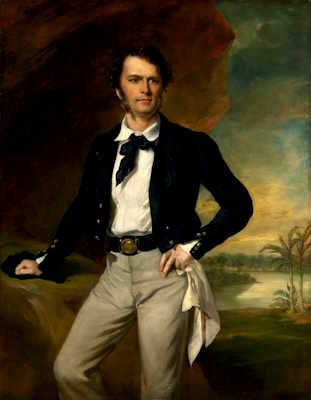
This investiture began an Anglo-Indian dynasty that would last until Japanese military occupation of Sarawak during the Second World War. The Iban went from being ruled by one foreign power with an unfamiliar religion, to another. Since 1963, Sarawak has been part of the Islamic State of Malaysia.
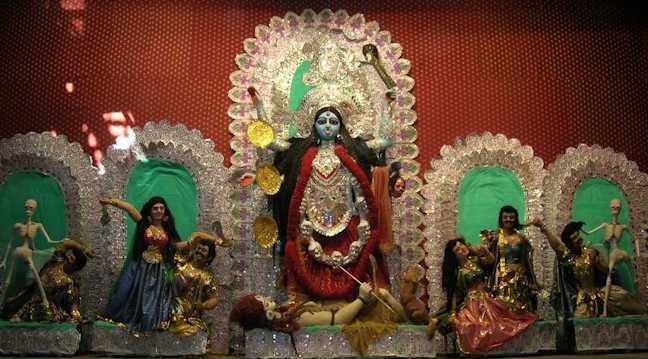
The first White Rajah frowned upon the Iban practice of head-hunting, which was intended to enrich a village by capturing soul-matter from the brains of enemy communities and storing shrunken heads as the good-luck charms of their indigenous religion. Like in cannibalism, the head-hunting tradition relied on the understanding of the soul as something material that could be captured or ingested, with the beneficial side-effect of reducing the enemy tribe’s numbers. Far from soul-matter being a unique conception of the Iban, the flesh-eating ḍākinī goddess is common to both Hinduism and Buddhism across Asia.
The polygender societies of the Iban, and the Bugis from Borneo’s neighbouring island of Sulawesi, forced to become able seafarers by colonial displacement, were not ethically opposed to piracy. Bugis maritime merchants also practised slave trading when the need arose. Somewhat hypocritically, these were customs which British explorers of distant lands, armed to the teeth and not averse to stealing enemy gold or establishing plantations worked by slaves, had developed a new-found aversion to by Victorian times. Consequently, Rajah Brooke aimed to end traditional plunder by the indigenous peoples of the region and unite the Iban under his rule.
Colonialism and sexual exploitation
While the rival Dutch and English East India Company formations fought for control of new colonies and trade routes across the Indonesian and Malay archipelagos, some Bugis sailed to the colony of Singapore to escape oppressive Dutch rule. As a key international port in the colonial system, Singapore’s harbour became a centre of sexual exploitation and prostitution, initially providing native women for use by visiting soldiers, sailors and merchants. To meet demand in the colony’s brothels, women were trafficked to Singapore from as far away as Hungary, according to contemporary reports.
English author Francis Downes Ommanney wrote of the prostituted men and children that he encountered in Singapore during the late 1950s in his 1960 memoir, Eastern Windows. Young transgender males were then known as kai tais, literally ‘agreeable younger brothers’, or ‘catamites’, meaning the sex objects of a pederast.
The availability of South Sulawesi flesh for sale was so well-known among the colonial community that Singapore’s red-light district was named Bugis Street. Ommanney recalled a visit to one of the street’s open-air food stalls on page 39 of Eastern Windows: “As I sit there and let time drift past like a river a little girl, heavily made-up and looking many years older than her age, comes to my table and sings a song in a Chinese dialect… They said she was being trained to be a whore, but she disappeared and Bugis Street knew her no more.”
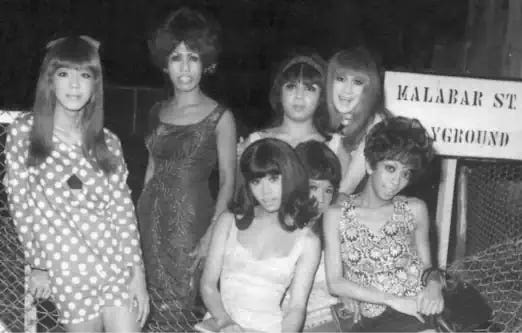
On page 44, Ommanney wrote of a prostituted male calling himself Maisie: “There is something not quite right about her feet. They are a shade too large… Sometimes clients have been known to make quite a scene when they discover their mistake, and Maisie has sometimes had to stay away from Bugis Street for a day or two, nursing a black eye. But not for long.”
British author Noël Coward wrote about this notorious neighbourhood in his 1964 short story ‘Pretty Polly Barlow’, adapted for the screen as ‘A Matter of Innocence’ featuring former child star Hayley Mills, and later made into a radio play by the BBC.
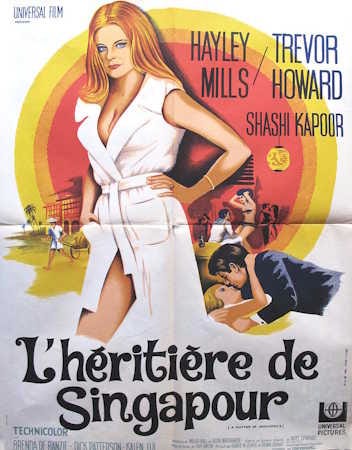
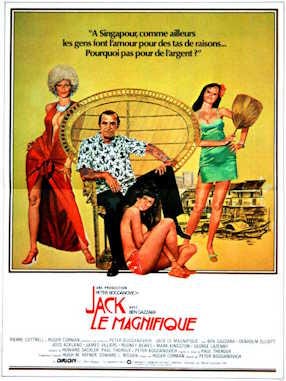
American novelist Paul Theroux’s 1973 novel ‘Saint Jack’, referring to a pimp who had made Singapore his business, was made into a 1979 film by Peter Bogdanovich. Canadian tone-deaf miserabilist Leonard Cohen wrote and performed a song about his encounter with Bugis Street, renaming it ‘Boogie Street’, after he had spent five years in a Zen monastery:
“It is in love that we are made;
In love we disappear
Tho’ all the maps of blood and flesh
Are posted on the door
There’s no one who has told us yet
What Boogie Street is for”
Also in 1979, Anglo-Irish author J.G. Farrell published his novel ‘The Singapore Grip’, named after the reputed tantric ability of East Asian women exploited in the colony to command their otherwise-involuntary vaginal muscles. This talent was said to provide a superior quality of prostitution to those men willing to pay for it.
The technique, known as kabzah in India, is thought to have been developed by the ancient cult of the Devadasi, variously considered slave women, mistresses of wealthy men, exotic dancers and temple prostitutes down the centuries. While the ceremony making a girl a devadasi at the age of seven began to be outlawed during the late Raj period, and is illegal in modern India, there remain an unknown number of females indoctrinated into this sexual exploitation. Today, former devadasi Sitavva Joddati leads a self-help group for these prostituted women.
Farrell’s novel was more recently made into a television series, slated by a group representing Britain’s Asian actors for its dated, stereotypical presentation of Singapore’s people as “exotic dancers, giggly prostitutes, monosyllabic grunts and half-naked Yogis. Asian womanhood is represented as lurid temptation and subservient availability.”
During Western interventions in the Korean War from 1950 to 1953, and then the Vietnam War from 1954 to 1975, many American and Australian military personnel would include a trip to Singapore to buy sex when on leave from the front lines. This era was depicted in the 1995 movie ‘Bugis Street’ by director Yonfan, recently restored and re-released.
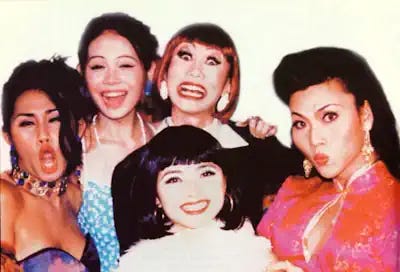
Following Singapore’s transformation from British colony to independent city-state by 1965, the visitors to the port’s brothels diversified. Singapore became a regular stop for international sex tourism in the jet age, no doubt in part because of literary and cinematic depictions of the exotic-erotic transactions that took place there.
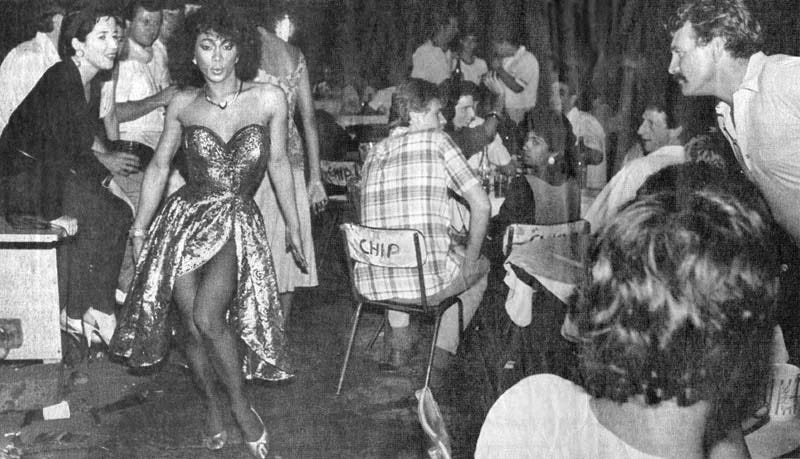
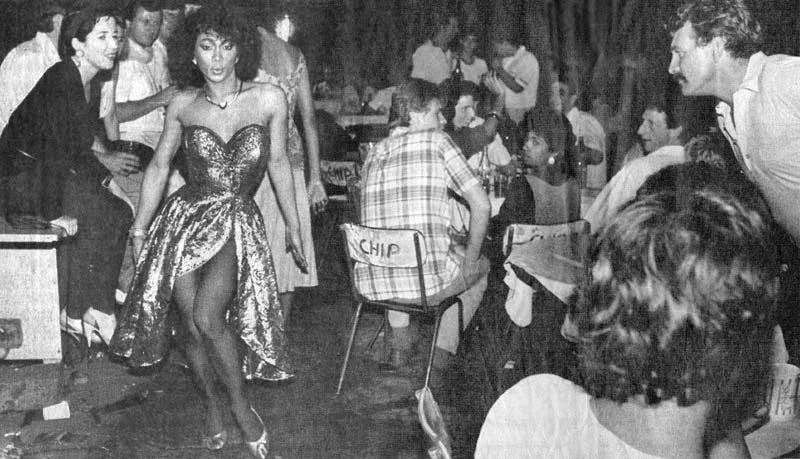
It was reputedly Australian sex tourists who invented the Dance of the Flaming Arseholes, a ritual which involved setting fire to a rolled-up newspaper inserted into the rectum of each participant, while cavorting on the rooftop of the public toilet on Bugis Street. Any Australian servicemen who visited the city’s brothels was required to participate in, or at least cheer on, this public spectacle, signifying that in this period of Singapore’s history, there was no minimum decorum for Western visitors.
While some Western men claimed surprise that the person they had paid for sex with was also male, by the Vietnam War era, Bugis Street was widely known as a centre of transgender prostitution. Contemporary newspaper reports indicate that the practice was hardly secret. The Singapore LGBT Encyclopedia includes several such references from 1972 onwards.
Esoteric male power networks
That year, the New Nation tabloid reported “The transvestites who have become prostitutes frequent Bugis Street where they usually solicit after midnight and Johore Road, in foul-smelling, oppressive hovels, honeycombed with box-like cubicles big enough only for a double bed and standing space for one or two. At these places, they ply their trade at prices ranging from $3 to $20 or more for a quick time, often fleecing European tourists or resident expatriates. Their clients: Male homosexuals as well as men who also enjoy normal heterosexual relationships and do not regard themselves as homosexuals. The Bugis Street homosexuals often cater for Europeans or tourists, and the Johore Road group for the locals.”
Claims that the cross-dressing prostituted men of Bugis Street were not controlled by pimps should be considered in the context of the city-state’s underworld ‘secret societies’; esoteric male power networks with long and bloody histories which extorted protection money from the port’s brothels, among many other crimes. The English word ‘triad’ refers to the sānhéhuì, or ‘Three Harmonies’ of heaven, earth and humanity.
As reported in 1839, the East India Company soldier and orientalist Thomas John Newbold wrote “the ends of justice are frequently defeated both at Pinang, Malacca, and Singapore: by bribery, false swearing, and sometimes by open violence, owing to combinations of these fraternities, formed for the purpose of screening guilty members from detection and punishment.” To this day, the Singapore police force has a ‘Secret Societies Branch’ which disrupts pimping gangs such as the Salakau, named after local dialect meaning ‘369’.
Sex reassignment and the global gender industry
Kandang Kerbau Hospital, reportedly Singapore’s largest gynaecology and maternity centre, carried out ‘sex reassignment surgery’ on males from 1971, and later on females, becoming a key centre of the global gender industry. A Gender Identity Clinic and Gender Reassignment Surgery Clinic were set up at the city-state’s National University Hospital in the early 1990s. While John Money’s sex-change experiments at Johns Hopkins Hospital in the USA had been shut down by 1979, it seems East Asian clinics continued these procedures without significant opposition.
In the encounter between Western men and East Asian girls or women, and East Asian boys or men dressed as women, sexual exploitation was normalised. This prostitution took place within a colonial context, where indigenous people with pre-scientific notions of gender arising from their own religious beliefs were frequently displaced from their homelands, and their traditional ways of life disrupted. From the very beginning, the Western understanding of polygender societies like the Iban and the Bugis has been bound up with colonial exploitation of native bodies.
It was in these foreign adventures and conquests that modern Westerners learned of ‘gender’ meaning more than the ordinary qualities associated with a person being male or female. Rather than ‘indigenous ways of knowing’ teaching us more expansive definitions of gender, indigenous peoples have been sexually exploited by a prostitution and transition industry built on the customer’s gender stereotypes, constantly in search of the novel and the exotic-erotic in order to develop and grow new markets.
Sex tourism that feeds on cultural appropriation
Perhaps the Dutch colonizers of Indonesia brought their anthropological discoveries back to the Netherlands, creating polygendered prostitution in the heart of Amsterdam. It is not necessary for the Bugis themselves to be transported to a Dutch red light district if we can manufacture new transgender people for sexual-medical-surgical exploitation using a ‘Dutch’ protocol.
If Eastern models of gender which derive from Hinduism, Buddhism or local, indigenous religions are compatible with Western medicine, why not also reincarnation? Is there any point trying to save the lives of patients if they’re coming back next week in a different body? Indeed, why would we deny the patient’s opportunity to reincarnate at a higher level by delaying their death?
In this respect, euthanasia programmes such as Canada’s euphemistically-titled ‘Medical Assistance in Dying’ scheme could be described as ‘reincarnation-affirming care’. Born in the wrong body? Why not get a brand-new one? If you’ve lead an enlightened life, you are guaranteed by the scriptures to receive a corporeal upgrade. If you come back as a cockroach, sucks to be you.
Andy Ngo has reported that when Jack ‘Ziz’ LaSota, alleged leader of the Zizian transgender death cult, was arraigned in federal court in Baltimore and asked his date of birth, he responded “I have been born many times.” This might be at odds with ‘Ms’ LaSota’s claim of ‘trans genocide’, unless the objection is that some gender non-conforming people will reincarnate sooner than they would have wished.
The cultural appropriation of Eastern gender models is therefore bound up with the postmodern conceit of “indigenous ways of knowing”. If it’s anti-scientific or pseudoscientific, a concept can now be considered epistemologically valid. We cannot blame indigenous peoples who had no access to microscopes or laboratories for not knowing about gametes or chromosomes.
In the absence of the knowledge we now have, mythopoeia about the sexes filled the gap. And so indigenous cultures believed that the way someone behaved, including their sexual preferences, dictated whether they were man, woman or something else. In some cultures, it is not who you have sex with, but your preferred position during intercourse, which defines what Westerners call your gender identity and sexuality.
Beliefs about soul genders belong in the temple, not the operating theatre or the brothel
Rather than decolonise gender, we have taken the prototype of polygendered exploitation and subjugation which evolved in colonial South-East Asia, and re-imported it to the West. Child drag queens twerking in American strip clubs are culturally-appropriated ladyboys, after all. But would the prototype exist if it were not for Western soldiers, sailors and sex tourists?
The gender transition industry offers the unification of the pre-scientific belief in a material soul-matter, as understood by indigenous headhunters and cannibal tribes, with the consumer principle that we can all have what we want (as long as someone pays for it). In that respect, gender identity is simultaneously ancient and modern.
Perhaps what is needed to end the medical and sexual exploitation of gender non-conforming people is a recognition that esoteric beliefs about soul genders belong in the temple, not the operating theatre or the brothel. We have the opportunity to break the cycle of the use and abuse of human beings as exotic-erotic sex objects. Until then, we are all living on Boogie Street.
Genspect publishes a variety of authors with different perspectives. Any opinions expressed in this article are the author’s and do not necessarily reflect Genspect’s official position. For more on Genspect, visit our FAQs.