



Brave and Inspiring, or Deviant and Disturbing?
By Mia Hughes

When a vascular surgeon from Cornwall who made his living amputating limbs lost both his own legs in 2019, the tragic irony was too delicious for the British press to resist. Neil Hopper swiftly became a national hero, nominated for Bravest Briton in 2020 and making the rounds on mainstream outlets. His story was packaged as an uplifting tale of triumph over adversity, and the British public applauded his courage without question.
But his story has since taken a much darker turn. On September 4th, he was jailed for two years and eight months for insurance fraud and possessing extreme pornography. Hopper admitted to Truro Crown Court that he lied when claiming his injuries were due to sepsis when, in fact, they were self-inflicted using dry ice. The court heard Hopper had a “sexual interest in amputation.”
What initially led police to investigate Hopper’s claims was the 2022 arrest of Marius Gustavson, aka The Eunuch Maker—the leader of a castration fetish ring who rose to notoriety when he was arrested for orchestrating and livestreaming castrations and amputations that he performed in his London home for the sexual gratification of his viewers.
Hopper, it turns out, was one such viewer. He purchased three videos containing extreme body mutilation from The Eunuch Maker’s website and actively encouraged Gustavson to produce more videos. It was also revealed during his trial that Hopper engaged in a lengthy message exchange with Gustavson—amounting to approximately 1,500 messages—discussing how he had succeeded in getting his legs amputated; how much dry ice he had used, and how he thought having no legs but just stumps would be “sexy”.
For many, these revelations surely call into question the celebration of Hopper’s courage, but in a world that puts paraphilic men who claim to be women on the cover of magazines and views their decision to surgically modify their healthy bodies as inspiring and brave, can there really be justification for stripping Hopper of his Bravest Briton title?
In fact, according to the defense, Hopper also “felt he was in the wrong body and was troubled by his gender and wanted to be female. In private he wore his sister’s clothes.” This plot twist makes the disgraced surgeon’s story an even more perfect springboard from which to examine two closely related paraphilias: apotemnophilia (sexual arousal at the thought of being an amputee) and autogynephilia (a man’s sexual arousal at the thought of being a woman).
A Tale of Two Paraphilias
These days, thanks to trans activism, autogynephilia is quite widely understood. Taken from the Greek — auto (self), gyne (woman), philia (love) — the term was coined by sexologist Ray Blanchard in 1989. After years of studying men who identified as women and sought hormones and surgeries, Blanchard realised that for the heterosexual group seeking these drastic medical interventions, it was the fantasy of becoming women, not merely dressing and presenting as women, that drove them. Blanchard estimated that in the early years, before the culture-bound epidemic of trans identities began, these men made up approximately three-quarters of those seeking medical body modification in gender clinics.
Autogynephilia’s close relative—apotemnophilia—is less well known. Also derived from Greek— apotemno (to amputate) and philia (love) — the term was first described by the infamous John Money in 1977. It manifests as a compulsive sexual desire to lose a limb, most often a leg. Like autogynephiles who are attracted to women while longing to become women, apotemnophiles are typically attracted to amputees — a related paraphilia Money dubbed acrotomophilia.
Before trans activism made the comparison taboo, researchers noted the overlap between the two groups, with one 2005 paper finding almost 20% of apotemnophiles, like Hopper, wished to be members of the opposite sex.
Sufferers and experts alike also frequently noted the commonalities of the two paraphilias. As Dr. Anne Lawrence, an autogynephilic man and sex researcher, put it: “[They] are two sides of the same coin. They’re both about feeling like you’re in the wrong body and wanting to change that body.”
Or, as one apotemnophile bluntly told a researcher in the 1980s: “Just as a transsexual is not happy with his own body but longs to have the body of another sex, in the same way I am not happy with my present body, but long for a peg‑leg.”
In both, there is the same ethical quandary: what constitutes harm? In traditional Hippocratic medicine, cutting into healthy bodies amounts to obvious harm. Yet, for those in favour of “sex-reassignment” surgeries and limb amputations, the inverse is true: not cutting into healthy bodies is defined as “harm.” The ethical justification is framed as: operate, or the patient will harm themselves.
And evidently some do. Hopper’s is far from the first story of this nature. Apotemnophiles have, like Hopper, frozen limbs in dry ice, blown them off with shotguns, or attempted self-amputation.
Autogynephiles have a similar history of extreme self-harm. In the days before trans activism persuaded surgeons to abandon their instinctive revulsion at disfiguring healthy genitals, extreme self-injury was common. One 1965 study of 100 male “transsexuals” found that “[s]ix patients performed autocastration, three transsexuals amputated their penises, and nine others attempted self-mutilation.”
It was likely Anne Lawrence’s intimate knowledge of the autogynephilic mind that bizarrely led him in 2003 to offer DIY amputation advice to apotemnophiles, including recommending ketamine as a “good anesthesia for amateurs,” and the use of pneumatic tourniquets for blood control. Though he cautioned that having a tourniquet in the house would make it “hard to say it was a chainsaw accident.”
The Rebrand That Died on the Table
If Hopper’s story is the perfect entry point for comparing these paraphilias, New York psychoanalyst Gregg Furth’s stranger-than-fiction life provides the perfect lens through which to view almost every twist of apotemnophilia’s failed push for public acceptance and medical recognition.
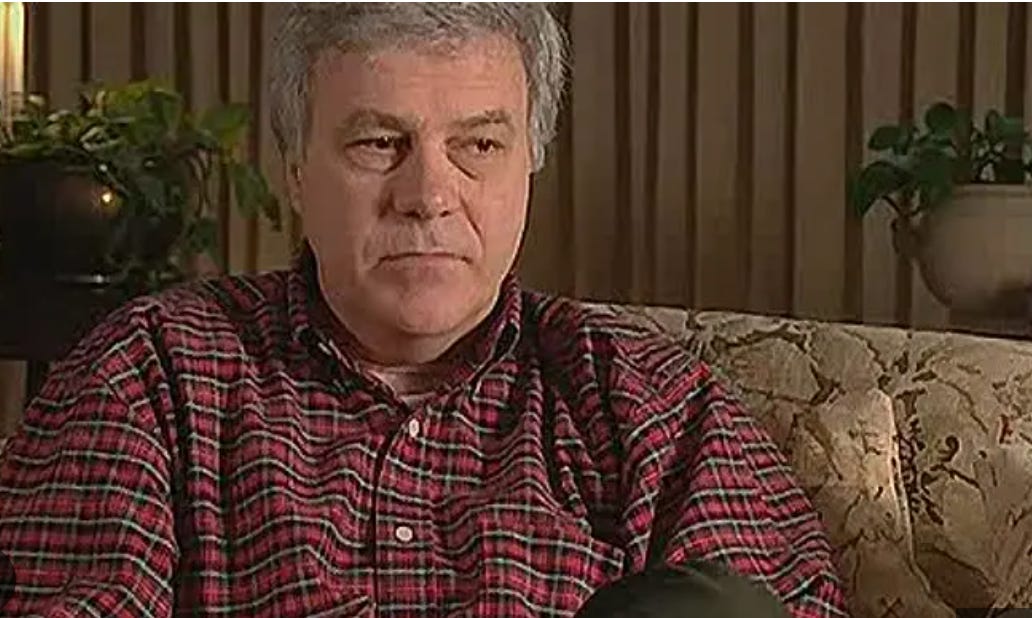
Furth, himself an apotemnophile, entered the scene in 1977 when he co-authored the first paper on the condition with John Money. Then, two decades later, he joined forces with Robert Smith—the Scottish surgeon famous for performing leg amputations on two healthy men in the 1990s—and together they wrote a book that attempted to rebrand the condition as “amputee identity disorder,” inspired by the remarkable success of gender identity disorder in securing medical treatment for trans-identified individuals.

In 1999, around the time that the book project was underway, Furth traveled to Tijuana with fellow “wannabe” amputee Philip Bondy. Each man intended to have a leg removed by a notorious unlicensed surgeon known as John “Table-Top” Brown. Bondy went first; Furth wisely backed out at the last minute. Two days later, Bondy died of gangrene in a motel room, and Brown was ultimately convicted of second-degree murder and lived out the rest of his days behind bars.
Undeterred, Furth instead sought a “respectable” route, and here the tale of the two paraphilias merges again when he consulted London psychiatrist Russell Reid, a leading figure in gender medicine at the time. Reid approved Furth for his long-yearned-for amputation and referred him to Smith in Scotland for the procedure. All three appeared in the BBC documentary Complete Obsession, in which Reid justified his decision to approve Furth for surgery by drawing the obvious comparison with “transsexuals.”
“Transsexuals want healthy parts of their body removed in order to adjust to their idealized body image, and so I think that was the connection for me,” he said. “I saw that people wanted to have their limbs off with equally as much degree of obsession and need and urgency.”
Yet for Furth, once again, it wasn’t meant to be. Shortly before Smith was set to operate, the press got wind of it, and the hospital trust shut the program down.
Furth’s many thwarted efforts show what happens when a paraphilia lacks political backing. He coined gentler terms, recruited a sympathetic surgeon, obtained a psychiatric rubber-stamp—and still failed to convince the medical world and the public of the necessity of the procedure.
Meanwhile, trans activists executed the very playbook Furth attempted, and met with enormous success. In the Diagnostic and Statistical Manual of Mental Disorders (DSM), they replaced the language of paraphilia with the language of identity. The gender-related diagnoses went from being categorized as a sexual deviancy in DSM-II to transsexualism in DSM-III, gender identity disorder in DSM-IV, and finally to gender dysphoria in DSM-5. In its DSM-5 iteration, the transgender identity is framed as healthy, and the “disorder” is the distress felt due to mind and body being misaligned.
Those same activists enjoyed even greater success in their lobbying of the WHO, with transsexualism becoming gender incongruence in ICD-11, and the new condition was moved out of the section for mental disorders and into the newly created chapter on disorders of sexual health.
With each rebrand, more barriers to accessing hormones and surgeries were dismantled, until activists succeeded in framing drastic body modification as both medically necessary and a human right. None of this reflects scientific breakthroughs; it simply reflects successful political maneuvering.
But it’s worth lingering for a moment on an uncomfortable truth that got overlooked in the rush to sanitize gender diagnoses, which is that trans has always had natural overlaps with homosexuality. From the start, a minority of those seeking extreme body modification were not paraphilic men but homosexuals hoping to overcome their internalized homophobia through a medical remedy. And when psychiatry pathologized childhood gender nonconformity, it inadvertently pathologized homosexuality itself, since most feminine boys and masculine girls would have simply grown up gay or lesbian.
These innocent gender-nonconforming children then provided the perfect smokescreen to hide the paraphilic desires at the core of the trans movement, so it is no surprise that the concept of the “trans child” was destined to be placed front and centre in the battle for “trans rights.”
By contrast, it wasn’t possible to tie apotemnophilia to an existing minority group, and there were no innocent children to place at the forefront of an apotemnophile rights crusade. The paraphilia never even made it into the DSM as a recognized, treatable condition. Furth’s “amputee identity disorder” gained no traction, and Dr. Michael First’s later attempt to formalize body integrity identity disorder (BIID)—another broad, identity-framed construct—was studied but ultimately not adopted into DSM-5. The phenomenon remains in the literature and ethics debates, but outside psychiatry’s bible.
One Idea Goes Viral, the Other Remains Contained
Undoubtedly, the most devastating difference between the two paraphilias is that one triggered an epidemic. When trans activists succeeded in wrapping autogynephilia in a sanitized cloak of identity and made celebrating that identity mandatory, legions of young people began interpreting their normal pubertal distress as proof they too possessed a “wrong body” identity. They aren’t autogynephiles, but they seek, and obtain, the same body modifications autogynephiles have long desired.
Apotemnophilia, by contrast, enjoyed but a brief moment in popular culture, with the documentary Whole showing on the Sundance channel in 2003, and the occasional film or character in television shows. But these didn’t result in public acceptance or any noticeable epidemic, and the reason for that is more than just the lack of political backing; it’s that the core desire is neither relatable to the public nor contagious within vulnerable groups.
The “born in the wrong body” idea is highly transmissible and has universal hooks. Puberty discomfort is almost inevitable, and dislike of secondary sex characteristics is a standard-issue adolescent experience. It’s therefore easy to see how an identity that involves a strong dislike of one’s sexed body would be all too relatable in this group, making every adolescent mind fertile ground for it to flourish.
Then, in a perfect storm, social media exploded in popularity at just the right moment and supercharged the spread of this highly contagious identity, with YouTube influencers selling transition as the cure for pubertal misery, TikTok clips of girls proudly displaying mastectomy scars, and Instagram “before and afters” promising miraculous transformations.
To make matters worse, schools, political parties, and medical institutions were swept up by the same powerful cultural force and dutifully reinforced the pseudoscientific “born in the wrong body” message. Meanwhile, LGB charities—eager for a new cause and the funding that came with it after winning marriage equality—provided the dangerous idea with institutional backing, failing to notice the homophobia rampant in a movement that cloaks the new conversion therapy in rainbow flags and pleasant-sounding slogans.
Apotemnophilia, on the other hand, has no such cultural pathways. Few people feel alienated from their limbs; the desire is difficult to explain and harder to empathize with. Thus, it lacks the means to go viral—no rainbow branding, no celebrity ambassadors, no TED Talks about “finding one’s true amputee self.” In a hostile cultural environment, the idea remains safely contained.
Yet, in a startlingly prescient article published in 2000, bioethicist Carl Elliott wondered whether, given the right cultural climate, the desire for limb amputations ever could spread, drawing the parallel with trans identities in his argument. He suggested that the cultural and historical conditions at the turn of the century might not have just been revealing transsexuals but might also have been creating them—that once “‘transsexual,’ and ‘gender identity disorder,’ and ‘sex-reassignment surgery’ became common linguistic currency, more people began conceptualizing and interpreting their experience in these terms.” And he argued that this same “semantic contagion” could occur for apotemnophilia.
From our vantage point in 2025, it is clear that when it comes to trans, Elliott’s hypothesis was uncannily accurate. We may not have created autogynephiles, but by celebrating a paraphilia as an identity, the feelings of discomfort and distress with sex characteristics felt by autogynephiles got separated from the erotic urge and landed in the minds of a mostly adolescent-female cohort, who then experienced the ordinary turbulence of puberty through the fashionable lens of a transgender identity.
As of yet, we haven’t created people who want their healthy limbs amputated—or at least not in any significant numbers. But that doesn’t mean we couldn’t. In a 1997 paper, there is the case of a female apotemnophile who, as a neglected child, saw her cold, distant parents show warmth to a disabled girl. She came to believe that becoming an amputee herself would earn the love she lacked, and so her obsessive desire began.
And in 2019, Hopper told the BBC: “My life is more interesting because of what happened to me,” and he bragged about learning to walk on his prosthetic legs in just three hours when it takes, on average, three months. Shortly after, he applied to a para-astronaut program with the European Space Agency. This is another central theme of apotemnophilia: the erotic fantasy of overachieving despite one’s disability, and accomplishing heroic feats such as climbing a mountain on a prosthesis or, say, becoming an astronaut.
Now imagine these desires being encouraged and celebrated on a population-wide scale. If amputee identity disorder entered the lexicon, an entire field of medicine appeared to affirm amputee identities, and society began celebrating “amputees-by-choice” as brave, the consequences would be catastrophic. There are already TikTok reels bearing hashtags such as #electiveamputee and #amputeelife, where glamorous women document overcoming the challenges of their amputation—interspersed with the occasional, more sinister accounts clearly tailored to apotemnophiles.
Ten years ago, it would have been unthinkable, even distasteful, to suggest that these videos could trigger a disturbing contagion of wannabe amputees—but as the parallel TikTok reels bearing hashtags such as #trans, #topsurgery, and #phalloplasty show, when cultural, political, and medical forces converge in just the right way, distressed and vulnerable people can be seduced into embarking on journeys of unimaginable horror.
Confronting Uncomfortable Truths
The British public’s reversal on Neil Hopper—from applause to disdain—is actually but a small taste of what awaits when the West finally confronts the truth of what it has celebrated in the era of trans rights: a paraphilia disguised as a healthy identity, with paraphilic men paraded as cultural icons. Just as many are now wondering what exactly was Hopper’s motivation in pursuing a career amputating limbs, in the coming years, society will similarly have to grapple with what motivated paraphilic men to invade women’s spaces, “breastfeed” infants, and call themselves lesbians, all while the world cheered them on.
Worst of all, we must reckon with the fact that this collective madness spawned a social contagion in which legions of innocent adolescents—many of them simply gay or lesbian—were herded toward the operating table where they needlessly surrendered healthy body parts. That it happened in plain sight marks this not just as a medical scandal but as one of humanity’s darkest moral failures
In 2005, Michael First argued in favour of limb amputations in the New York Times. “When the first sex reassignment was done in the 1950s, it generated the same kind of horror. The dilemma of the surgeon being asked to amputate a healthy limb is similar,” he said. This implies that the horror felt in the 1950s was misplaced, but what if the reverse is true? What if that horror was justified?
As detransitioners multiply and stories of regret become too numerous to ignore, we must now consider the uncomfortable truth that people in the past were right to recoil at doctors amputating healthy genitals. Without scientific justification or evidence of safety and benefit, the entire gender medicine experiment has been reckless and ideologically driven from the start. When viewed from this perspective, the ethical solution becomes clear: surgeons must not start chopping off legs, but must stop chopping off penises.
In truth, it is long past time to fill the glaring research gap in both fields—one that does not focus on surgical appeasement, but on treatments that help sufferers manage and master their obsessive erotic fixations without destroying their healthy bodies.
But the deeper reckoning is cultural: we must ask ourselves why we celebrated this gender madness in the first place. Why were we duped into allowing a paraphilia to masquerade as an identity? How did we ever call this medicine? And why did we silence those who dared speak the truth? If we do not answer these difficult questions, we will surely fall prey to the next contagion of insanity that awaits.
Mia Hughes is the author of The WPATH Files, and director of Genspect Canada.
Image: A delighted Neil Hopper shows off his stumps while filming a video “to help amputees exercise post surgery!!”
Join Mia Hughes at the Bigger Picture Conference where she will speak on the false beliefs fueling medical harm.
Tickets selling fast – secure your seat now.