




Bathbombs and Body Politics: How Corporate Activism Markets Medical Transition to Kids
By Sarah Holmes and Sara Morrison
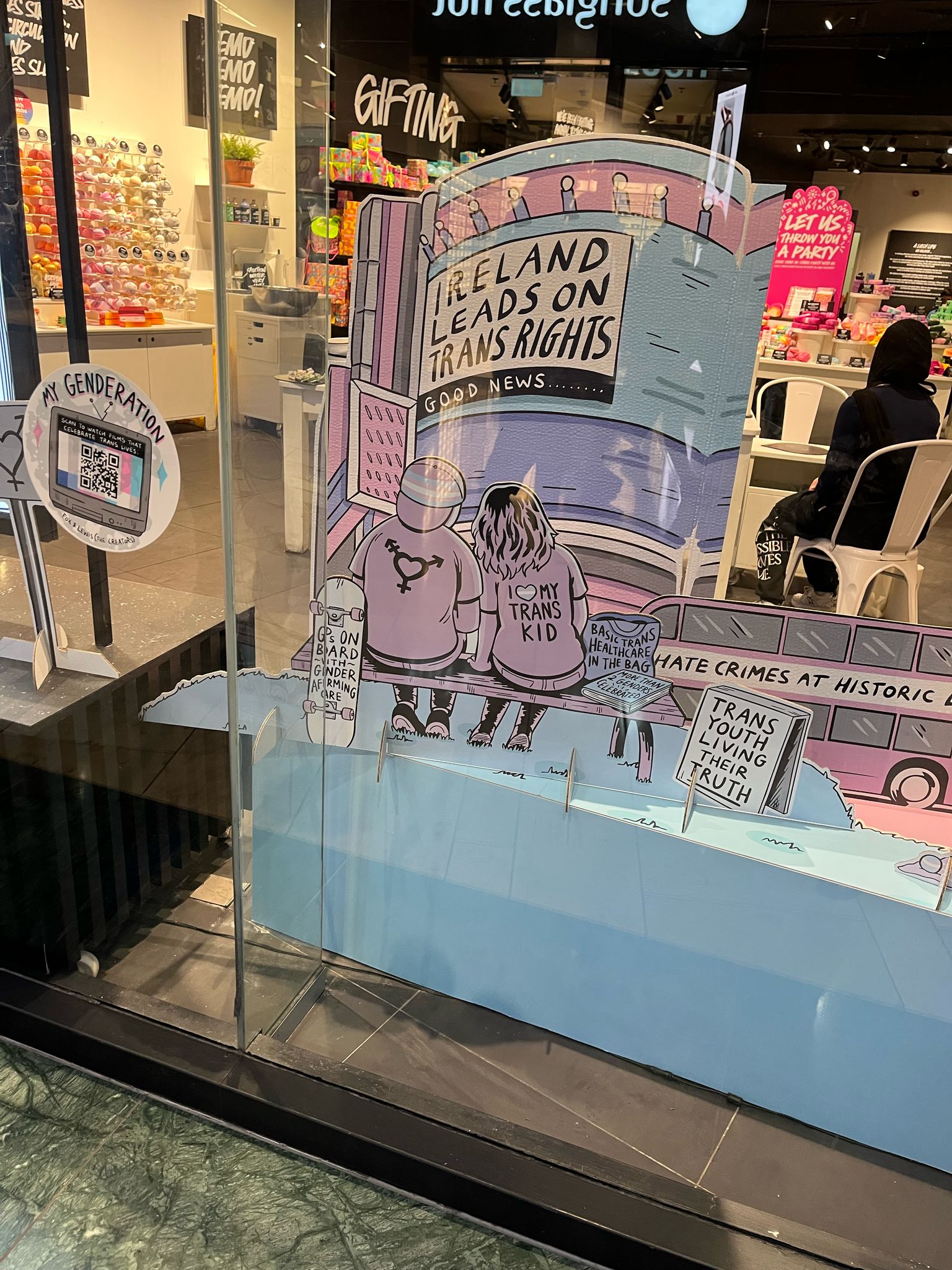
A disturbing new development has emerged in Lush’s controversial campaign: according to The Times, children as young as seven were handed branded campaign materials promoting trans ideology during a birthday party at one of its stores, turning a child’s party into a vehicle to encourage medical transition for children and young people.
The materials were included in party bags for children without parental consent or warning, raising serious safeguarding concerns. This incident confirms what many have feared: that a campaign originally framed as retail “allyship” is now crossing ethical boundaries and directly targeting vulnerable children with highly ideological messaging.
While Lush has since claimed this distribution was unintentional, this incident is not an isolated error, it is a consequence of a broader, activist-led marketing strategy.
Across Ireland and the United Kingdom, a dangerous form of corporate activism is being quietly and purposefully rolled out.
At Dundrum Town Centre in Dublin, and in all 101 Lush stores across the UK and Ireland, the cosmetics retailer Lush is using its brand power to market activist-led gender identity narratives to children and young adults.
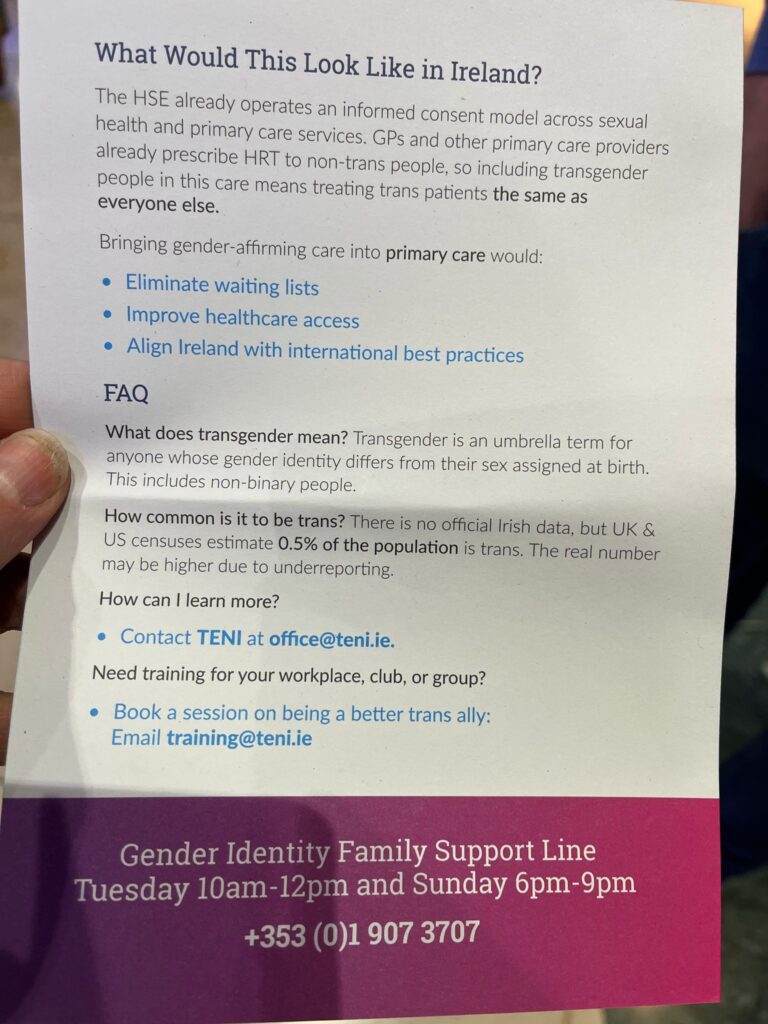
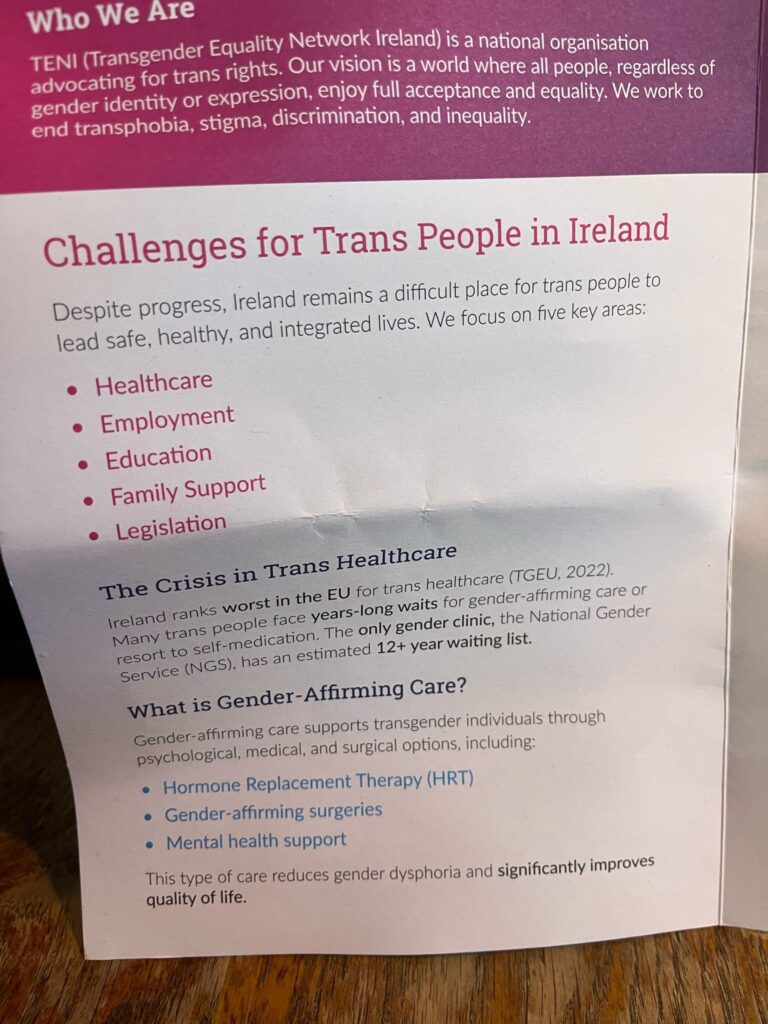
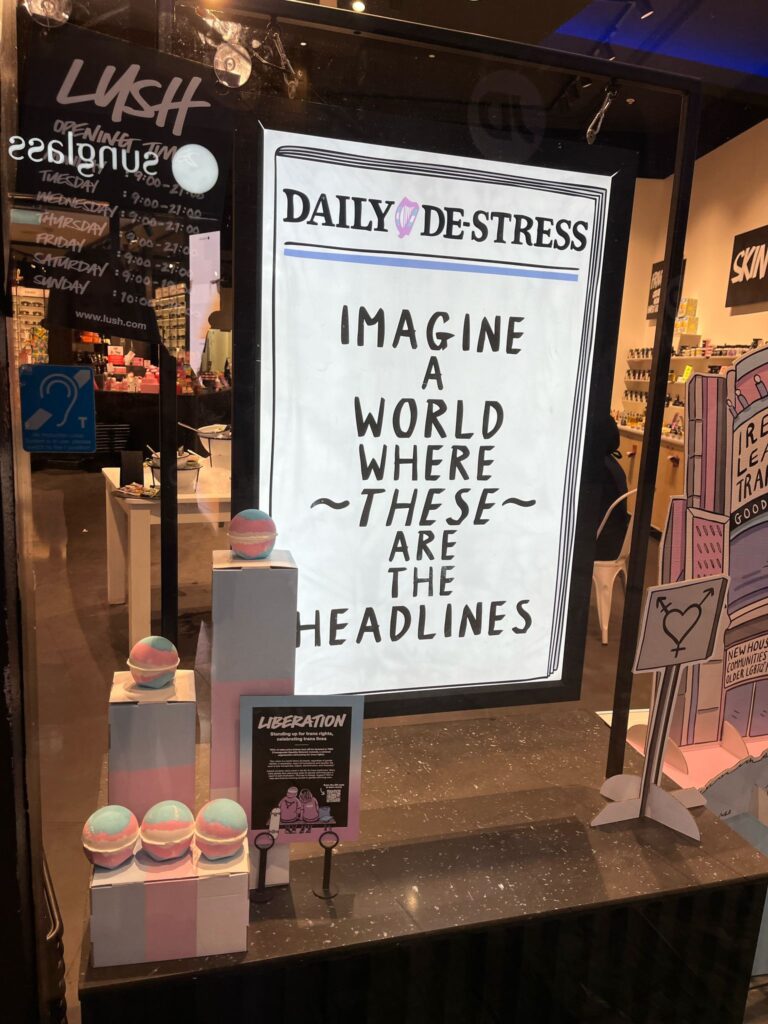
The current Lush campaign, built around bright window displays, free activist literature, and the sale of “Liberation” bath bombs — is not a simple act of solidarity. It is an overt promotion of medical transition narratives, combined with fundraising for trans activist organisations TransActual and My Genderation in the U.K, and to TENI in Ireland.
Lush’s campaign, running from 23 April to 11 May 2025, features:
- Window displays featuring cartoon children designed by trans activists Fox Fisher and Lewis Hancox.
- A free 24-page booklet (Dream vs. Reality), advocating for expansion of “gender-affirming care.”
- QR codes linking to trans activist-produced videos.
- “Liberation” bath bombs with 75% of proceeds donated to TransActual and My Genderation in the U.K., and to TENI in Ireland.
This marketing directly targets Lush’s core audience, young people aged 12 to 25 – many of whom are at critical stages of psychological development and identity formation, and who often shop independently of their parents.
No information is provided about the irreversible consequences of puberty blockers, cross-sex hormones, or surgeries. There is no room for thoughtful analysis, alternative perspectives, caution, or for truly informed consent. Serious risks, such as double mastectomies, osteoporosis, incontinence, permanent sexual impairment, and infertility, are entirely omitted. Instead, children and adolescents are presented with a single, activist-driven message: transition is fun – much like the bath bombs and soaps sold beside pastel posters celebrating gender-affirming care. The idea of the “trans kid” is promoted not as a complex identity, but as a cool, edgy persona.
This is not marketing; it is trans activism targeted at children.
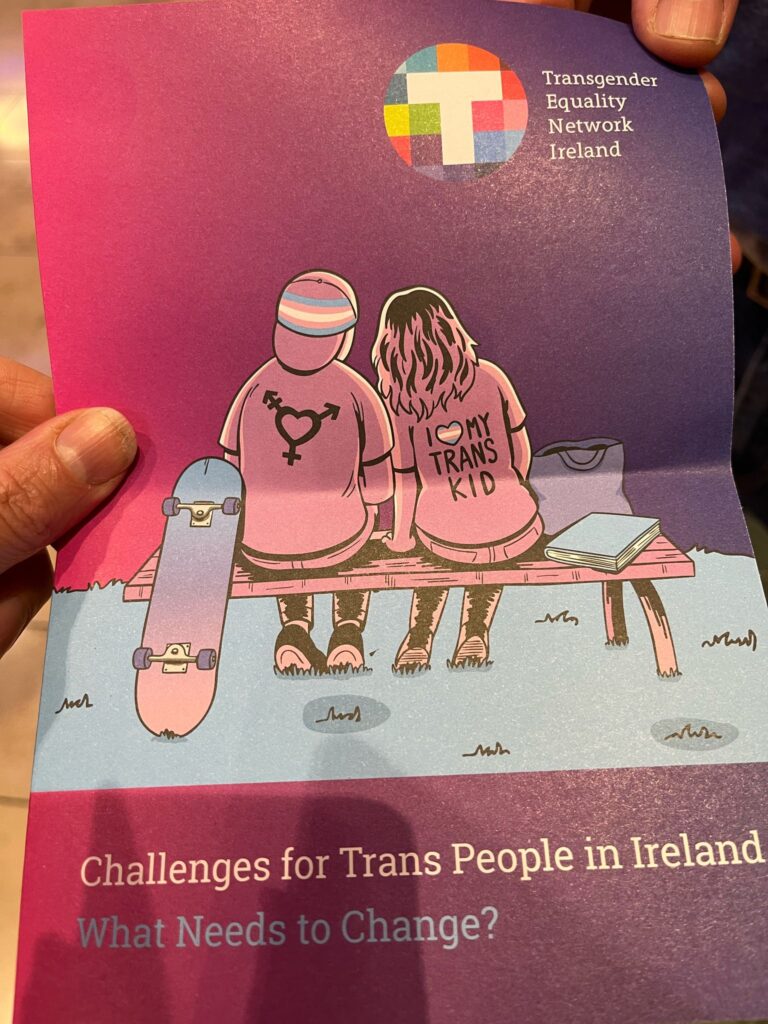
Social Contagion: The Unspoken Reality
So what is a “trans kid”? It’s an idea created by trans activists, designed to convince children they could be “born in the wrong body.” Let us be clear: there is no such thing as a “trans kid”. We do not have a choice in the bodies we are born with; we are born as our bodies and we die as our bodies. The latest research shows that children who identify as trans are socially vulnerable children, typically neurodiverse, isolated and seeking a sense of belonging.
The dramatic 5,000% rise in adolescents identifying as transgender over the past decade cannot be explained without acknowledging the role of social contagion. In a landmark 2018 study published in PLOS ONE, Dr. Lisa Littman documented the phenomenon of Rapid-Onset Gender Dysphoria (ROGD) and suggested that trans identification often occurred in peer groups, where multiple friends simultaneously declared new transgender identities.
This is a deeply vulnerable cohort. It is not the cool, savvy kids who identify as trans; it is the socially awkward, lonely, and lost children who are most likely to be dazzled by Lush’s cheerful, pastel-coloured campaign. Notably, 62.5% of those with ROGD had pre-existing mental health challenges before ever identifying as transgender.
The explosion in youth identifying as transgender is not simply the result of “better visibility.” The incredibly well-funded trans lobby has been masterful in targeting vulnerable groups, they have been very successful in selling the idea that medical transition is easy and fun.
But it’s not.
Medical transition is a very difficult pathway that leads to all manner of health complications. Indeed, the most reliable study on the long-term impact of medical transition shows that people who have medically transitioned are over 19 times more likely to die by suicide compared to the general population.
Gender-affirming care, another phrase promoted in the Lush window display, is another major driver behind the dramatic surge in the number of children and young people identifying as trans. While Lush promotes this approach to gender dysphoria, the most comprehensive and reliable report on gender-affirming care, the Cass Report, released in the UK in 2024, highlighted multiple problems with this new model of care. This approach, which isn’t backed by solid evidence, puts the child in charge while the adults, psychologists, clinicians, and others just go along with it. It places a huge burden on vulnerable kids right when they most need grown-ups to step in and offer real guidance.
Yet Lush’s marketing deliberately ignores the dangers of social contagion, presenting gender transition as an innate and joyous game rather than a socially mediated, irreversible medical pathway.
By glamourising transition to teenagers, Lush is fuelling a public health crisis – not alleviating suffering.
Lush’s History of Irresponsible Corporate Activism
This is not Lush’s first foray into shock-driven, ideological campaigning. The company has a well-documented history of using controversy to attract attention — often blurring ethical boundaries in the process. In 2012, the lunatics at Lush collaborated with the Humane Society to stage a grotesque stunt in which a woman was publicly force-fed, injected, and tortured in their Regent Street store to mimic the treatment of animals in cosmetic testing labs. While it drew media attention, the campaign was criticised for its gratuitous cruelty and its exploitative use of real trauma to drive sales.
Lush has also launched bizarre “Naked” campaigns in which employees stripped to aprons to protest plastic packaging. Their Manchester branch was relaunched as a plastic-free “Naked Store,” with staff going semi-nude to reinforce the message. Though framed as eco-activism, these stunts placed employees in humiliating situations and leaned more into publicity-seeking than genuine sustainability reform.
In recent years, Lush’s activism has taken a more disturbing turn, into the sphere of trans ideology and child-targeted marketing. They have partnered with controversial groups like Mermaids and Trans Media Watch, and in 2021, Lush’s Paddington store began distributing breast binders to anyone who donated £7 to G(end)er Swap, a trans outreach group. Contact details were collected in the process – a practice alarmingly like data mining. Offering medical-grade compression devices to minors in a retail environment is, at best, unethical. At worst, it mirrors grooming behaviour: building trust with vulnerable youth, while bypassing parental awareness and clinical oversight.
In these cases, what is marketed as “inclusion” quickly becomes ideological indoctrination, selling radical gender narratives to young customers without addressing the serious risks or long-term consequences.
Corporate Activism: Lush’s “Gender Affirming Care” Policy
The sale of the “Liberation” bath bomb – pink, blue, and white to mirror the trans flag – is not simply symbolic.
It is a fundraising tool directing money to activist organisations pushing for the expansion of gender-affirming care, including for minors.
This tactic – marketing harmful substances as child-friendly products – mirrors historical abuses by tobacco companies, who once used cartoons and sweets to entice children into smoking. Tobacco companies also portrayed smoking as glamorous and cool.
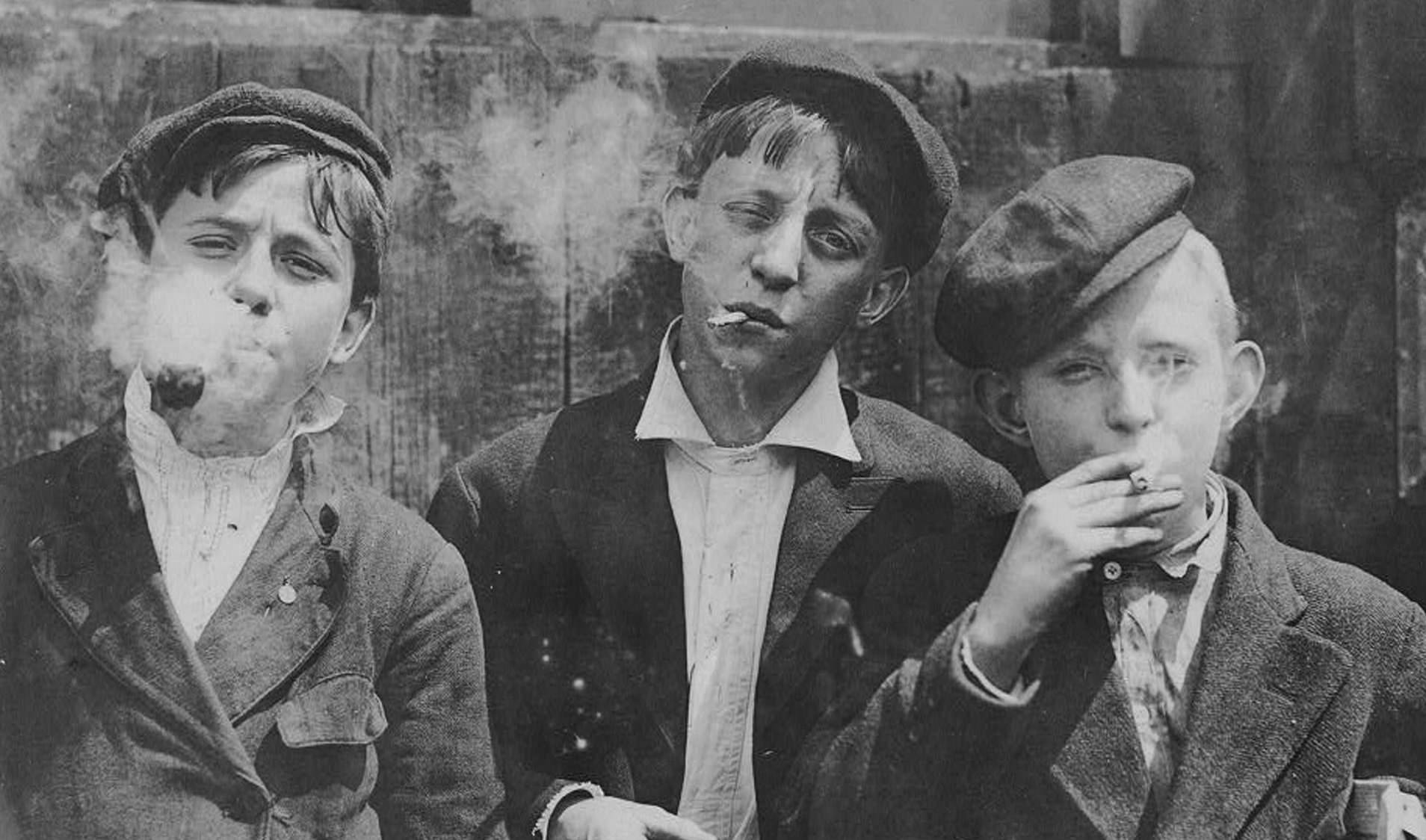
Society now recognises the tobacco industry’s behaviour as a catastrophic moral failure.
Why are we failing to recognise the parallels today?
Simultaneously with its public campaign, Lush has announced an internal Gender Affirming Care Policy for its UK and Irish staff, including paid transitioning leave and company support throughout medical transition. The problem is that just last year a fully comprehensive and forensic analysis of gender-affirming care carried out by Dr Hilary Cass and her team of researchers showed this new approach to gender dysphoria can be harmful and has no evidence-base to support it.
While companies have every right to manage internal policies, we also have the right to highlight how Lush is causing harm with its activist-led campaign, which is erasing the lines between retail, activism, and medical ethics.
Where Can Parents Voice Their Concerns?
There was a time when concerned Irish parents could rely on shows like Liveline to voice their worries, highlight safeguarding failures, and expose unethical practices.
However, since broadcasting just two programmes questioning the popular pro-trans narrative in 2022, Liveline – under pressure from RTÉ’s government-mandated stance on gender issues – has systematically avoided platforming any voices that seek to raise concerns about the startling number of Irish children pursuing medical transition.
Parents find themselves silenced. Children find themselves unprotected. And the media, which should act as a watchdog, strangely has nothing to say.
Ireland’s national broadcaster, RTÉ has been complicit in the suppression of critical perspectives on gender identity ideology. As Colette Colfer documented in Break the Silence for Genspect, RTÉ and the Broadcasting Authority of Ireland have endorsed the National LGBTI+ Inclusion Strategy, which promotes a singularly positive framing of gender identity issues — leaving no space for dissent, scrutiny, or open debate.
Liveline is no longer a place where worried parents can voice their concerns on this issue. Dissenting voices are excluded from the conversation about trans issues. And if you ring RTÉ to complain about the lack of attention given to this topic, RTÉ employees are now well-versed in defending their tiny amount of coverage. The truth is they avoid this issue like the plague – and tell themselves they’re doing a fine job.
Major international medical developments, like the Cass Report’s findings, are ignored. The UK Supreme Court decision last week received only a fleeting mention. Continuous calls from worried parents are dismissed. Whistleblowers Professor Dónal O’Shea and Dr Paul Moran from the National Gender Service are given barely a passing nod.
We now directly call on RTÉ, Joe Duffy, and the Liveline team:
Be brave and break the polite omertà that has descended over RTÉ. Allow concerned callers to voice their fears. Give a platform to the clinicians raising the alarm.
Listen to the families who have been devastated by inappropriate medical transition.
This is your duty. Public service broadcasting has a responsibility to report the news without fear or favour. Silencing one side because it is unpopular not only lacks integrity – it is causing real harm.