




Rethinking Youth Gender Medicine: First Do No Harm – London, 5–6 July 2026
By Genspect
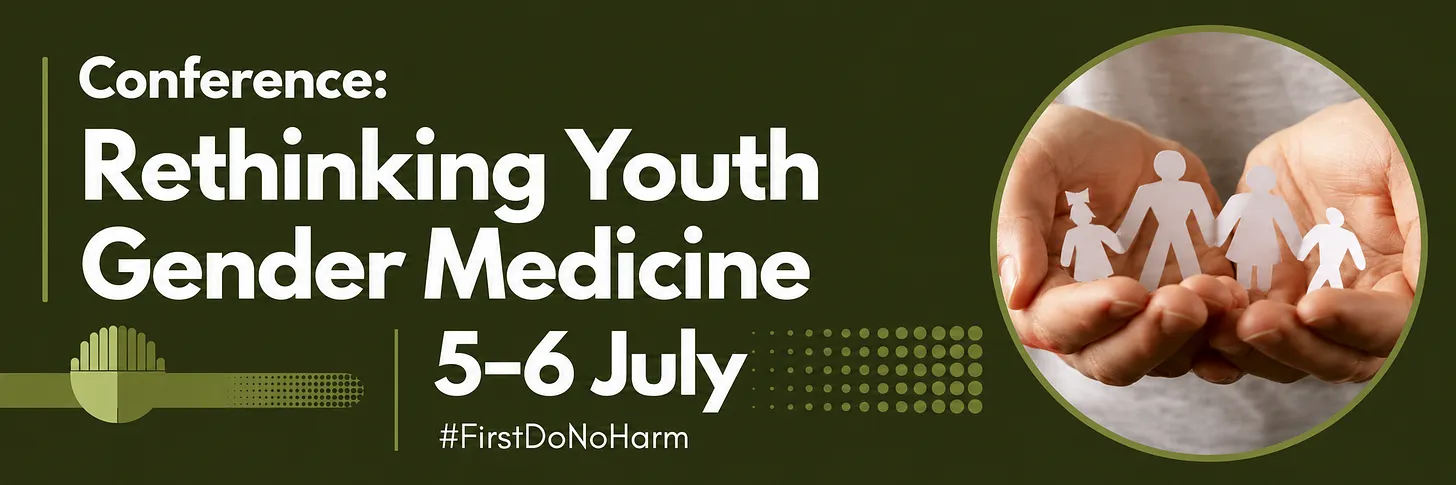
Youth gender medicine is at a crossroads in the United Kingdom. Recent developments, including the pause of the proposed puberty blocker trial and NHS England’s consultation on ending new cross-sex hormone prescriptions for under-18s, have prompted significant debate about how best to support children and young people experiencing gender-related distress.
Against this backdrop, the Clinical Advisory Network on Sex and Gender (CAN-SG) and the Society for Evidence-Based Gender Medicine (SEGM) are bringing together clinicians, researchers, academics, parents, and people with lived experience for a major international conference in central London on 5–6 July 2026: Rethinking Youth Gender Medicine: First Do No Harm.
The conference will explore the history and development of gender medical interventions, the social and cultural factors shaping contemporary practice, and the future of care for children and young adults experiencing gender-related distress. Sessions will critically examine current evidence, emerging research, and the ethical challenges involved in providing safe, compassionate, and evidence-based care.
Over two days, speakers from the UK, USA, Canada, Australia, and France will address a wide range of topics, including the rise of the medical affirmation model, the role of puberty blockers, ethical questions surrounding consent and autonomy, mental health factors associated with gender distress, and alternative therapeutic approaches for supporting young people. The programme will also feature parent perspectives and discussions about the broader social influences affecting young people today.
Among the speakers will be Genspect founder Dr Stella O’Malley, who will discuss the growing need for services supporting detransitioners and individuals experiencing regret following medical transition. Drawing on her work with Beyond Trans, Genspect’s free international support service for detransitioners, Stella will examine the challenges facing healthcare systems as they seek to respond to the complex psychological and medical needs of this often-overlooked population.
Joining her will be Michael Kerr, a detransitioned man from Scotland who identified as transgender for seven years and underwent medical treatment for five of those years. Michael founded Detransition Pathway UK, a peer-support organisation for detransitioners, and will speak about the realities of detransition and the support needs of those navigating that experience.
Other featured speakers include Professor Michael Biggs, Professor Sallie Baxendale, Dr Stephen Levine, Stephanie Davies-Arai, Dr Scot Glasberg, Professor Moti Gorin, and many others (view the full list here) contributing expertise across medicine, psychology, ethics, research, and public policy.
This conference comes at a pivotal moment. As policymakers, clinicians, and families grapple with difficult questions about youth gender medicine, there is a growing need for open discussion, careful examination of evidence, and thoughtful consideration of how best to support vulnerable young people.