




The SPLC Says Gender-Critical Beliefs = Pseudoscience & Hate
By Peter Jenkins
US Department of Justice: the Southern Poverty Law Center is ‘manufacturing racism’ to justify its existence
As the political temperature continues to rise in the US with regard to transgender issues, the US government has, for the first time, included political violence by trans activists as a potential terrorist threat. This follows a number of mass shootings and the assassination of Charlie Kirk, the charismatic leader of Turning Point, USA, which was allegedly carried out by ‘a radical who espoused extreme transgender ideologies.’ According to this latest policy document, ‘the threat is significant and pervasive.’ Together with larger-scale global challenges, ‘our national CT (counterterrorism) activities will also prioritize the rapid identification and neutralization of violent secular political groups whose ideology is… radically pro-transgender.’ Judging by the limited amount of supporting detail contained in the document, the terrorist threat posed by trans activists appears to be relatively small-scale, an emerging, rather than a substantive, risk.1
The second linked development is the concerted legal action by various branches of the US government against the Southern Poverty Law Center [SPLC]. This may seem a surprising development to many who may not have followed the changing fortunes of the SPLC over the past few years. The SPLC is a nonprofit, tax-exempt 501(c)(3) organization, based in Montgomery, Alabama. Its mission, according to its website during the time period in question, has been to be a “catalyst for racial justice in the South and beyond”.
SPLC Business Model: Risk-Inflation?
The SPLC is perfectly branded and positioned to appeal to the consciences of American progressives and liberals. Its business model specialises in the very lucrative market of providing intelligence intended to help organisations mitigate the risk of political threats. This seems to require constant risk-inflation to stoke concern and encourage funding on a massive scale. The SPLC achieves this very effectively. As a result, it is a very wealthy organisation, with annual revenue of $205 million, and assets of $795 million.
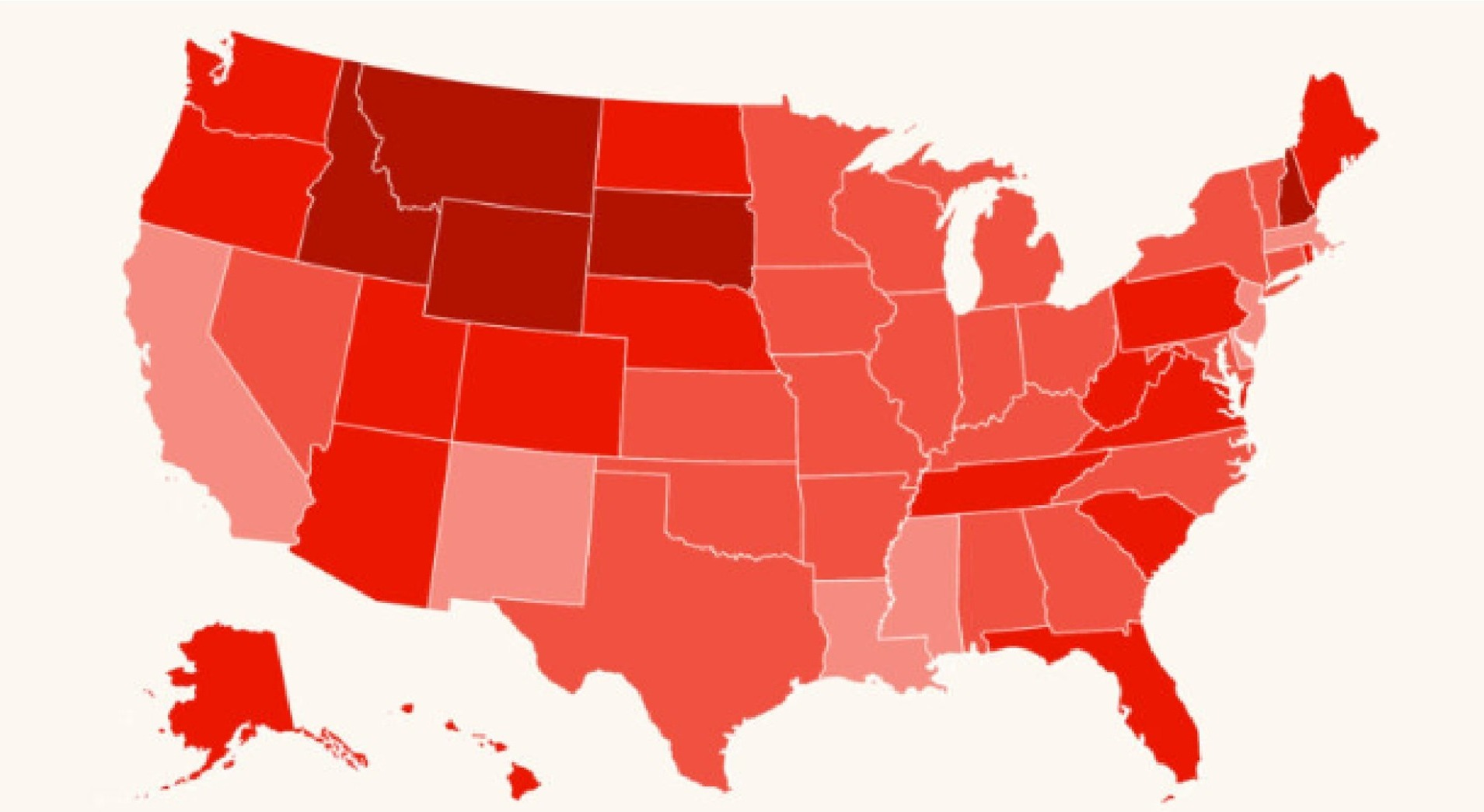
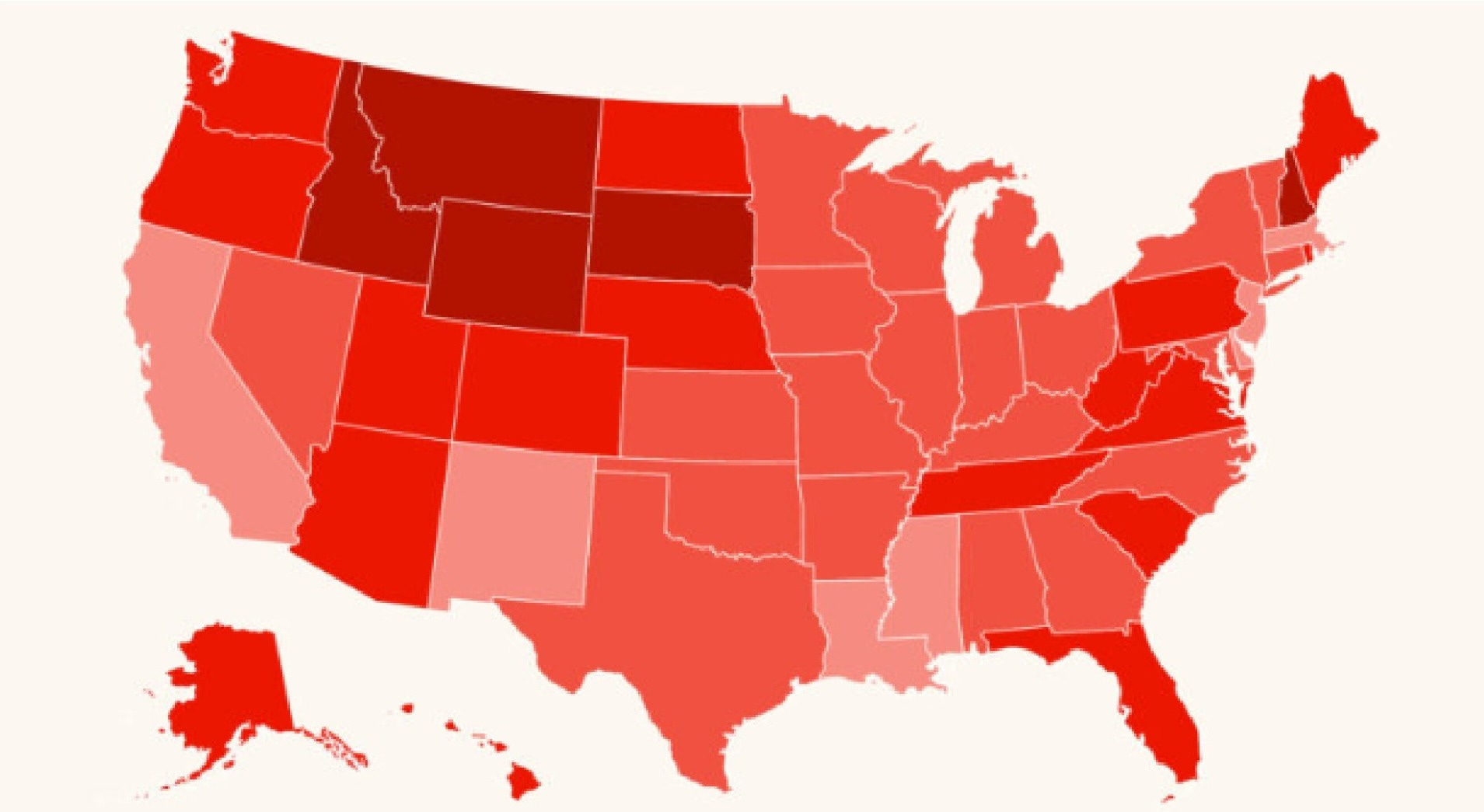
However, the SPLC has not escaped the breath of scandal over the past few years. There have been dramatic changes and resignations at the very top of the organisation, together with past claims of racial discrimination and sexual harassment, with more recent allegations of in-house union-busting. The SPLC has traditionally specialised in identifying right-wing hate threats based on racism, but has recently added anti-trans activity to its influential hate map. Being placed on the SPLC hate map can have a severe and crippling impact on an organisation’s ability to retain donors, access fundraising platforms, obtain unbiased media coverage, and even to survive in the medium term.
The SPLC: Be Kind to Your Enemies?
All this is not quite as straightforward as it might seem. In a surprise move, the US Department of Justice has brought Federal Grand Jury charges against the SPLC for wire fraud, false statements, and conspiracy to commit money laundering. In a nutshell, the charges allege that the SPLC has been secretly funding the very organisations it so publicly opposes, including the Ku Klux Klan, American Nazi Party, and Unite the Right. Between 2014 and 2023, it is claimed that the SPLC secretly channelled more than $3 million in donated funds to individuals who were associated with various violent extremist groups.
Hence, “the SPLC allegedly engaged in a massive fraud operation to deceive their donors, enrich themselves, and hide their deceptive operations from the public,” said FBI Director Kash Patel. ‘They lied to their donors, vowing to dismantle violent extremist groups, and actually turned around and paid the leaders of these very extremist groups – even utilizing the funds to have these groups facilitate the commission of state and federal crimes.’ Or, to put it even more bluntly, “the SPLC is manufacturing racism to justify its existence,” said Acting Attorney General Todd Blanche.2
Covert Funding for Informer-Activists?
So the SPLC, the main stop for liberal bequests and major donations, is now alleged to have secretly funded informers within the same racist organisations which it was expressly set up to oppose. Perhaps funding Nazi informants might be ethically justified in rare cases, if it actually leads to crime prevention. Whether those now funding the SPLC would still happily donate, knowing that contributions went to proven racists, is a moot point. Added to which, the hate map, now central to SPLC’s very existence, has, of course, generated its own unplanned consequences.
In 2012, a gunman told the FBI that he had used the SPLC hate map to select the Family Research Council, a Christian advocacy group, as a target for a planned attack. In 2024, Turning Point USA was added to the SPLC hate map, the year prior to Charlie Kirk’s death. While the SPLC cannot bear total responsibility for the unpredictable actions of others, the very designation of organisations as ‘hate groups’ (bizarrely, some allegedly in receipt of secret SPLC funding) might well be described as reckless. It is also an approach that can all too easily come unstuck. In 2018, the SPLC had to pay out $3 million in compensation for its defamatory claim that a leader of the Quilliam Foundation was an anti-Muslim extremist.3
The SPLC and Gender-Critical ‘Hate Groups’
In recent years, the SPLC has turned its ‘Eye of Sauron’ towards alleged anti-trans activism. Its apparent risk-inflation business model fits perfectly with the new trans agenda, but its wider role regarding potential harassment of gender-critical therapists and their organisations is much less widely understood. In a detailed report in 2023, the SPLC identifies leading organisations and their links with each other. Thus, the Society for Evidence-based Gender Medicine (SEGM) is described as a ‘prominent hub of information… Since its founding, members of SEGM have undertaken a global media and public policy blitz to challenge the affirming care model, advocate against gender-affirming care, and lend scientific credibility to legal claims against LGBTQ+ civil rights.’ Not to be outdone, we also learn that ‘Genspect is a hybrid research and advocacy group founded by SEGM member and Irish psychotherapist Stella O’Malley in 2021’ and is a ‘powerhouse in the dissemination of anti-LGBTQ+ pseudoscience’. Both SEGM and Genspect have now qualified for the SPLC hate map. So how does this work?
The use of the term ‘pseudoscience’ is absolutely critical in trying to make sense of the SPLC’s wilder claims. In fact, Erin Reed (2024), a trans advocate fond of amplifying the SPLC’s incoherent message, focuses particularly on ‘the weaponization of pseudoscience as a tool of trans suppression.’ Defining gender-critical thinking and research as pseudoscience is not just a casual insult, but the key rationale for justifying this targeted hostility. Thus, there are over 50 references to alleged pseudoscience in the SPLC’s 2023 analysis of gender-critical activism.
Science or Pseudoscience?
The SPLC appears to claim that groups like SEGM and Genspect are based entirely on pseudoscience and should therefore be disbelieved and dismissed. The silent corollary is, of course, that there should be no debate of any kind with supporters of pseudoscience. However, this defensive stance actually contradicts one of the main tenets of science: that rational debate with others, particularly critics, can lead to a more accurate presentation of ideas. Such debate helps refine the effectiveness of arguments and the robustness of evidence, and may persuade the uncommitted of the superiority of the ideas being advanced.
It is striking how the SPLC and its supporters characterise groups like SEGM and Genspect as being embroiled in pseudoscience. Yet, the latter groups rarely apply the same term to denigrate trans advocacy organisations. Instead, SEGM, Genspect, and other gender-critical groups tend to focus on rebutting very highly specific claims, e.g., regarding the allegedly high suicide rate of transgender adolescents; the claimed minimal rate of detransition; and the anticipated mental health benefits of gender identity-affirming medical interventions.
The SPLC and the Break with Science
Furthermore, the SPLC’s repeated failure to clearly define what is meant by ‘pseudoscience’ itself constitutes a significant breach of the scientific method. For the SPLC and its vocal supporters, such as Erin Reed, any viewpoint expressed that is unsupportive of gender identity is, by definition, anti-trans and therefore pseudoscience. No further discussion at all is needed, as with the parallel category of alleged conversion therapy.
We also find emotive reasoning hidden within the SPLC’s rhetoric through the persuasive repetition of key terms. Pseudoscience is the essential reference point, but its precise meaning is never clearly defined. Drilling down into the details, the SPLC identifies two key, allegedly definitive, pseudoscientific claims within gender-critical views. These are ‘the equivalency of sex and gender and the immutability of the gender binary’. For the sake of brevity, we could further reduce these two ideas to the foundational concept of an immutable sex binary. So, support for the core proposition of an immutable sex binary is sufficient to qualify as pseudoscience and to designate the organisations, such as SEGM and Genspect, that express any support for this view as hate groups. QED.
Misrepresenting Gender-Critical Thought as Far-Right
Then there is the repeated motif of contamination of gender-critical views by politically unacceptable ideas, associated with the US far-right. Hence, holding anti-LGBTQ ideas is associated by SPLC variously with: white supremacy, opposition to abortion, opposition to stem cell research, support for climate denial, millenarian theology, and, finally, creationism. This is guilt by association, or a primitive form of what therapists might best describe as splitting. To question trans ideas in any way risks being catapulted into the whole shebang of right-wing political beliefs. However, holding gender-critical beliefs is not necessarily an open passport for a one-way journey towards the US far-right.
But there is a deeper, historic reason behind the SPLC’s obsessive linking of gender-critical activism with the far-right that goes well beyond what the facts actually support. The SPLC has thrived on knowing its donor market extremely well, right back to when its founder, Morris Dees, made his first forays into political marketing during the McGovern Presidential campaign back in 1972. Social research suggests a pairing of small (and big) donors, who strongly support libertarianism on sexual and identity issues, with an equally strong, visceral opposition to the Christian right. This has proved to be a rich and rewarding seam for the SPLC. Using SPLC’s proven fundraising model, it seems to have been expertly mined and ruthlessly plundered, managing their traditional donation streams with pinpoint accuracy. This might explain the otherwise puzzling reflexive pairing of gender-critical activism with the Christian far-right, for instance, on the detransitioner issue. It also goes some way to explaining why the SPLC will not, and can not, address gender-identity issues simply on their own merits, but constantly segues into riffing on the latter’s spurious far-right links.4
Diving deeper, the SPLC warms to its theme of anti-trans hate: ‘A central theme of anti-LGBTQ+ organizing and ideology is the opposition to LGBTQ+ rights or support of homophobia, heterosexism and/or cisnormativity…’ We can see here that the designation of SEGM and Genspect as anti-trans hate groups is clearly based on avowedly political criteria. From this instrumental perspective, any research undertaken or presented by SEGM and Genspect is contaminated and can only be considered pseudoscience. However, the SPLC here falls into a trap of its own making, by applying primarily political criteria to decide on the value of scientific research (i.e., based on its reference to ‘homophobia, heterosexism and/or cisnormativity’). This approach is itself a signature feature of any heavily politicised (and therefore deeply corrupted) forms of science, such as Aryan Physics under the Nazi regime in Germany and Lysenkoism under Stalinist rule in the USSR.5
Trans Activist Evaluation of the Cass Report as Pseudoscience
Far from the high moral ground of science, trans ideology belongs, according to Thomas Kuhn’s influential work on the philosophy of science, within a decidedly pre-scientific paradigm. In this pre-scientific worldview, feelings and beliefs can somehow magically alter the biological reality of sexed bodies. Thus, trans ideology evaluates research which has been carried out in a scientific manner, such as the Cass Review, by using directly political criteria (is it pro-trans?). In much the same way, churches might evaluate Darwin’s scientific evidence for the theory of evolution on the narrow religious basis of whether it was pro- or anti- Biblical teaching.6
This pre-modern approach presents any number of potential problems in dealing with current reality. Take the Cass Review in the UK, which trans activists categorised as pseudoscience, because it is perceived as anti-trans. The British Medical Association has just carried out its own (arguably completely unnecessary) critical review of Cass. The BMA decided that, on balance, Cass’s research methodology is sound, with some reservations regarding its policy implementation.
To pursue the logic of this weaponised pseudoscience argument to its logical (if absurd) conclusion, if the Cass Review is anti-trans, then so is the group which enthusiastically financed and supported the dissemination of such anti-trans pseudoscience, i.e. the UK National Health Service (NHS). Perhaps the NHS should also be added to the SPLC list as yet another hate group, together with the British Medical Association? At this rate, the SPLC and its vocal supporters will rapidly alienate its few remaining friends; if all and sundry are not fully on board the trans train, they will be quickly bracketed off as being members of hate groups.
The Consequences of the ‘Hate Group’ Label
Unfortunately, all of this adolescent posturing can have very serious consequences for those targeted as members of hate groups. According to Tyler O’Neil, who has carried out extensive research on this topic, ‘the SPLC uses the ‘hate map’ as a reputational weapon to silence those who dissent.’ In 2025, a single complaint about SEGM’s authorship of training material, brought by a colleague of trans advocate Erin Reed, led to the cancellation by Washington State University of SEGM’s Continuing Medical Education programme. So much for democracy, so much for science, so much for free speech.
Using the SPLC hate map legitimates the erosion of trust and undermines the reputation of any therapist defending the scientific concept of an immutable sex binary. For instance, the Irish Association for Counselling and Psychotherapy produced a themed journal on LGBTQ+ issues, in which Leonie O’Dowd made the following claims:
‘Groups such as SEGM, consulted by the Cass Review, and Genspect – both categorised by the Southern Poverty Law Center as “hate groups” for their anti-trans stances – advocate that no medical treatment should be available to transgender people until age 25’ 7(O’Dowd, 2024: 23).
Such hostile claims are liable to gain wider traction simply through endless recycling, to the point where they are generally accepted as true. However, statements made in the public domain are fully accountable in law, and this issue is now subject to legal proceedings under the Defamation Act 2024 (Ireland). Until resolved, statements of this kind can lead to a loss of funding and deter therapists from sticking their heads over the parapet when it comes to raising issues about gender identity.
The Chilling Effects for Therapists on the Ground
Perhaps the most severe effect of the hate group racket is precisely to deter ordinary therapists from getting too interested, or too involved in professional discussion of these issues. My own research (n = 89) with members of Therapy First found widespread fear amongst therapists of professional complaints by trans activists, or by trans allies. One respondent to our survey reported:
‘I attended a CEU workshop where a representative from the SPLC [Southern Poverty Law Center] spoke. He said that they were continually ‘hunting’ for clinicians who do not affirm “LGBT+” in order to bring lawsuits against them with the goal of stripping them of the clinician’s license’ (Jenkins & Panozzo, 2024, p. 9).
This is just one indication of the chilling effects at ground level of all the social media bombast about hate groups.
At one level, the SPLC seems to be a unique example of a once progressive force, where fundraising skills have completely outpaced and derailed the organisation’s original mission. At another level, however, it seems to provide a classic illustration of what Richard Hofstadter described in his book, The Paranoid Style in American Politics. Hofstadter described the paranoid style as a central preoccupation with ‘a vast and sinister conspiracy, a gigantic and yet subtle machinery of influence set in motion to undermine and destroy a way of life.’ So, recorded hate levels just keep rising, year on year, and the need for ever more donations never seems to go away.8
The SPLC may now be reaping the whirlwind for its alleged covert funding of racists, but it has had a successful and highly lucrative run for its money up until now. The SPLC rejects democratic debate and free speech on gender identity issues, based on its own politicised and corrupted version of pseudoscience, the very thing it claims so adamantly to oppose.
Peter Jenkins is a counsellor, supervisor, trainer and researcher in the UK. He has published a number of books on legal aspects of therapy, including Professional Practice in Counselling and Psychotherapy: Ethics and the Law (Sage, 2017).
1 The White House. (2026). 2026 United States Counterterrorism Strategy
2 U.S. Department of Justice. (2026, April 21). Federal grand jury charges Southern Poverty Law Center for wire fraud, false statements, and conspiracy to commit money laundering. Office of Public Affairs.
3 Thiessen, M. (2018, June 22). The Southern Poverty Law Center has lost all credibility. The Washington Post.
4 O’Neil, T. (2020). Making hate pay: The corruption of the Southern Poverty Law Center. Bombardier.
5 Gordin, M. (2021). On the fringe: Where science meets pseudoscience (pp. 30–38). Oxford University Press.
6 Kuhn, T. S. (1970). The structure of scientific revolutions (2nd ed.). University of Chicago Press
7 O’Dowd, L. (2024). Providing therapeutic space to transgender and non-binary clients. Irish Journal of Counselling and Psychotherapy, 24(4), 21–27.
8 Hofstadter, R. (2008). The paranoid style in American politics (p. 29). Vintage.
Genspect publishes a variety of authors with different perspectives. Any opinions expressed in this article are the author’s and do not necessarily reflect Genspect’s official position. For more on Genspect, visit our FAQs.