




The “Ladies” Gaelic Football Association
By Catherine Monaghan
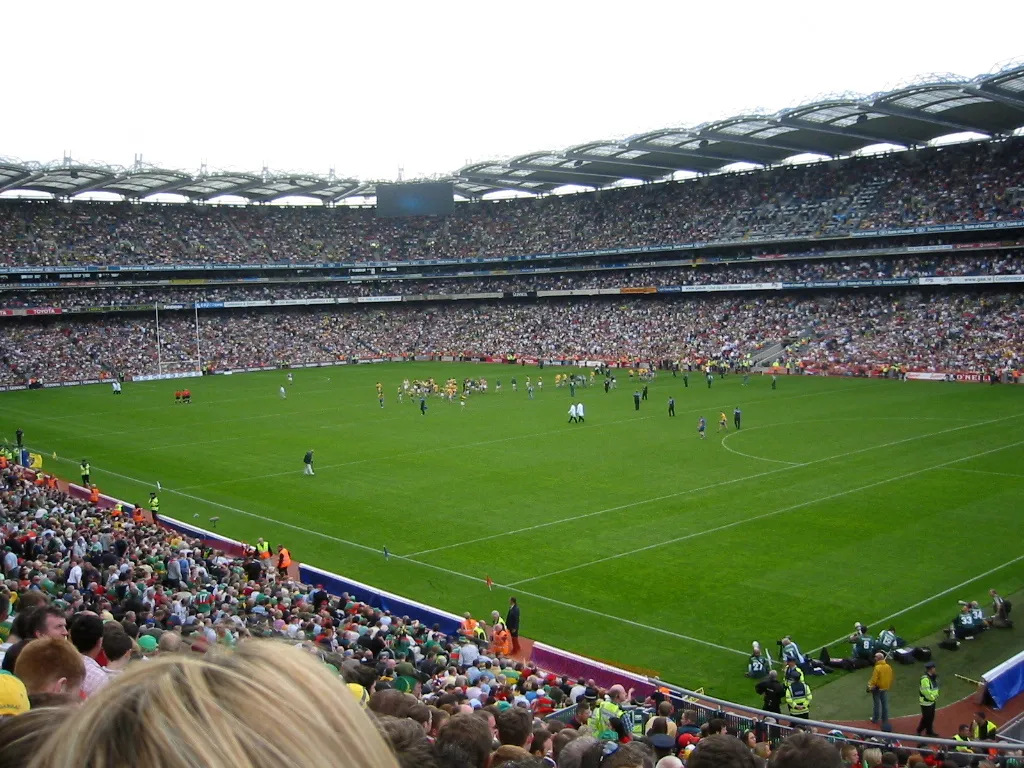
Anyone who has spent time in Ireland will know that the national sports – Gaelic football, hurling, and camogie – are an integral part of Irish community life. The Gaelic Athletic Association (GAA) is one of Ireland’s most well-known cultural institutions. Every town and parish has its GAA club with local people investing time and energy into running and supporting these clubs on a voluntary basis. Gaelic sport involves social structures, community centres, and shared traditions that connect generations. The women’s football, overseen by the Ladies Gaelic Football Association (LGFA) – a sister organisation of the GAA – enjoys the same grassroots enthusiasm, with ladies’ football thriving alongside the men’s games, often sustained by the same families, volunteers, and local rivalries. Gaelic sport is a living expression of Irish culture and community spirit.
The GAA and the LGFA are separate organisations but they work together, and many clubs have adopted a “one club” model to cater for both male and female members. The organisations work together on the “Go Games” policy for under-12s sport where teams can occasionally be mixed sex. After that, players move on to the appropriate age category in the ladies’ under the LGFA, or the men’s under the GAA.
The GAA and the LGFA, along with the Camogie Association, are in the process of merging to become one organization by 2027. A steering group chaired by Former President of Ireland Mary McAleese is leading this process.
In the News
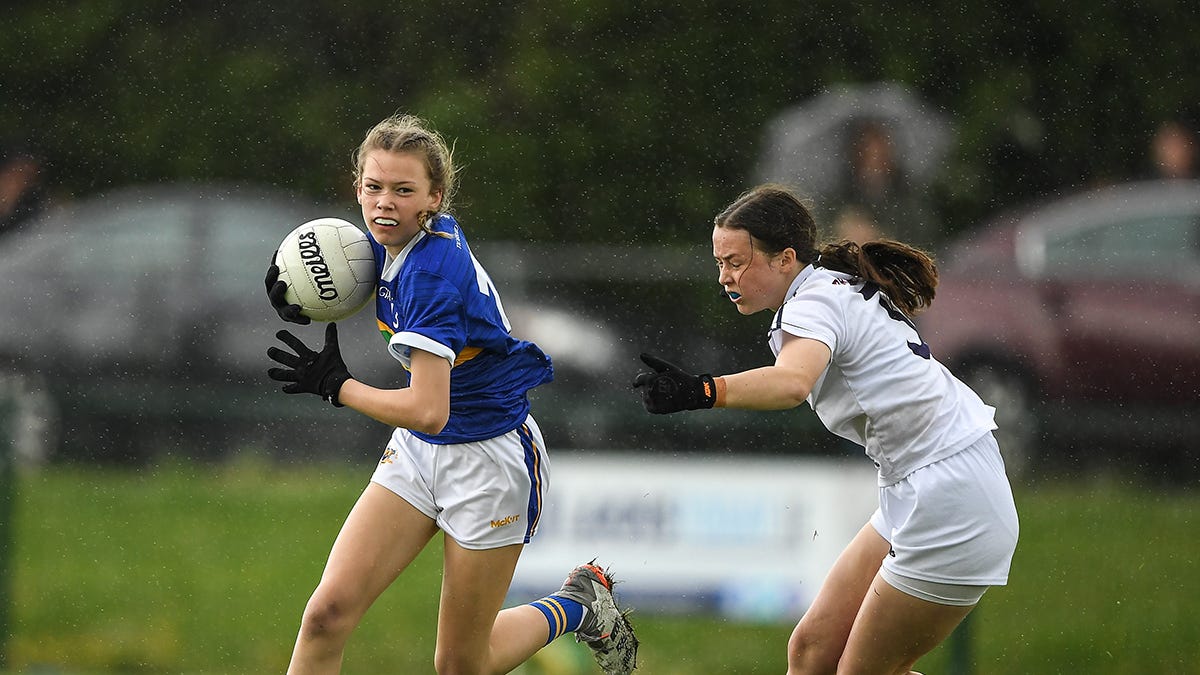
Recently, an Irish newspaper ran a story about an under-12s ladies’ Gaelic football match. Allegedly there were repeated, vocal claims from a parent that there was a boy on one of the teams and that this was unfair. The article goes on to explain that the father of the child in question – the alleged boy – says in no uncertain terms that the child is a 12-year-old girl, that the situation caused the family great distress and that he had hoped – and was told – that there would be an investigation into the matter. Both clubs released statements condemning the behaviour and the sharing of the story on social media. The father was later told by his daughter’s club that there had been an investigation and the matter was closed although he had not seen or heard any evidence of an investigation. When he pursued the matter with higher authorities he was told that the appropriate protocols had been followed and the matter was now closed. The article ends:
“The matter remains a live Garda enquiry. But the question remains: When (not if) this happens to another child, who do you call?”
The article skimmed the surface of an issue that Irish media and politicians now routinely and determinedly avoid – the importance of biological sex when it comes to sport, spaces and rights.
Why did this happen?
As mentioned above, mixed-sex teams can and do occasionally play Gaelic football under the age of 12. This was a ladies’ team though, and under the Ladies Gaelic Football Association. As such, it would seem fair to assume that a parent can be confident no matter how boyish a player looks that they are, in fact, a girl and have every right to compete.
However, the LGFA allows boys and men who identify as female to play with and against girls and women. This is despite the fact that the GAA – the men’s association – explicitly bars girls aged 12 and over from playing with the boys.
The parent who questioned the sex of the player may have handled the situation badly, but that a boy could be on the team creating an unfair advantage as well as posing a physical risk to girls playing against him was not beyond the realms of possibility. No child or team should be subjected to heckling or abuse from the side-lines, but if the LGFA is prepared to put girls at risk, then they must be prepared to deal with concerned parents.
The fact that girls and women can be pitted against adolescent boys and men in ladies Gaelic football is an alarming safeguarding fail on behalf of the sport’s governing body. The journalist reporting on the incident above missed an opportunity to draw attention to the LGFA Transgender Policy which is the root of the problem.
Captured
The LGFA, set up in 1974 to protect and promote women’s participation in Gaelic football, has been captured by gender ideology and is now prioritising the feelings of boys and men over the right of girls and women to safe and fair sport.
Gender ideology is the idea that boy or girl, man or woman, is determined by how you feel rather than your actual biology. So, if you feel like a man you’re a man, regardless of your biology, and if you feel like a woman you’re a woman, even if you have a male body. The feeling is called your “gender identity”. Gender ideology is a belief system, like a religion, and has no basis in science or fact. In fact, sex is binary and immutable – one is either male or female, and cannot change.
Believers in gender ideology see no problem with men who identify as women accessing single-sex spaces such as women’s toilets and changing rooms, women’s refuges and hostels, and even women’s prisons. They see nothing wrong with children and young adults who are confused about their bodies or have mental health issues being prescribed puberty blockers, cross-sex hormones and surgeries which render them unhealthy, infertile, and dependent on the medical system for life.
When it comes to sport, it is challenging for even the most ardent proselytisers of gender ideology to justify male inclusion in the female category without revealing at best a disregard for women, at worst outright misogyny. From a young age, boys have a physical advantage over girls and from the onset of puberty the advantage is so obvious that it takes willful blindness to deny it. Men, even if testosterone is supressed, retain all the advantage of male puberty – they are generally taller, bigger, heavier, with bigger hearts and lungs and longer, stronger muscles.
And yet, for several decades sporting bodies as high up as the International Olympic Committee (IOC) allowed males to compete in female categories. From the 1960s to the 1990s, international sporting bodies including the IOC, World Athletics, and others required sex verification for female competitors. Then, around the turn of the century, some organisations abolished sex testing due to claims it was invasive, limited, and discriminatory. In 2003 the IOC moved toward allowing male athletes who identified as women into the female category under certain conditions which varied from sport to sport. In 2015, they implemented a requirement for testosterone levels to be below 10 nmol/L, a figure which is still far above normal female range of 0.5–2.4 nmol/L.
Seeing Sense
The tide is turning again, though. As biological males competed and often won in female categories, sporting federations faced increasing evidence of unremovable male physiology advantages and safety risks, especially in contact sports. In the past five years, many sporting bodies including World Rugby, World Athletics, World Swimming/FINA, and World Cycling/UCI have restored sex-based eligibility rules. In Ireland the Irish Rugby Football Union (IRFU), Athletics Ireland, Swim Ireland, and Cycling Ireland have all aligned with their international federations’ move back to sex-based categories.
The IOC is now preparing to ban males who identify as female from competing in female categories across all Olympic sports following a scientific review on physical advantages linked to male puberty. The review found that the physical benefits of being born male remain even after testosterone suppression. IOC President Kirsty Coventry has made it clear that she wants to protect the female category.
Meanwhile in Ireland
The LGFA is lagging behind the main international and Irish sporting bodies with their transgender policy, introduced in 2023, which allows males who identify as transgender women to participate in female games. Males aged 12-15 must submit an application form along with a letter from a GP stating that they have transitioned or intend to transition to “living as a female”. Males aged 16 and up submit the same, along with evidence that their testosterone level is 10 nmol/L or below. As mentioned above, males who suppress their testosterone still retain the advantages of male puberty. A man whose testosterone level is half of the upper limit of 10 nmol/L is still well above the normal range for a woman. Testosterone suppression is a useless and tokenistic gesture which does nothing to ensure safety and fairness for women playing with and against men.
The LGFA is aware of this because they have been contacted by members expressing concern and dismay over a policy which was brought in with inadequate consultation and which severely compromises the integrity of the women’s category in Gaelic football.
Mary-Anne McNulty and Danielle Loughrey, who co-founded Gaels for Fair Play in response to the LGFA’s refusal to engage with members on this issue, emailed Helen O’Rourke (CEO) and other management committee members, outlining their concerns with the policy and requesting a meeting.
The LGFA’s response? Not, as one might expect, an offer to listen to women’s concerns and work towards a fair solution, but a solicitor’s letter that was utterly dismissive of the issues raised and said that the LGFA “…is not under any circumstances going to take steps to amend or replace the policy despite your request for it to do so.” The letter said that points raised by the concerned women including about fairness, safety, and dignity, about safeguarding, and about the likelihood of girls and women now self-excluding from the sport if they were unwilling to compete with and share facilities with males were “very subjective” and without “a shred of evidence”.
Mary-Anne said:
“I’ll never forget the morning I opened up the email, seeing the name of solicitors firm at the top and the words ‘strictly private and confidential’ marked in bold and underlined. A feeling of sheer panic and terror took hold of me – which was the LGFA’s intention, I suppose.”
Situations have arisen where girls and women have suffered injury to their bodies and to their dignity due to competing with and against males who identify as women. Female players and parents of girls around the country are seriously concerned about this, but most are reluctant to speak out for fear of causing hurt or offence to people in their community – as mentioned above Gaelic football clubs are interwoven with close-knit communities in towns big and small around Ireland. Most people don’t know much about gender ideology, but they know just enough to know that questioning it is a no-no, unless one is prepared to be labelled a bigot or a transphobe.
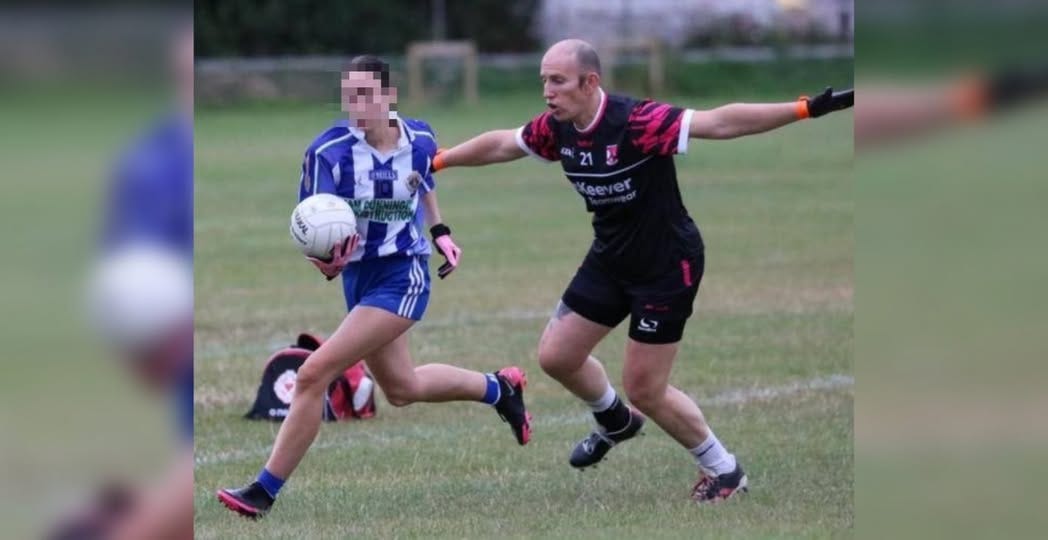
The LGFA seems determined to include males in the female games, and they imply in their correspondence with members that the Gender Recognition Act obliges them to do so. However, guidance from Sport Ireland says that sporting bodies can use their discretion in how they define participation categories – they may use sex-based categories provided they comply with equality law constraints meaning that exceptions must be reasonably necessary. There is no question that sex-based categories would be considered reasonably necessary when it comes to Gaelic football just like rugby, athletics, swimming, and other sports in Ireland.
What Next?
Will the GAA speak up for women where the LGFA have failed? The upcoming merger of the GAA, LGFA and Camogie Association is likely to become a decisive moment for women’s sport in Ireland, as it will require a single, unified policy on eligibility and participation. At present, only the LGFA has a formal transgender policy, while the GAA and Camogie Association do not. Integration will force the issue. Advocacy groups such as Gaels for Fair Play and The Countess have already urged the merger steering group to adopt a sex-based policy to protect fairness, safety and single-sex competition for women and girls, warning that the wrong approach will undermine female sport. Although no official policy has been drafted yet, the new unified organisation will have to address this issue, and members across all three associations will eventually vote on the final rules. As a result, women players will see either a strengthened, sex-based framework aligned with other major sports, or the continuation of the current gender-identity-based approach which endangers women and girls.
Catherine Monaghan is an Irish women’s rights activist and founding member of Wicklow Women 4 Women.
Genspect publishes a variety of authors with different perspectives. Any opinions expressed in this article are the author’s and do not necessarily reflect Genspect’s official position. For more on Genspect, visit our FAQs.