




The Right to Be – or the Right to Control?
By Marisa Antunes
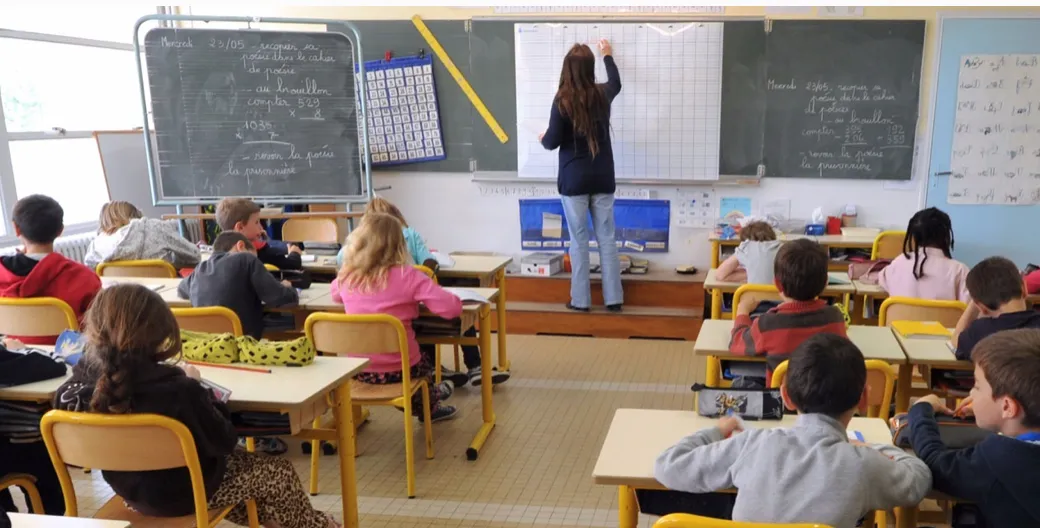
In Portuguese public schools, children and young people questioning their gender are permitted to undergo a social transition—adopting a new name and identity—without parental consent. Parents who discover this and object to teachers using their child’s “social name” risk being reported to the Child Protection Commission. Worse still, some have lost custody of their children, a consequence already occurring in several cases.
These rules stem from the previous government, a coalition of the Left and far Left led by António Costa, who now serves as President of the European Council of the European Union. The current ruling Centre-Right coalition (PSD-CDS) is now seeking to abolish these guidelines. Responding to a public petition signed by over 55,000 people, the coalition’s parliamentary group has scheduled a draft resolution for debate this Friday, 28 February.
The controversial manual, The Right to Be in Schools (O Direito a Ser nas Escolas), was developed under João Costa—then Minister of Education and now president of the European Agency for Special Needs Education and Inclusive Education—alongside the Commission for Gender Equality (CIG). Seven LGBT organisations and two “experts” in gender identity contributed: Amplos, Action for Identity, Plan i, Casa Qui, ILGA, Rede Ex Aequo, TransMissão, Eduarda Ferreira, and Sandra Saleiro. The document, which asserts that sex is non-binary and encompasses dozens of genders, is applied across all educational levels, from primary to secondary school.
Intended as a guide to promote tolerance and protect minorities, the manual includes well-meaning advice but veers into troubling territory. Pages 16 and 17 state: “The right to use one’s self-attributed name must be respected in all school and extra-curricular activities within the educational community, without prejudice to ensuring the identification of the person through their identity document.” This effectively endorses social transition without professional diagnosis or psychological oversight—practices deemed irresponsible by experts like Hilary Cass, author of the Cass Report, and Stella O’Malley, founder of Genspect.
Currently, students can announce a new name and gender to teachers, who then adopt it—often without informing parents. The guide further advises teachers and school psychologists: “When communicating with the family, recognise the importance of privacy and dignity in this area. There may be situations in which the person has not yet communicated their gender identity to legal guardians, father, mother, family members, or even their circle of friends” (page 17). Parents who uncover their child’s double life and protest risk being reported to the Child Protection Commission for “psychological abuse,” with the manual urging staff to “detect and report to the competent authorities cases of violence or mistreatment” (page 17).
Though in place for nearly two years, with multiple instances of children removed from parental custody, the Right to Be in Schools guidelines are only now facing significant scrutiny as potentially “unconstitutional.” Critics argue that the rules, introduced in June 2023, preceded parliamentary approval of a supporting bill on “gender self-determination in schools,” passed in December 2023 under Costa’s outgoing government. In January 2024, President Marcelo Rebelo de Sousa blocked the legislation, swayed by the public petition. Yet, many provisions remain in effect across public schools, from nursery to secondary level.
Mainstream Portuguese media, dominated by left-leaning outlets, have largely obscured this issue, presenting only the guidelines’ positive aspects. A recent interview with João Costa in a leading newspaper—conducted by a journalist who has repeatedly won ILGA’s Rainbow Awards—exemplifies this bias, glossing over the manual’s darker implications. ILGA, a prominent LGBT organisation akin to Stonewall or Mermaids, is also part of ILGA Europe.
Unlike most Western nations, Portugal treats the surge in youth questioning their gender—a 450% rise in trans cases since the pandemic—as a taboo subject. Few journalists or opinion writers address it, stifling factual reporting. This mirrors concerns raised by gender-critical activists in the UK, who warn that Labour’s proposed ban on trans conversion therapy could criminalise parents opposing their child’s transition.
Too Late for Some, Hope for Others
For “Sara” and her parents, reversing this policy comes too late. A bright, sensitive girl who never questioned her body, Sara sank into depression at 15 during the pandemic, compounded by her parents’ divorce. She first identified as non-binary, then bisexual, before declaring herself a boy while attending António Arroio, Lisbon’s progressive arts school. Without her parents’ knowledge, she adopted a masculine name, which teachers immediately accepted.
Her parents discovered this during a school meeting when a teacher repeatedly used an unfamiliar male name while glancing at them. “At the end of the meeting, we spoke to her and couldn’t believe it—she was referring to our daughter,” they recall. This moment planted an ideological “seed” that shaped Sara’s life over the next four years, including interactions with Portugal’s public health system.
“It took one 10-minute consultation with a psychiatrist at the Júlio de Matos gender medicine unit for him to refer my daughter to an endocrinologist for testosterone,” her tearful mother explains. When challenged on the rushed diagnosis, the psychiatrist claimed his “extensive experience with gender dysphoria” sufficed. He even told Sara, then a minor, in front of her father: “You are the owner of your body and don’t need your parents’ permission for hormones.”
Now 19, Sara still identifies as trans, though her parents have persuaded her to delay hormone treatment for now. Alongside others with similar experiences, they founded Youth in Transition (Juventude em Transição), a civic movement uniting parents, detransitioners, psychologists, journalists, lawyers, and professionals advocating for less medicalised, psychotherapy-focused approaches. Affiliated with the Genspect network, the group warns of the risks posed by the Right to Be in Schools guidelines and urges swift legislative action—for the sake of the next generation.
Genspect publishes a variety of authors with different perspectives. Any opinions expressed in this article are the author’s and do not necessarily reflect Genspect’s official position. For more on Genspect, visit our FAQs.
Photo: Portugese classroom from vivearuportugalconsulting.com