




Single Sex Spaces in Ireland – What’s the Story?
By Catherine Monaghan
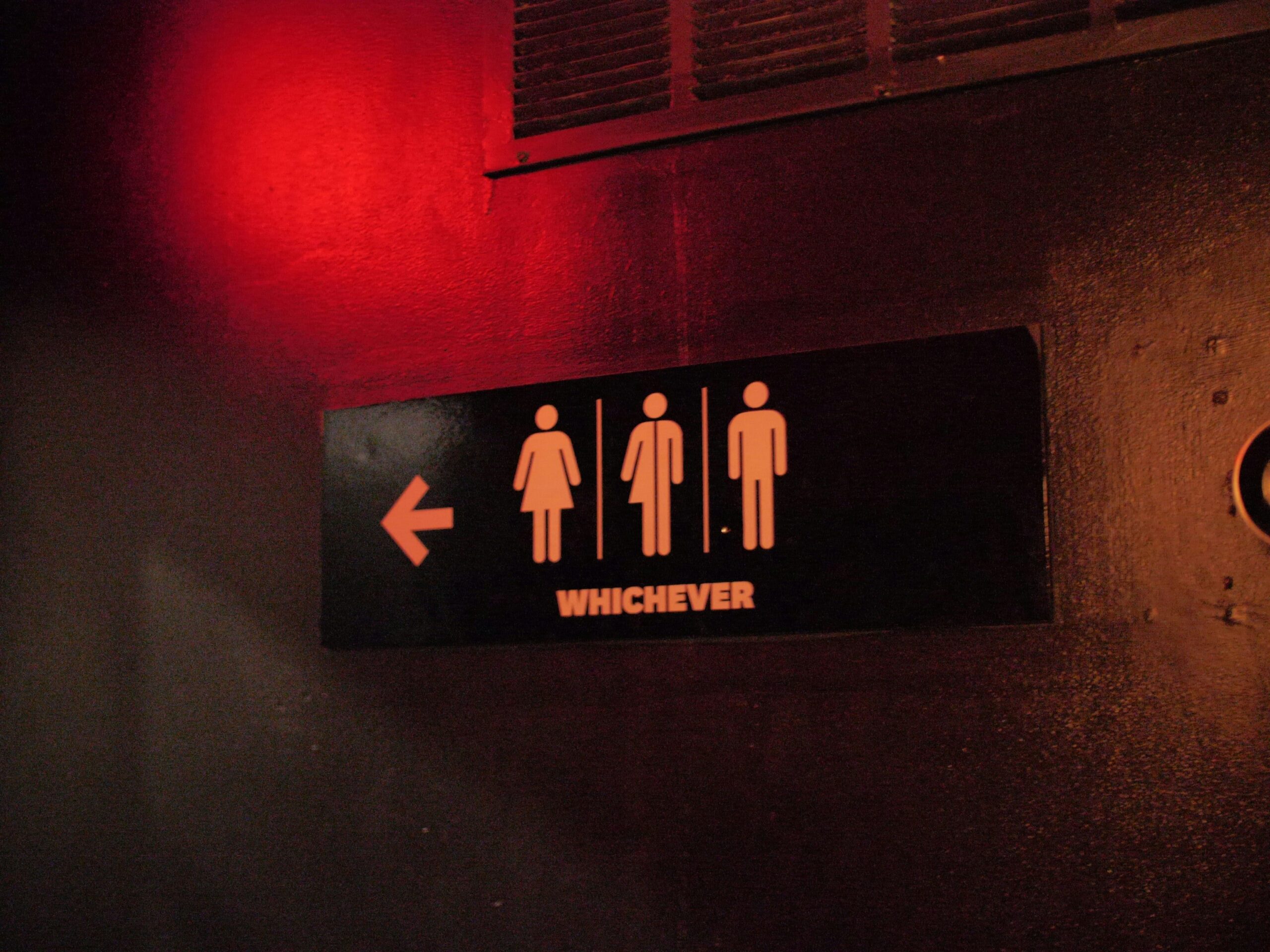
Recently, whilst trying on clothes in the ladies’ fitting room of a well-known Dublin department store, I had an interesting experience. The fitting room had individual, lockable cubicles and was well supervised by a woman. There was a little commotion, and the supervisor loudly informed us that a maintenance man was coming in to do some work. She wanted to know if we were all okay with that. There followed some good-natured banter—everyone was fine—and the maintenance man came in and proceeded to do his work, secluded in the dodgy cubicle, while we were all secluded in ours. On my way out, I thanked the woman for her consideration in letting us know that a man was entering the women’s space. I was curious to know if she would have done the same had the man in question been wearing a dress and claimed to be a woman. Her response was no; she had been told to say nothing should that situation arise.
So, where do we stand on this issue in Ireland, and why is it important?
Common Sense
We all know there are very good reasons why women need women’s toilets, changing rooms, hospital wards, refuges, etc.—safety, dignity, and privacy at a time when we are vulnerable.
Statistically, the overwhelming majority of sexual offences are carried out by men, and the overwhelming majority of victims are women and girls. Most women do not want to put themselves or their children in a position where they might be isolated or exposed around a man they don’t know. This is just common sense. To tell women that such caution is no longer necessary because sex is now a spectrum and gender is fluid is disingenuous and dangerous.
Data from the Ministry of Justice in the UK shows that transgender women (men who identify as women) in the prison population exhibit a male-type pattern of criminality. In fact, approximately 50% of transgender prisoners (biological men) had at least one conviction for a sex offence. In the overall prison population, by comparison, 19% of males had been convicted of sexual offences and only 4% of females.
In Ireland, the Equal Status Act 2000 and the Gender Recognition Act 2015 provide a legal framework that governs access to single-sex spaces.
The Equal Status Act 2000
The Equal Status Act 2000 prohibits discrimination based on various grounds, including gender. However, the Act makes it clear that it’s reasonable to treat someone differently on the basis of gender “where embarrassment or infringement of privacy can reasonably be expected to result from the presence of a person of another gender” (page 11, 5.2.f). “Gender” in the Act refers to male or female (page 8, 2.a).
This means that it’s legal and reasonable to restrict entry to certain spaces to women only or men only.
So far, so sensible.
The Gender Recognition Act 2015
The Gender Recognition Act 2015 allows individuals to legally change their sex and have it fully recognized for all legal purposes, including on birth certificates and official documents.
Anyone aged 18 and over can declare a change of sex without the need for medical assessment, diagnosis, or intervention of any kind. This is known as “self ID”. Applicants simply fill out a form online and submit a statutory declaration. They are then issued a Gender Recognition Certificate (GRC) and their new gender is legally recognised as their preferred gender for all purposes.
Ireland was one of the first countries to adopt this approach of self declaration. We went from having no means of legally changing gender prior to 2015, to full self ID once the Gender Recognition Act (GRA) was introduced. Our nearest neighbour, the UK, requires a medical diagnosis of gender dysphoria and evidence of two years living in the desired gender before granting a GRC.
Conflict of Rights
So, the Equal Status Act tells us it’s reasonable and legal to have women-only spaces. The Gender Recognition Act says that a man who feels like a woman and gets a GRC is legally female and entitled to enter those spaces.
Nowhere in Irish law is this potential conflict of rights addressed. Crucially, the Acts fail to define, or differentiate between, “sex” and “gender”, and the conflation of these two terms renders the legislation all but useless when it comes to protecting single sex spaces. Sex and gender are not the same thing.
Sex refers to whether you are born male or female; every human being is either one or the other. Even the tiny number of people who are born with an intersex condition are ultimately either male or female according to their chromosomal makeup.
Gender refers to ways of behaving and presenting oneself, the social and cultural roles that we associate with being male or female. When we talk about gender roles or gender stereotyping, we’re talking about the ways we expect women or men to behave or dress because they are female or male.
Women need single sex spaces and protection against discrimination because of our sex. It is our female bodies which make us vulnerable to discrimination, exploitation, and violence. Legislation that doesn’t clearly define and differentiate between sex and gender, therefore, does not serve women.
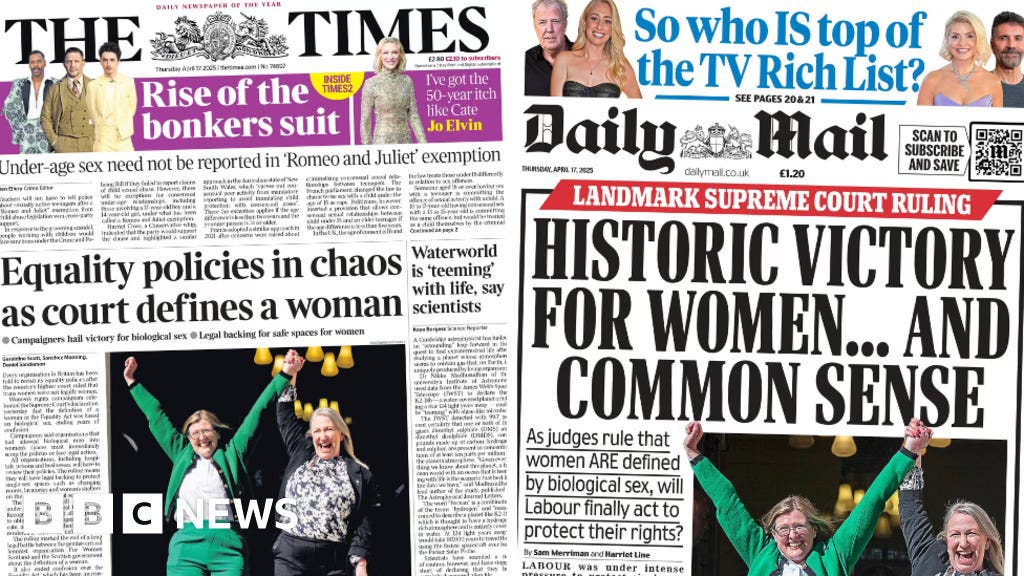
Just last month, the UK Supreme Court confirmed that in their Equality Act 2010, the words “woman”, “man”, and “sex” refer to biological sex and not gender, gender identity, or gender recognition status. UK law recognises that sex is binary and immutable; people are either male or female, and they cannot change from one to the other. This means that in the UK, it is legal to exclude men who identify as women, whether they have a GRC or not, from women’s spaces, women’s sport, women’s awards, etc.
Here in Ireland, we have no such clarity. Our Equal Status Act refers to discrimination on the basis of gender, which is now taken to include gender identity.
Our Gender Recognition Act, on the other hand, uses the terms sex and gender interchangeably, and actually states that a person’s sex is changed by virtue of obtaining a GRC – “..if the preferred gender is the male gender the person’s sex becomes that of a man, and if it is the female gender the person’s sex becomes that of a woman” (page 18, 18.1).
Even if our Equal Status Act did legislate against discrimination on the basis of sex, the GRA enables a person to legally change their sex and so claim the rights and protections of the opposite sex.
All this to say, in Ireland gender or gender identity seems to trump biological sex. Whether the male has a Gender Recognition Certificate or not seems almost irrelevant given it is not considered appropriate or lawful to ask someone to show a GRC.
It it all feels a little Kafkaesque, that’s because it is.
The Picture So Far
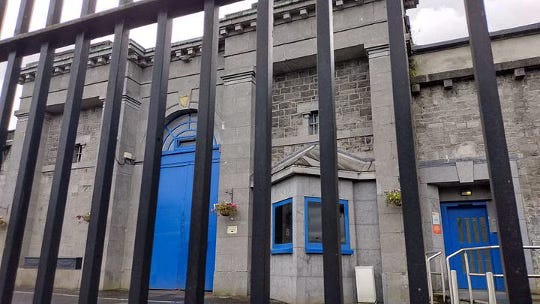
The case of Barbie Kardashian, a male who identifies as a woman and has a Gender Recognition Certificate to say he’s female, raises serious questions regarding the efficacy of the current legal framework. Kardashian, a 23-year-old sex offender with a history of violence, is currently serving a six-year sentence for threatening to torture his mother to death. He was initially sent to the women’s section of Limerick Prison despite the fact that, according to journalist Paddy O’Gorman, “He spent much of his life in various juvenile detention centres for his threats of violence and actual violence against women. In one case, he ripped the eyelid off a female social worker who was driving the car in which he was travelling. He described that woman’s screams as ‘music to my ears’”.
In 2024, Kardashian was in court again, accused of threatening to rape and sexually assault fellow prison inmates and prison staff. Despite admitting to making the threats, citing a desire for revenge over complaints about his behaviour, he was acquitted. He was, however, transferred to a male prison facility, where he remains but is due for release in 2026.
Barbie Kardashian wasn’t the only male in the women’s section of Limerick Prison. He joined two others, one a paedophile with a horrific history of abusing a young boy, the other a man who was serving a sentence for assaults on three men (and who went on to assault a woman in a women’s hostel he was placed in following his release from prison; he is now back in prison, again confined with women).
Media coverage of all three cases have referred to the criminals as women, so there is little public awareness of the fact that in Ireland, we have imprisoned vulnerable women with violent men. Prior to our recent election, I asked every politician who came canvassing at my door if they were aware of our self-ID legislation. Not one admitted to being informed about it, and not one knew anything about the men housed with women in our prison system.
Drawing the Line
The example of males being imprisoned with women may be extreme, but it is the endpoint of allowing biological men into women’s spaces.
It might seem to some relatively harmless to allow men into women’s changing rooms or toilets where there are lockable cubicles, less so to share women’s hospital wards or dormitories. It’s obviously unsafe and unfair to allow men into women’s sport, and downright dangerous and inhumane to allow known violent and sexually aggressive men to share women’s prisons. Where do we draw the line? How many women need to be threatened with rape or violently assaulted before something is done to remedy the current clash of rights?
Anecdotally, many women experience incursions into their spaces in daily life—men who identify as women using ladies’ toilets, joining women’s sporting teams, advertising on lesbian dating apps. Not all of these situations are necessarily dangerous; some are just uncomfortable, but shouldn’t it be okay to say no to a man because he is making us feel uncomfortable? Most women don’t complain; they don’t want to be thought unkind or bigoted, and they know that to follow a complaint through can be an arduous task. As a result, the status quo goes unchallenged.
The Gender Recognition Act 2015 has made it impossible for women to maintain boundaries that are absolutely necessary for us to live safely and free from discrimination based on our biological sex. Our UK neighbours have reclaimed their rights, but we have a long way to go to catch up. Clear definitions of male, female, and sex in our legislation would be a good start.
Catherine Monaghan is an Irish women’s rights activist and a founding member of Wicklow Women 4 Women.
Photo credit: Akshay Chauhan on Unsplash
Genspect publishes a variety of authors with different perspectives. Any opinions expressed in this article are the author’s and do not necessarily reflect Genspect’s official position. For more on Genspect, visit our FAQs.