




Religion in the Gender Wars: A Leap of Faith?
By Nancy McDermott
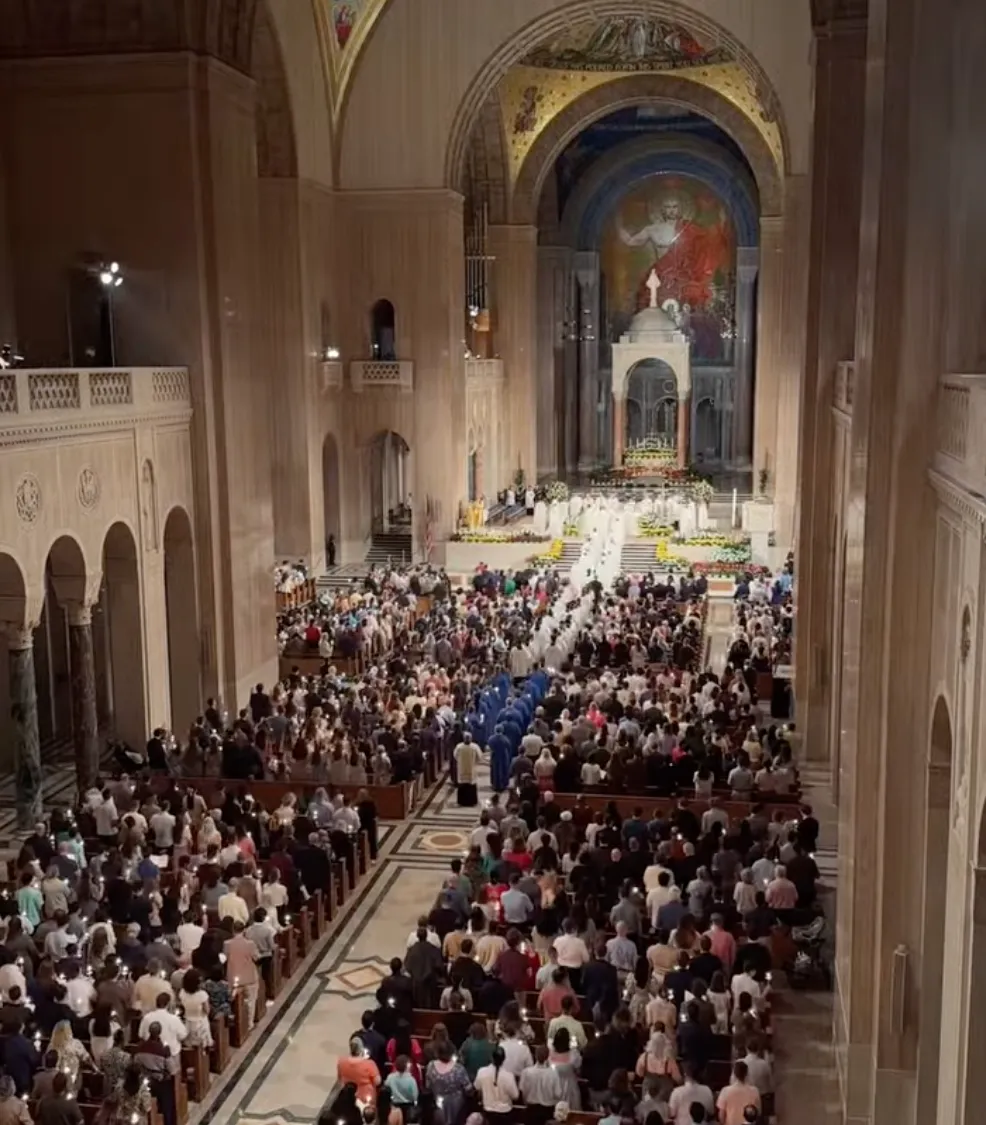
Religious faith is back in the United States, and that’s not a bad thing.
This Easter, after years of decline, the American Catholic Church welcomed a record number of new converts, mostly adults, and many from Gen Z. Other Christian denominations have also registered modest increases in membership over the last few years, and there has been a slight but measurable uptick in synagogue attendance. While it is probably too soon to talk about a religious revival, it does feel like something is changing. It’s not just the high-profile conversions of people like Vice President JD Vance or the prominent atheist Ayaan Hirsi Ali. It is that, after years of conspicuous secularism – think books about Dr. Martin Luther King Jr. that omit any reference to his Christianity – Americans are becoming more relaxed about religious faith.
Faith is back, and on balance, it feels like a good thing. It feels less like the strident religious revivals of the past than a return to moral clarity. I realize this may seem an anathema to some, especially those outside the United States who are unaccustomed to such religiosity, but hear me out.
The Religious Right?
Like all good alliterative labels, “Religious Right” is sticky. So sticky that it has outlived the phenomenon it originally referred to. The term first made its way into the language in the 1970s when the decline of mainstream Protestantism, an evangelical revival, and the needs of the Republican Party created a new force in American politics.
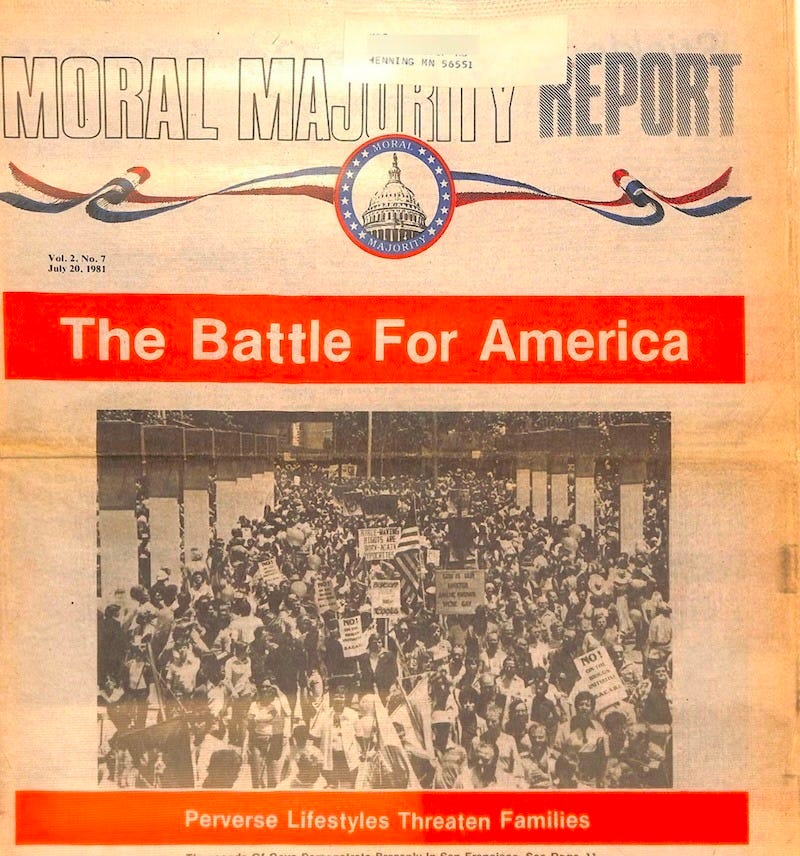
The “Religious Right”, epitomized by the Reverend Jerry Falwell’s Moral Majority, was a coalition of evangelical Christians, religious fundamentalists, and a few assorted Catholics and Jews who, disillusioned by the chaos of the previous decade, banded together to influence electoral politics.
The Moral Majority departed from American politics-as-usual in several important ways. They were fiercely anti-abortion, a sentiment at odds with the views of most Americans, who were decidedly moderate. They pushed the limits of secularism with campaigns for prayer and bible readings in schools and advocated teaching creationism alongside evolution. In retrospect, their influence, to the extent that they ever really had any, was short-lived.
Republicans were happy to have evangelical votes, paid lip service to so-called “family values,” and even professed their personal religious views, but they continued to respect the traditional separation of church and state. Moreover, the Moral Majority was fighting a rear-guard action against the views of the new generation (Gen X). This was particularly true when it came to homosexuality, which young people were beginning to accept as a variation of normal.
As a result, support for the Moral Majority soon dwindled, and the organization finally shut its doors in 1989. It seems that for most Americans, religiously-inspired is one thing, but seeking to codify religious doctrine in policy, especially regarding their personal lives, is something else.
Since then, the ‘Religious Right” has lived on in the imagination of liberals. It acts as shorthand for the populist masses of the American red states, who Barack Obama memorably caricatured as “clinging to their guns and religion”. People who asked awkward questions, such as whether imposing sweeping changes to social norms from the top, rather than attempting to win people over to their point of view and making changes via the democratic process (most saliently in the case of the Obergefell ruling, which legalized gay marriage), was really a good idea. Even to ask the question was treated as evidence of religious bigotry or at least deep-seated insecurity.
When, only a decade later, others dared to voice similar qualms about the radical, top-down “queering” of norms via school curricula, language, or allowing male athletes in women’s sports in the name of “inclusion,” they were dismissed in the same way as “homophobic, transphobic bigots.”
These former left-of-center people—many of whom supported Obergefell—were suddenly “right-wing” for opposing trans ideology. They learned from bitter experience that the old left-versus-right dichotomy we once used to make sense of politics is wholly inadequate to describe what is happening today. Whether we like it or not, to some, we are all “right-wing” now, regardless of our politics.
Keeping Our Faith
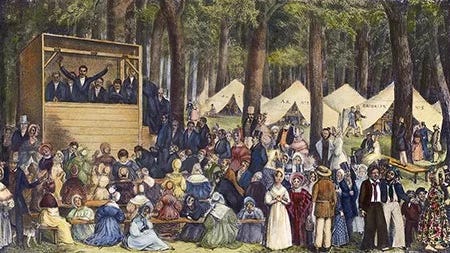
That religion continues to exercise an indirect influence on American politics should surprise no one. Religious faith is one of the glues that holds our society together, and our nation’s short history has been punctuated by waves of religious revival. These periodic ecstatic episodes seem to lend purpose and direction to American life and stave off our individualistic temptation to, as Tocqueville described it, ignore civil life and remain “confined to the solitude of our own hearts.”
Past revivals took a broadly Protestant religious form, but that doesn’t mean they must. The so-called “Great Awokening” of the 2020s, an emotional attempt to establish a new moral (double) standard, superficially resembles the religious revivals or “Great Awakenings” of America’s past, albeit without Christ, the radical call to love our enemies (agape), or any promise of redemption.
The renewed influence of Christianity in America in politics today is more subtle than in the past. There is no appetite to reprise the 70s, none of the fervor of a Billy Graham, much less the politicking of the Moral Majority. Rather, it seems to express a modest, grown-up longing for normalcy and goodness, to marry and to raise a family without worrying about what the kids are learning at school. It expresses a desire to restore trust in institutions and other Americans through shared moral, if not precisely religious, assumptions.
Conservative organizations like the American Enterprise Institute or the Heritage Foundation, once associated with the religious right, do not endorse any religious faith and instead promote traditional conservative values such as limited government, individual freedoms, free trade, free speech, a strong national defense, law and order, and parental rights.
The people within such organizations may be personally devout, and their faith may inspire them, but they are not the bible thumpers of an earlier era. No doubt there are exceptions, and someone, somewhere is charting the connections between religious fundamentalists and the organizations like Genspect with red yarn and pushpins on their bedroom wall, but the truth is more banal. At a time when mainstream liberal organizations opposing trans ideology are conspicuous by their absence, there is nowhere else to go.
Who are the religiously inspired people we work with? They are people like the Christian doctor setting up a clinic to treat detranstioners at huge personal risk. They are the whistleblowers whose faith inspired them to speak up. They are evangelical Christians who left lucrative law practices to pursue detransitioners’ lawsuits. They make up institutions like Catholic nursing schools, alerting all their students to the dangers of conflating sex with gender in a medical context, or the Catholic hospitals, which ended all gender-related procedures last November.
They are doctors who have sacrificed their careers, who testify and educate, often at their own expense. They are individuals and organizations working side-by-side with lesbians and gay men who also oppose trans ideology. They are parents who pray for their children and detransitioners seeking peace, purpose, and hope. The most striking thing about them is not their religious fervor but their decency and compassion.
Anyone serious about opposing trans ideology in the United States must be willing to collaborate in good faith with people of any faith, no faith, and from across the political spectrum. Of course, there will be differences of opinion. Such is the nature of alliances; what matters is that we focus on what matters most. This is what Genspect strives to do and will continue to do for as long as we are able.
Nancy McDermott is the Director of Genspect USA