




Is Genderism an Esoteric Male Power Network?
By Daniel Howard James
If you’re new to this series, please visit Genspect on Substack to read the earlier parts in this series about Gnostics, Jungian alchemists, castration cults, rock ‘n’ roll gender outlaws, and the deification of the transgender child.
Like many British people, I live in a crumbly old house which pre-dates electricity supply and indoor plumbing. After chipping away cement to expose original stonework, it was evident that whoever built this dwelling had included a six-foot high rhombus made of flint stones above the front door, in an elevated position visible across the valley. The dark stones had been in-filled with black mortar to make this geometric shape especially prominent, functioning as a territorial marker.
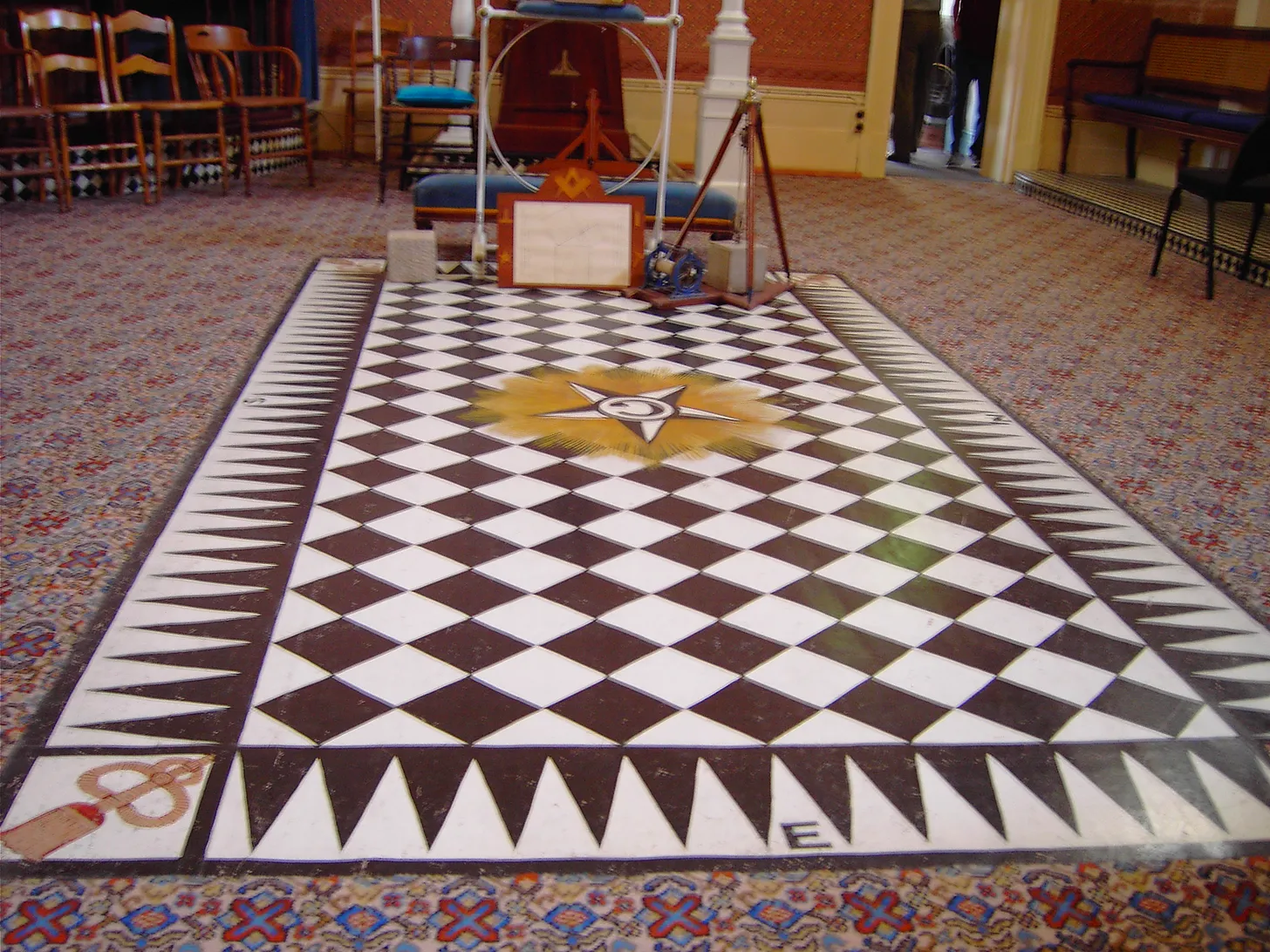
Once I understood the significance of the black rhombus, I began to notice it everywhere; even in the brick wall of a supermarket. What some may take to be a decorative feature is the signature of a male power network. It represents the black tile in the floor of a Masonic lodge, supposedly modelled after King Solomon’s Temple. In some accounts, the black and white floor tiles represent spirit and matter, while in other stories they represent good and evil.
Rather than a monolithic patriarchy, I believe that male networks, which may be highly selective in their membership, intersect to empower and serve specific interests. The Freemasons attracted notoriety among the descendants of the medieval craft guilds by developing their own quasi-religious rites, referencing a Great Architect who created their world. Like the bissu of South Sulawesi, the initiation ritual for a Freemason involves a sharp dagger and a supposedly secret, esoteric text.
The Freemasons I’ve met have been mostly concerned with business deals and charitable works in the local community, but long-held suspicions about the power of their network linger. Not all of their brethren have been so benign. In Spain from 1931, Freemasons deployed lawfare as part of the anti-clerical movement. Their allies in ‘antifa’ groups murdered over 10,000 Christians before and during the Spanish Civil War.
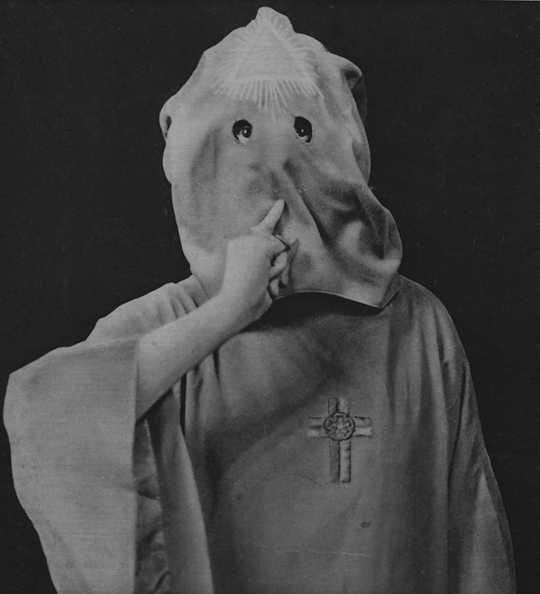
While there have been small, breakaway women’s and mixed-sex lodges across Europe since the mid-nineteenth century, the United Grand Lodge of England, which claims a lineage going back over three hundred years, is strictly male-only. The wives of Freemasons are expected to support the organisation, but may not participate, and certainly cannot challenge its doctrines. Freemasonry’s wackier clones include the Order of the Oriental Templars, which Aleister Crowley, whom we met earlier in this series, seized control of long ago.
If you are ever in the financial district of the City of London, built upon the original Roman colony of Londinium, I highly recommend a visit to the Temple of Mithras. Its stone foundations were relocated and rebuilt in their original position during the construction of Michael Bloomberg’s headquarters in the city. After obtaining a ticket in advance, you can enter a side door of the Bloomberg building and descend below modern street level to see the temple’s remains, and a small exhibition.
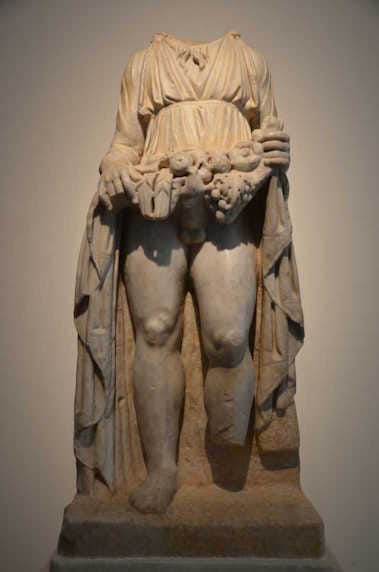
It was here that I learned that the all-male cult of Mithraism, popular among Roman colonisers before Constantine’s endorsement of Christianity, had an initiation ritual referred to as the ‘male bride’. The hazing ceremony in this windowless, underground temple, known as a mithraeum, seems to have involved a lot of alcohol and the young male initiate being dressed in women’s clothing, in a forerunner of today’s S&M dungeon. It has been speculated that the male bride ritual was derived from the feminine representation of Babylonian bad-boy Baal.
This cult practice has been preserved in the form of a headless statue now held in Madrid by the National Archaeological Museum of Spain, which could be taken as evidence that transgender people have existed for thousands of years. Or, that when sex-starved military men are hundreds of miles from home, the prettiest boy in the unit has to dress up and take one for the team.
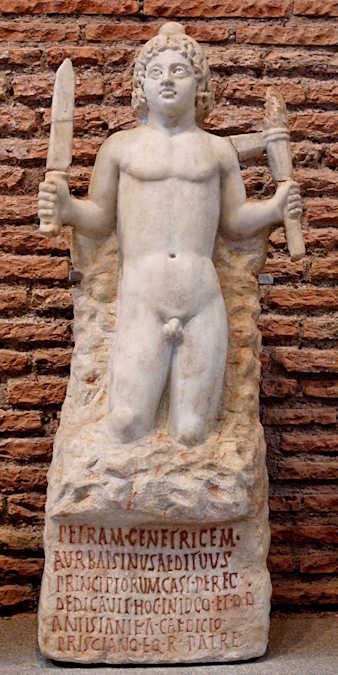
It seems this cult was widespread across classical-era Europe and beyond, with examples of Mithraic statues and allegorical stonemasonry found in north Africa and Syria. Somewhat like ‘Monkey’ in the Japanese TV show I enjoyed each week, Mithras was supposed to have been born from a rock. One such statue from the era of the Emperor Commodus (177-192 AD) was found at the Castra Peregrina imperial barracks in central Rome, indicating that this was no fringe religion.
Furry cosplay may also have been involved, as evidenced by a statue dated to 389 AD, found in a mithraeum in the country now called Lebanon, and kept today in the Louvre in Paris. This sculpture features a man with a lion’s mask, a snake around his torso, and his genitals on display. Some historians of these fruity basement-dwellers believe that ‘Leo’ was one of the senior levels in the Mithraic cult.
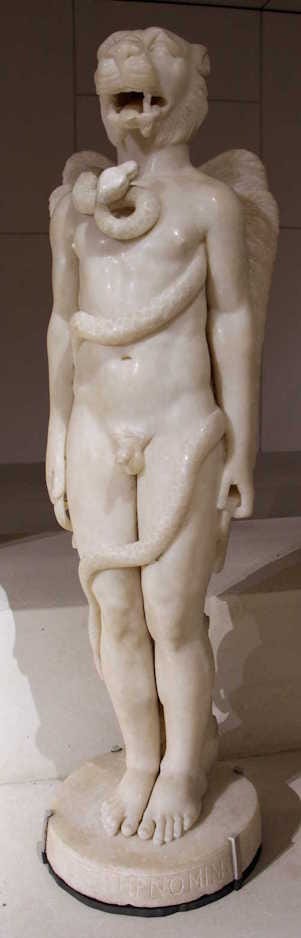
With the Roman Empire so vast by ancient standards, the followers of Mithras weren’t its only cross-dressing cultists. In his podcast episode ‘A critical history of gender theory’,
Forrest Smith detailed how the Galli, self-castrating transfeminine priests from Anatolia who worshipped the goddess Cybele, have been appropriated for modern times by the abuse of historical process. As UK government quango-turned-charity English Heritage puts it, the Galli “occupied an ambiguous space in Roman notions of gender that many modern transgender and nonbinary people have identified with.” This amounts to official celebration of deliberate, masochistic and dangerous self-harm.
In 1897, English poet George Cecil Ives founded secret society ‘The Order of Chaeronea’, also known as the ‘Army of Lovers’. This quasi-military cult was inspired by the Sacred Band of Thebes, a unit of three hundred homosexual warriors who had been defeated at the Battle of Chaeronea in Ancient Greece during 338 BC. A reference to the Army of Lovers re-surfaced in the 1990 pamphlet ‘Queers Read This’, which James Lindsay has reviewed recently. The anarchist ‘Bash Back’ movement of militant-deviant activism appears to have inspired today’s ‘trantifa’.
Andy Ngo reported that a group calling itself ‘Bash Back’ carried out a vandalism attack on the Equality and Human Rights Commission building in London during November 2025. This was in retaliation for the Commission recognising the authority of the UK Supreme Court ruling on the definition of ‘woman’ in the Equality Act 2010.
The ritual of the ‘male bride’ does not appear to have ceased over the centuries, with the evidence in Martin Dammann’s photographic book “Soldier Studies: Cross-Dressing in the Wehrmacht” suggesting those men who accuse feminists of being ‘Nazis’ may be doing what psychoanalyst Sigmund Freud called ‘projection’: attributing problematic thoughts and desires to others.
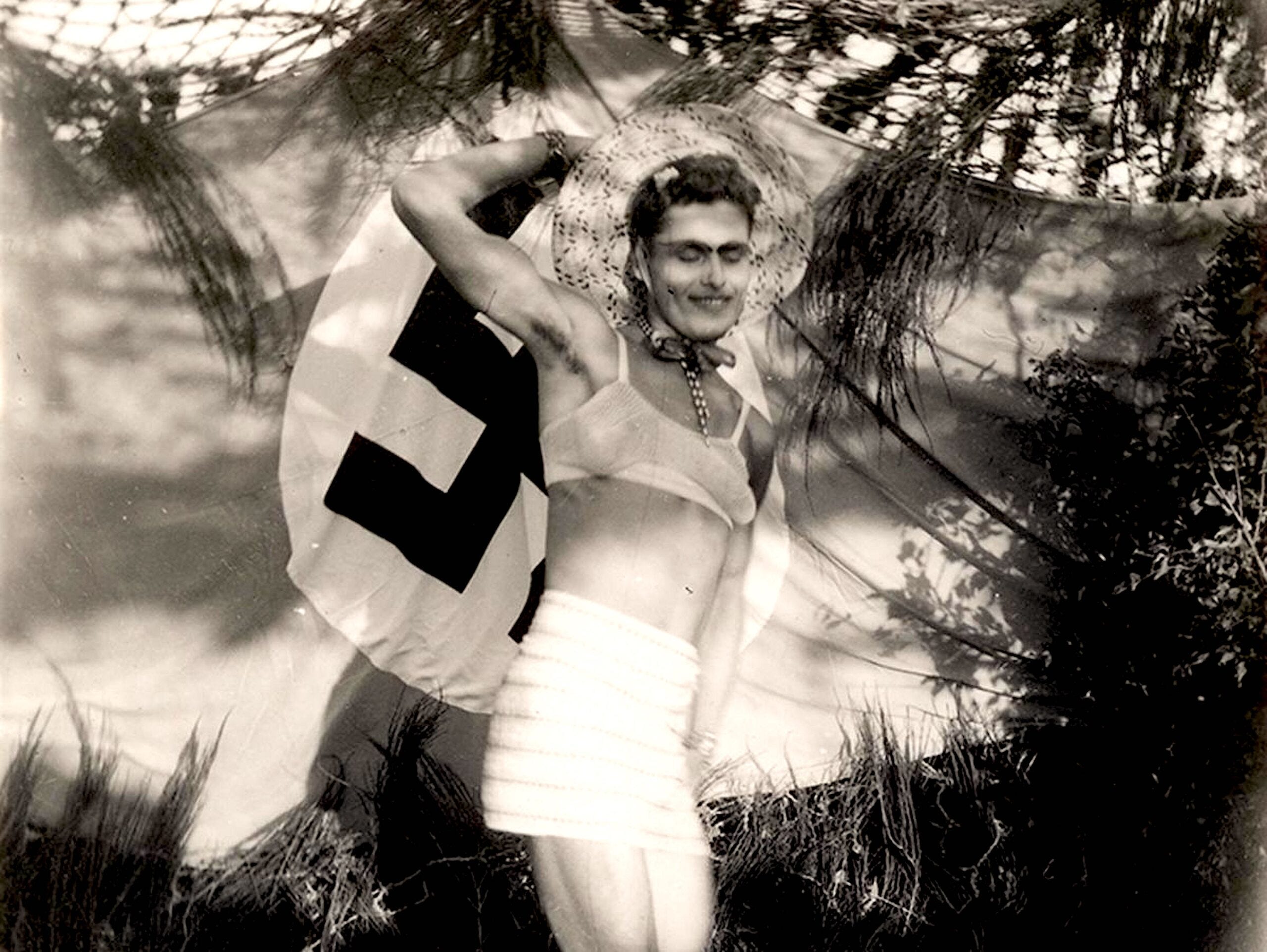
The National Socialist Workers Party of Germany was of course a formidable male power network, going from a rag-tag of revolutionaries, Berlin night-clubbers and rough-trade street brawlers to dominate the country within little over a decade. The party’s mantras about domestic roles for females elided the fact that as early as 1933, the Third Reich had opened a concentration camp at Moringen for women who wouldn’t wheesht.
In today’s cancel culture, we see evidence of a male power network in operation. Feminists asking awkward questions about gender ideology, and women simply objecting to the presence of a naked man in their changing room or prison cell, have been subject to censure out of all proportion to the offence supposedly caused. Queer theory appears to have escaped the academic seminar to engender a male power network, which certain women appear to support, perhaps in the hope of obtaining power by becoming non-women.
Male power networks with esoteric beliefs are routinely accused of corruption precisely because history has proved them extremely effective at manipulating whole societies and nations. The bond of brothers under pain of death, sworn to make all others secondary, is a supremely powerful organising force, because loyalty is of vital importance to functioning clans. These powerful associations do not sit well with liberal notions of equality.
To what extent is the online community of socially isolated basement-dwellers a male power network used for sadistic hazing? Members of the so-called ‘764’ cult have been convicted in both the USA and UK of encouraging self-harm and suicide by young women.
What if the harmful medical interventions and bizarre surgeries carried out on young, terminally online people with gender identity crises are the result of trolling by devious manipulators and wannabe Satanic edgelords? Is anyone checking the motivation of transgender forum members who encourage vulnerable teenagers to seek the interventions of gender clinics? And are the anonymous posters who encourage institutionalised self-harm in the guise of ‘life-saving healthcare’ even transgender themselves?
In this respect, transgender people could be considered victims of organised psychological manipulation by social network. The gender industry of doctors, clinic staff, plastic surgeons, drug companies and pharmacists has been only too happy to oblige this new legion of self-harmers, only at war with their own bodies.
If we are to challenge the harms being actively pursued for gender non-conforming people by an ideological-industrial complex, I believe we need to recognise the influence of networks of power attached to magical belief systems, and in particular male power with dark intent.
The gender non-conforming Bissu of Indonesia were believed by the Bugis people to have descended from the heavens via rainbow with the ‘white-bloods’, aristocratic rulers of the region. Their esoteric status is therefore tied into power politics. Until the 1940’s, the Bissu priests led the ritual which crowned new kings and queens for their people. As historian Leonard Y. Andaya put it, the origin story of the Bissu “is not simply an entertaining legend but a form of oral magic which reactivates the beginning of time in order to endow the favored ruler with powers of that primeval period.”
The followers of Mithras in Britain may have been drunken, horny soldier-colonisers who liked playing dress-up with the boys in darkened basements, but they also founded one of the most powerful cities the world has ever known. The square mile around Londinium’s Temple of Mithras remains a key centre of international financial empire almost two thousand years later. Those of us who have been inspired by Margaret Mead’s famous quote on small groups of people changing the world might note that it also applies to ruthless bands of ambitious and highly motivated fetishists who organise in cults.
Being surrounded by hostile natives who do not share your novel beliefs and rituals appears to cement the bond between men, making them a powerful adversary, like the British soldiers who killed hundreds of Zulu warriors after facing an overwhelming siege at Rourke’s Drift, Natal in 1879. Due to its technological advantages, the male power network of the colonial British army ultimately won that war. It would take another 115 years before majority rule emerged in South Africa.
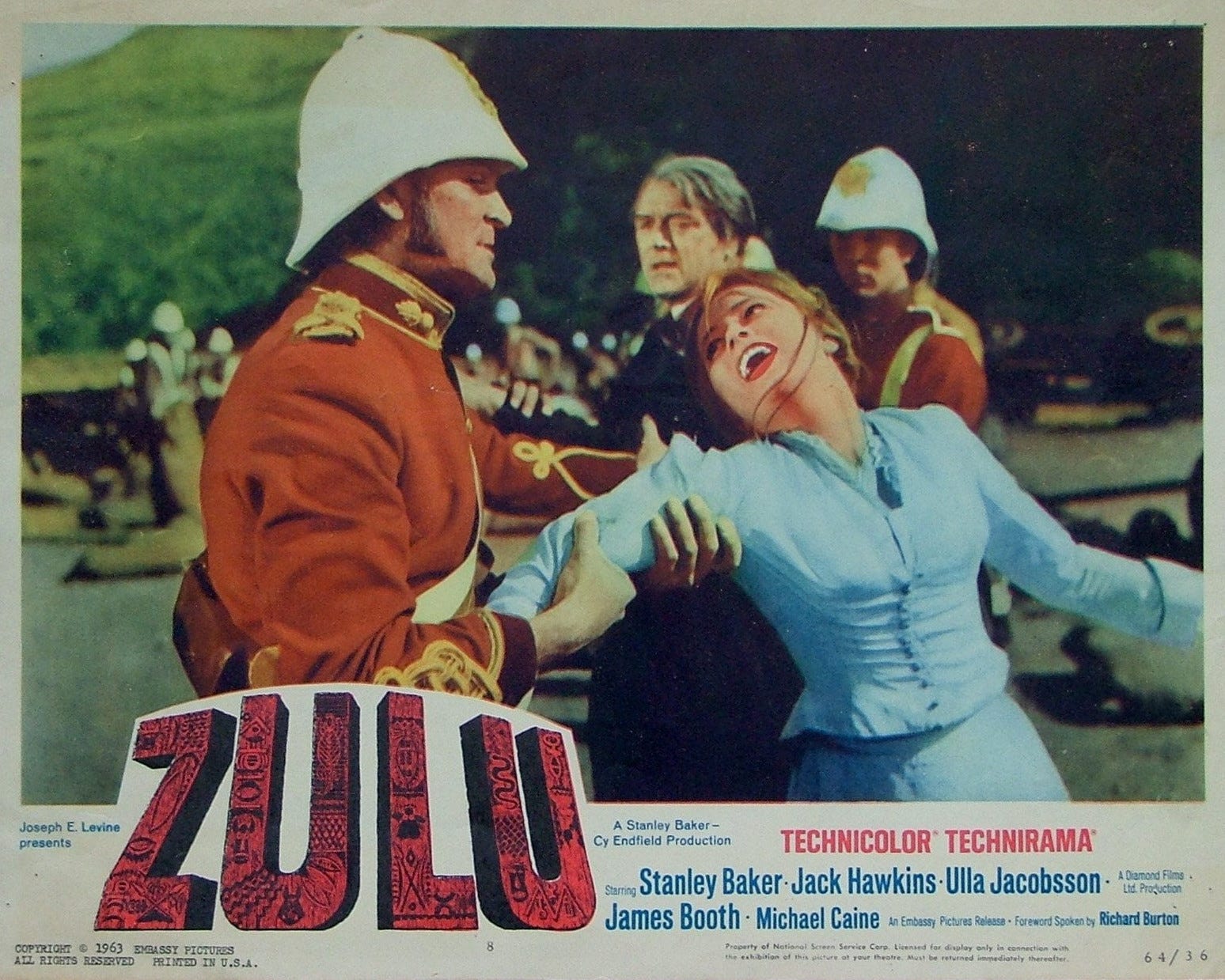
In our time, a very small number of cross-dressing men appear to have dominated nations of millions of women. And so, the very act of colonising territory can reify countercultural belief systems into policies to be imposed on a reluctant local population; siege mentality begets an authoritarian form of governance if the coloniser can achieve and maintain power. How many years will it take for majority rule to be restored in the case of gender?
The network’s belief system must contain a categorical imperative for the seizure and maintenance of power in order for that network to endure. For the coloniser, this could be based on the vulnerability inherent in numerical disadvantage; for the usurper or crusader, divine right. Sometimes both imperatives combine, forming a Molotov cocktail of murderous, insurrectional zealotry.
Late American sociologist Alvin Gouldner attacked the tendency of critical theories to espouse ‘underdog metaphysics’, noting the irony that progressive academics were drawn from the wealthier classes. Today, ‘allies’ support the right of violent sex offenders, invariably male, to be housed in prisons for women while simultaneously arguing for prison abolition. Deviant underdogs are supposed to form the new proletariat, with maximal revolutionary potential. That the contemporary spree of sex crimes harms the actual proletariat most is of no consequence to the postmodern theorist.
The contemporary transgender rights movement in the West appears to operate as a quasi-Masonic male power network; queermasonry, if you will. Instead of the dagger of the bissu, the sharp initiation implement is a syringe of cross-sex hormones, and the sacred, esoteric text is Judith Butler’s ‘Gender Trouble’, or ‘Julia’ Serano’s ‘Whipping Girl’. And so, the male power network takes on a quasi-religious quality, as its fundamentals, essential to power-seeking, become codified into initiation rituals, creeds and mantras, like the slogan, heard so many times, “Repeat after me: Trans women are women!”
From the Yogyakarta Principles of 2006 to the notorious ‘Denton’s Document’ of 2019, it is more than obvious that the trans brigade is on a mission to change the world. How else might we explain the rapid adoption of policies directly contrary to established medical, scientific and ethical principles, except via a powerful network acting in the interests of a self-selected affinity group? The arrest of comedian Graham Linehan by armed police on arrival in Britain, treatment usually reserved for international criminals and terrorists, was evidence of queermasonry in the justice system.
Women may outnumber men with transgender ideation by the ratio of Zulus to British soldier-colonisers, but there is no ‘trans genocide’ underway in the West. If your identity depends on the mental and physical submission of the majority, it was always unstable and precarious, with a tenuous connection to reality. The existential need for the power-seeking imperative of the ‘trans rights movement’ simply does not exist, suggesting that queermasonry will not endure in the long term as a network of male power.
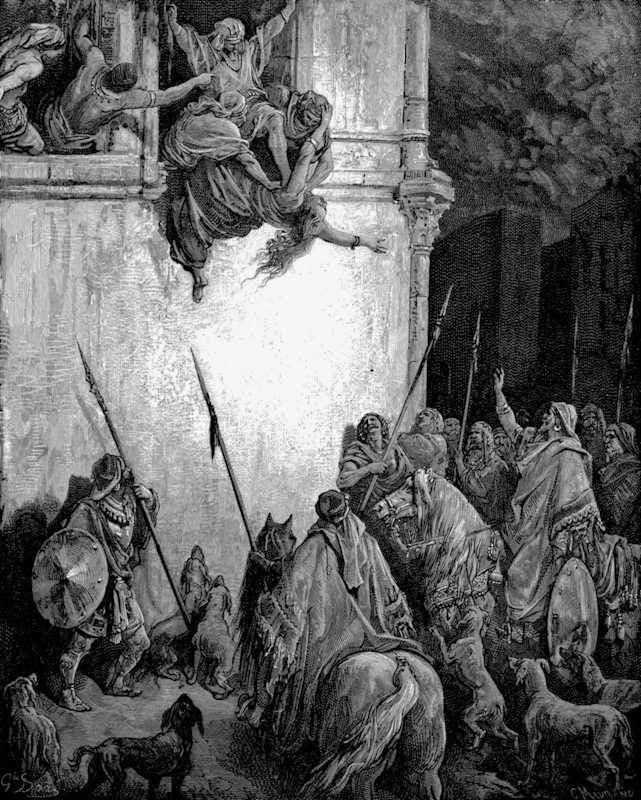
Like in Freemasonry, women do not lead the genderist movement, but some play an important supporting role in sustaining it. As Queen Jezebel found out in around 843 BC, proselytising for Baal may result in being defenestrated by eunuchs and then being eaten by wild underdogs.
It seems allyship is seldom rewarded.
Image: Altar and mosaic floor at the Moonta Masonic Temple, South Australia. Photo by Denisbn, CC BY-ND 2.0
Genspect publishes a variety of authors with different perspectives. Any opinions expressed in this article are the author’s and do not necessarily reflect Genspect’s official position. For more on Genspect, visit our FAQs.