




Ireland’s Gender Recognition Act – Part 2
By Catherine Monaghan
In Part 1, we looked at the Gender Recognition Act 2015 – what it is, and the implications of such legislation.
In case you need a refresher:
Ireland’s Gender Recognition Act 2015 is a piece of legislation which allows individuals to legally change their sex and have it fully recognized for all legal purposes, including on birth certificates and official documents.
Anyone aged 18 and over can declare a change of sex without the need for medical assessment, diagnosis, or intervention of any kind. This is known as “self-ID”. Applicants simply fill out a form online and submit a statutory declaration. They are then issued a Gender Recognition Certificate (GRC) and their new gender is legally recognised as their preferred gender for all purposes.
Young adults, aged 16-17, can apply for a GRC with court approval. They must obtain a court order exempting them from the requirement to be aged 18, have the consent of parents or guardian(s), and written approval from both their primary medical practitioner and either a psychiatrist or an endocrinologist not involved in the child’s medical care.
The legislation was enacted in 2015, despite no consultation with the general public, medical or educational organisations, child welfare organisations, or women’s rights organisations.
Issues that should have been considered include the impact that freedom to legally change sex would have on single-sex spaces, women’s sport, equality law and protections, data collection and statistics, and medical care and research.
We know that this strategic avoidance of engagement with potential opponents of gender recognition was based on documented tactics employed by transgender rights activists worldwide, outlined in the Dentons Report.
So Who Was Consulted?
What consultation there was targeted specialist stakeholders, legal experts and medical professionals.
The Gender Recognition Advisory Group (GRAG) was a working group established by the Irish Government in 2010 to advise on the legislation to be formulated. It consisted of medical and legal professionals, government officials from relevant departments, representatives from advocacy group TENI (Trans Equality Network Ireland), and other specialist stakeholders such as academics and social workers familiar with transgender issues.
The GRAG, as a whole, was fully on board with the idea of gender recognition, with most members supporting self-ID. It lacked ideological diversity and did not include voices critical of gender recognition or self-ID, such as those concerned about implications for sex-based rights, safeguarding in single-sex spaces, or data collection.
TENI’s lobbying, in particular, was instrumental in shifting the GRA from a medical model to one based on self-identification. The HSE (Health Service Executive, Ireland’s public health and social care service) and some medical professionals had initially favoured including medical criteria for legal gender recognition in Ireland.
Activists, however, considered such requirements unnecessary and offensive to those who identify as transgender and not in keeping with the Yogyakarta Principles, a set of guidelines established in 2006 by a mixed group of international professionals and activists. The principles are not legally binding, but they have been influential in shaping LGBTQ+ advocacy and law reform.
The Yogyakarta Principles, which attempt to apply existing human rights laws to issues of sexual orientation and gender identity, are controversial. They were developed without democratic oversight, endorse unrestricted rights and affirmation of gender identity, including for children (in harsh contrast with the UK’s Cass Reportwhich urges a clinical, evidence-based, and highly cautious approach); and they are in direct conflict with women’s sex-based rights, existing laws, and freedom of belief.

TENI’s position aligned with the Yogyakarta Principles and by the time the Irish legislation was rolled out all medical criteria for gender recognition had been abandoned, making Ireland one of the first countries in the world to adopt full legal self-identification with no restrictions for adults.
Review
In 2017, two years after the GRA was enacted, there was a review to evaluate how the legislation was working and whether changes were needed. The government appointed a Gender Recognition Act Review Group, again made up of professionals and activists supportive of gender recognition and self-identification. There were no representatives from women’s rights organisations or others who might have raised concerns about implications for sex-based rights, child safeguarding, or data collection.
The review, unsurprisingly and in keeping with the Yogyakarta and Dentons agendas, recommended:
- Extending legal gender recognition to children of any age (although still with parental consent)
- Creating a process for legal recognition of non-binary status
- Continuing the non-medical model of self-ID for adults
- Providing increased information and support for those navigating the process.
In 2019, the government proposed a simplified process for 16-17-year-olds to obtain legal gender recognition, still with parental consent but removing the requirement for a court order and medical involvement.
Gold Star for Ireland
Ireland is now held up by trans rights activists and the Dentons Report as a shining example of success when it comes to gender recognition and self-ID. We went from no legal gender recognition prior to 2015 to being considered one of the most progressive countries in the world with our Gender Recognition Act, all with barely any public knowledge or engagement. Were we all just too busy discussing same-sex marriage and then celebrating love being love? It would seem so, but we know now that was no accident.
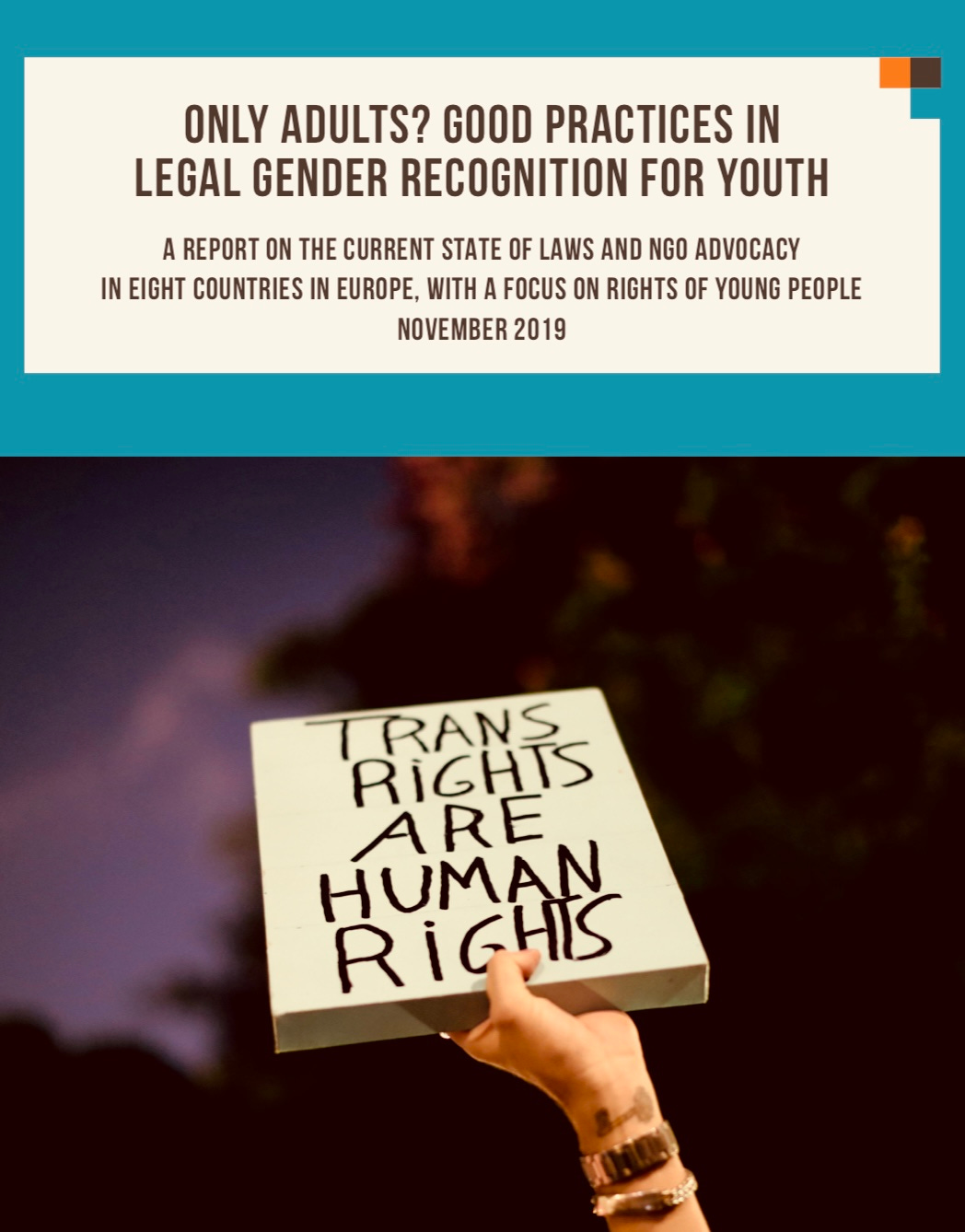
Essentially, the Yogyakarta Principles provide a legal and philosophical framework for worldwide advancement of gender recognition for adults and minors, while the Dentons document provides the strategy for successful lobbying and advocacy. Activists and advocates for transgender rights in Ireland successfully used these tools in pursuit of gender recognition and self-ID.
Ten Years On
With the ten year anniversary of the Gender Recognition Act approaching, there are several questions worth asking. Who has benefited from the legislation? Has it caused any harm? Do we have a stronger, safer, healthier, society because of it? And were we, the general public, hoodwinked?
We’ve ended up with legislation which prioritises a small minority of people while undermining the rights and safety of all women and children. The Gender Recognition Act has rendered the previously protective Equal Status Act all but meaningless when it comes to sex-based rights. We have men in our women’s prison, men playing in women’s sport, men sitting on boards and winning awards that were specifically meant for women. Most people would consider this to be regressive, not progressive.
Our near neighbours in the UK have recently clarified, in a Supreme Court ruling, that in law, the terms ‘man’ and ‘woman’ do in fact refer to biological male and female. Such clarification is essential for protecting sex-based rights and ensuring accuracy in data collection and record-keeping. Can we hope for any review, analysis or debate in Ireland about gender recognition that actually asks the public what they think? It seems the least we should be able to expect.
Our government and national media failed to keep the public informed about this important issue, but we’d like to do better. If you are interested in helping us raise awareness about gender recognition and self-ID in Ireland, please email saram@genspect.org
Genspect publishes a variety of authors with different perspectives. Any opinions expressed in this article are the author’s and do not necessarily reflect Genspect’s official position. For more on Genspect, visit our FAQs.