




From American Dream to State-Sanctioned Nightmare
By Jo Richardson
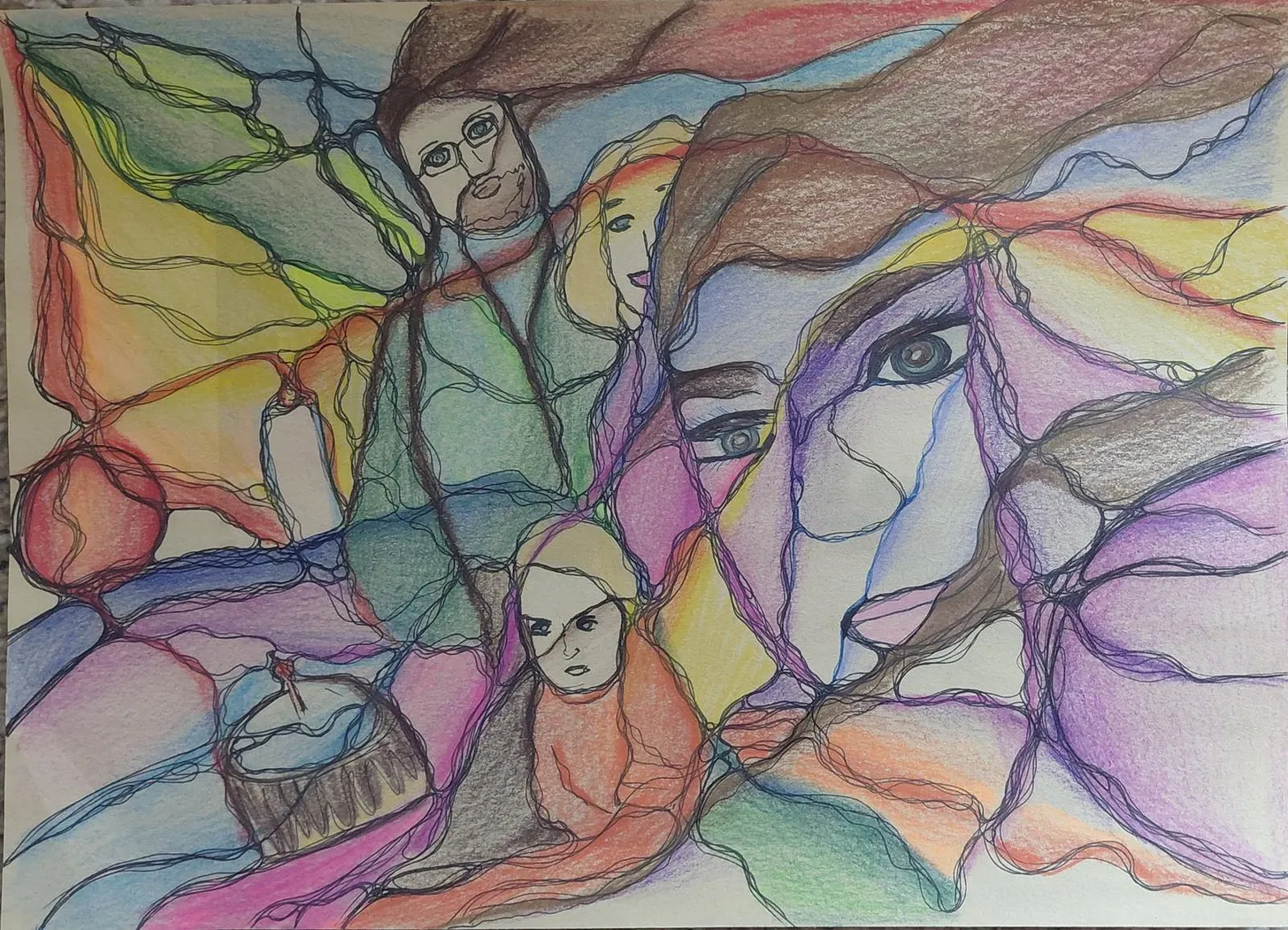
How a Ukrainian family lost their daughter to the trans belief
Ellie arrived in Boston on November 4, 2008, the day America elected its first black president. The young Ukrainian mother stepped onto new soil with her one-month-old daughter, Maya, cradled against her chest. Obama’s victory infused the nation with so much hope that autumn, and Ellie herself remembers feeling optimistic about the future and about the life that awaited her tiny daughter in this land of opportunity.
Eighteen years later, her family’s American dream would morph into a nightmare when, on an evening in June 2024, Child Protective Services arrived unannounced at the family’s California home to take Maya away because Ellie and her husband would not affirm that their daughter was a boy.
Diagnosing Sadness in the Digital Age
Like so many innocent youth swept up by the transgender belief, Maya had never exhibited gender-nonconforming behaviour, but she did have a long history of mental health challenges preceding her trans identity.
Described by her mother as a bright, active child, her troubles began when she was bullied in elementary school. Multiple moves, the addition of a little brother to the family, and the onset of puberty at just age 9 left Maya flailing. Then, to top things off, COVID and the global shutdown hit. At age 11, Maya’s life was suddenly reduced to the digital world, her only social contacts occurring on Minecraft and Discord. Desperately unhappy, she, like many of her peers, began researching diagnoses on the internet to help make sense of her distress.
In the months leading up to Maya’s adoption of first a non-binary identity and then later demands for testosterone, she requested to be tested for ADHD — and an evaluation done over the phone resulted in a litany of diagnoses, including ADHD, ODD, PTSD, MDD, and anxiety.
But this was only the beginning.
Soon after, Maya came across online descriptions of borderline personality disorder and became convinced she had found herself in the diagnosis. She sought an official assessment and had her self-diagnosis confirmed. This despite the longstanding reluctance within psychiatry to diagnose BPD in adolescents, precisely because the emotional volatility and identity instability common to adolescence can closely resemble the disorder itself.
Another internet search planted the idea that she needed Lithium to treat her mood instability. Once again, she was successful in her quest, obtaining the powerful psychotropic after just a small number of visits with a psychiatrist.
Whether these diagnoses were accurate or the medications appropriate is ultimately beside the point. What emerges from Maya’s story is the portrait of a girl in profound distress, scouring the internet for answers. A girl who appears convinced that the right label — the right explanation, the right prescription — will resolve all her psychological pain.
And then, after finding her way into an LGBTQ Discord group, Maya encountered the most destructive label of all.
Trans.
The pattern was the same. Just another psychiatric framework lifted from the digital world and applied to a troubled adolescent’s life.
The only difference — and it’s a major one — is the way society reacts to this particular self-declared diagnosis. Because instead of recognising Maya as a troubled adolescent in need of help and support, the deeply misguided community around her leapt into action to affirm this dangerous new identity.
The Nightmare Begins
Maya’s drift into trans identification was gradual. There was no dramatic “I’m trans” announcement to her family. Instead, the danger crept slowly into their lives. First, Maya experimented with a non-binary identity and they/them pronouns, and her parents, unaware of the harm that accompanies what looks like normal adolescent experimentation, didn’t react strongly or fight the identity.
But things changed dramatically when Maya requested that her parents sign a consent form for testosterone. Their refusal triggered a cascade of events that the family is still reeling from to this day.
Then, one warm June night, without warning, eight police cars descended upon the family home. They were accompanied by a social worker from the local Child Protection Service (CPS) who had come to remove Maya. Ellie watched helplessly as she was led away, barefoot under the flashing blue lights. She later learned that Maya’s psychiatrist had contacted CPS, alleging “emotional abuse,” “misgendering,” and “refusal to support medical transition”. It was that report that triggered her daughter’s removal.
Ellie recalls how, three months after Maya was removed from the family home, social workers filed a petition stating her and her husband’s “cultural background [and] fundamental values are inconsistent with the child’s desire to transition.” Placed with a family who affirmed her dangerous desire for unproven medical interventions, Maya’s contact with her parents was limited to one hour of visitation a week, later reduced to just one hour a month.
And yet, despite this drastic action taken to “protect” Maya’s well-being, Ellie sees no evidence that her daughter is thriving. She no longer appears to be attending school, and Ellie describes her as waxy and pale.
“She doesn’t look alive to me,” said a visibly distressed Ellie in our interview.
Overlooked Victims
Sadly, there’s another character in this story yet to be introduced. Maya’s little brother.
When telling these stories, it’s too easy to focus all the attention on the confused youth swept into gender clinics by this powerful cultural force. And the pain of the parents is now well-documented and widely understood.
But somehow society forgets about the siblings: the innocent young people suddenly expected to accept that their sister is now their brother, or vice versa, and to adjust their day-to-day lives to uphold this nonsensical claim. For a young child, the constant pressure to deny what they can plainly see — and to participate in a political fiction they are far too young to understand — can itself be deeply destabilising during a crucial stage of psychological development.
Yet, when the trans identity is accompanied by conflict, as it certainly was in Maya’s case, the harm ripples even further. After the police left and the social worker disappeared into the night with his sister, Maya’s traumatised brother was left alone; two years later, he still panics whenever someone rings the doorbell and he insists on sleeping with the bedroom doors open.
A Dark Inversion of Reality
Of course, this story is far more than one family’s isolated sorrow. Across the developed world, loving parents have found themselves cast as villains as an incoherent, destructive belief system turns reality upside down. Because it is impossible to redefine a serious psychiatric disorder as a healthy identity and still leave room for parents to seek help for children who apply this dangerous identity label to their own adolescent woes.
In a world where every announcement of a trans identity must be met with immediate celebration and affirmation, and all requests for medical interventions swiftly accommodated, parents are rendered almost powerless to shield their beloved children from this scandal.
Meaning, when this ideology strikes families, it has the power to tear them apart.
In a sane world, the institutions tasked with safeguarding children would be investigating the online forums feeding distressed adolescents the idea that the amputation of healthy body parts is the remedy for their suffering. They would be scrutinising the activist networks mailing breast binders and tucking devices to minors in discreet packaging.
Those tasked with child protection would investigate the schools socially transitioning children without parental consent, and the clinics prescribing puberty blockers and cross-sex hormones despite the exceptionally weak evidence base.
Protecting young people should mean defending their right to grow into adulthood with their bodies intact and their futures wide open.
The Rhythm of History
As the famous saying goes, those who cannot remember the past are condemned to repeat it.
One of the most remarkable things about our modern-day persecution of loving families is how eerily similar it is to the last scandal unleashed when the field of psychiatry fell under the spell of a dangerous false belief.
Then it was the belief in repressed memories. The idea that a person could endure years of horrific child sex abuse — supposedly at the hands of a close relative — but have no memory of it until finding themselves in the care of an “expert” in recovered memory therapy.
There was no truth to this theory. It was all a circus of absurdity. Built on nothing more than fantasy and ideological fervor.
The countless vulnerable women in the 1980s and 1990s who had the misfortune of falling into the hands of therapists practicing this pseudoscience emerged convinced they had been victims of incest or ritual abuse. Horrific false memories were implanted in their minds, resulting in hundreds of thousands of false accusations of child sexual abuse — most often against loving fathers, uncles, and other close family members.
The accused could do nothing to prove their innocence, and the accusations fell like a bomb on households. Lives were shattered; families torn apart.
Ellie’s family tragedy is full of the echoes of those past destroyed lives. Society has just substituted one absurd belief for another — victims promised happiness spiralling further into despair, loving relatives suddenly plunged into a helpless nightmare of accusations for which there is no defense, and trusted institutions falling captive to a fiction and persecuting the innocent in its name.
No one talks about the unimaginable suffering caused by the recovered memory movement these days. By allowing psychiatry to quietly bury this catastrophic blunder, we allowed ourselves to forget our seemingly limitless capacity for collective madness.
And then we simply repeated the tragedy.
A Mother’s Longing
Ellie thought she had moved to a nation “where laws work, and dreams come true.” She and her husband left everything behind in the hopes of a better life.
How tragically different the reality turned out to be.
One day, Maya may find her way home. When the confusion and turmoil of adolescence lifts, and the wider world frees itself from the spell of this devastating belief system. But the years stolen cannot be returned.
As Ellie and her husband continue to battle through the courts, stripped of custody and desperately trying every possible avenue to bring Maya back, she is left wondering whether her daughter would have been safer in war-torn Ukraine than in the progressive Golden State.
The American Dream did not fail Ellie because America is inherently cruel. It failed because the nation allowed an incoherent ideology to overtake its institutions. It allowed a pseudo civil rights movement to reshape the very fabric of reality to suit its demands, and ignored every warning sign along the way that young people were being harmed as a result.
But most important of all: Beneath all the ideology, court orders, activist slogans, and accusations, this remains something profoundly simple: the story of a mother longing for her daughter to come home.
Mia Hughes is the author of The WPATH Files and the director of Genspect Canada.
Author’s note: Ellie and Maya are pseudonyms. The family’s story is told with the mother’s permission, but names have been changed for privacy reasons.